

Passed Dec 17, 2025
1 co-sponsor
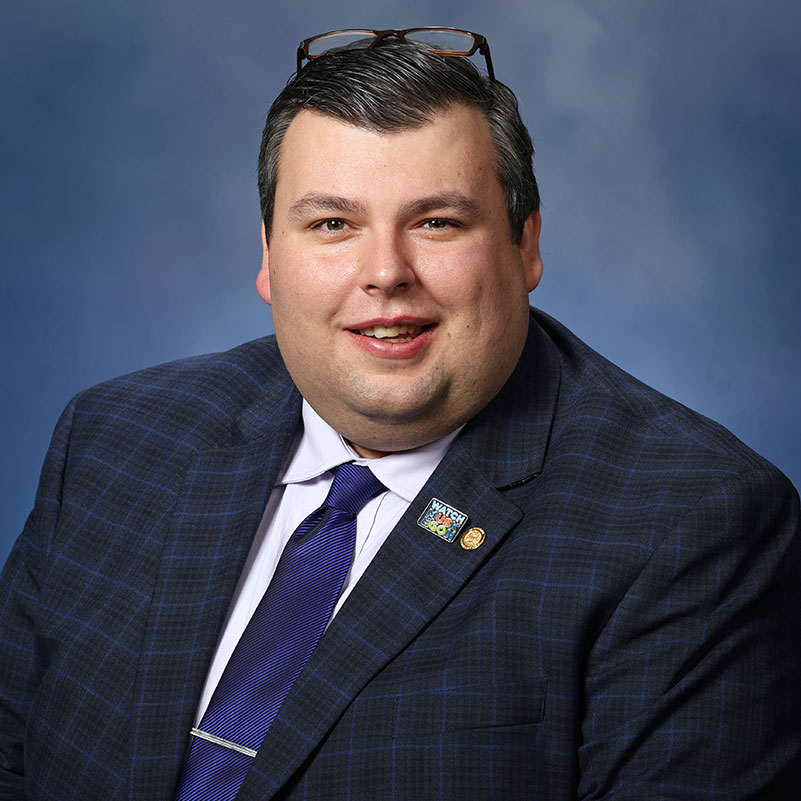
Rep. Will Snyder
Total votes
1,816
all sessions
Attendance
99%
20 missed
Near the chamber average
With party
96%
of cast votes
Lower than 76% of chamber peers
Bipartisan score
2%
crosses aisle rarely
Near the chamber average
Sponsored
500
bills & resolutions
Near the chamber average
Committees
2
assignments
500 bills and resolutions
Sponsored bills
Total
500
Primary
68
Co-sponsor
432
This page
500
matching current filters
A resolution to declare December 13, 2025, as National Wreaths Across America Day in the state of Michigan.
Maddy summaryThis resolution symbolically recognizes December 13, 2025, as "National Wreaths Across America Day" in Michigan. It does not create new laws or policies but formally honors Michigan's participation in the non-profit Wreaths Across America's annual event, where volunteers place wreaths on veterans' graves. The resolution acknowledges that Michigan will host 96 locations across the state, with approximately 60,000 wreaths laid to honor fallen veterans, active-duty military, and their families. It serves as a ceremonial declaration of the state's support for this existing national observance.
Passed Dec 11, 2025
1 co-sponsor
A resolution to urge the United States Department of Education to reject the recommended definition of “professional degree” and instead adopt a more accurate and consistent definition.
Maddy summaryThis resolution urges the U.S. Department of Education to reject a proposed definition of "professional degree" that would exclude many health care education programs from federal student loan eligibility. It specifically targets programs like physical therapy, occupational therapy, nursing, social work, and physician assistant studies - classified under CIP Code 51 - which would lose access to loans under the current proposal. The bill requests the Department instead adopt a definition based on required practice credentials, not program length or historical classification, to maintain consistent eligibility. This change aims to prevent worsening health care workforce shortages, particularly in rural and underserved communities.
EducationSupports EducationPrevents defunding of health care education programs by preserving federal student loan eligibility for nursing, physical therapy, and similar fields under CIP Code 51.
HealthcareSupports HealthcareBill prevents defunding of healthcare education programs (nursing, PT, etc.) by ensuring federal student loan eligibility, directly supporting healthcare workforce development.
Labor & EmploymentSupports Labor & EmploymentPreserves federal student loan access for healthcare education programs (nursing, physical therapy), enabling workforce development in critical labor sectors affected by proposed definition changes.
In committee Dec 11, 2025
1 co-sponsor
Natural resources: soil and erosion; beach nourishment permit program; provide for. Amends secs. 30106b, 30311b & 32515a of 1994 PA 451 (MCL 324.30106b et seq.) & adds secs. 1306 & 33709.
Maddy summaryHB 5304 requires applicants for dredging permits under Michigan's environmental law to either use dredged material for beach nourishment (if suitable) or pay a $25 per cubic yard fee. The fee funds a new Beach Nourishment Fund administered by the Department of Environment, Great Lakes, and Energy. This applies to projects under Parts 301, 303, and 325 of Michigan's Natural Resources and Environmental Protection Act. The bill amends sections 30106b, 30311b, and 32515a and adds sections 1306 (fee requirements) and 33709 (fund creation).
In committee Dec 9, 2025
1 co-sponsor
State management: purchasing; competitive solicitation for state purchases; modify exemptions for. Amends sec. 261 of 1984 PA 431 (MCL 18.1261).
Maddy summaryHB 5277 amends Michigan's state procurement rules to prioritize Michigan-based businesses, biobased products, and qualified disabled veteran-owned businesses in state contracts. It requires state agencies to give up to 15% preference to disabled veteran businesses when they are the lowest bidders and sets a goal for 5% of annual state spending on goods/services to go to these businesses. The bill mandates annual reporting on disabled veteran contracting progress and includes new requirements for state contracts to include anti-boycott clauses regarding strategic partners. These changes directly affect all state agencies purchasing goods/services and businesses seeking state contracts.
Budget & TaxesSupports Budget & TaxesSets 5% annual spending goal for disabled veteran businesses, directing state budget allocation toward specific vendors per procurement rules.
VeteransSupports VeteransPrioritizes disabled veteran-owned businesses in state contracts with 15% bidder preference and 5% spending goal, directly supporting veteran employment opportunities.
In committee Nov 13, 2025
0 co-sponsors
A resolution urging the federal government to not extend the emergency order preventing the planned closure of the J.H. Campbell Power Plant.
Maddy summaryThis resolution urges the federal government not to extend two Department of Energy emergency orders (202-25-3 and 202-25-7) that are preventing the planned closure of Michigan's J.H. Campbell Power Plant. The orders, issued to address an alleged energy emergency, conflict with MISO's approval for the plant's suspension by 2028 and have already cost Consumers Energy ratepayers $29 million in 38 days. The resolution highlights that continuing operations imposes financial burdens, worsens air/water pollution (releasing millions of pounds of pollutants annually), and causes estimated $389-879 million in annual health impacts. It directly affects Michigan ratepayers, public health, and environmental quality in the plant's local area.
EnergySupports EnergyBill urges ending emergency orders keeping a fossil fuel plant operational, aligning with reducing fossil fuel dependence and supporting MISO's closure plan.
EnvironmentOpposes EnvironmentBill prevents closure of coal plant, continuing operations that worsen air/water pollution as stated in summary, opposing environmental protection efforts.
In committee Nov 13, 2025
1 co-sponsor
Liquor: retail sales; restrictions on licensees owning and operating a motor fuel pump; modify. Amends sec. 541 of 1998 PA 58 (MCL 436.1541).
Maddy summaryHB 4276 modifies Michigan's liquor control law to allow certain licensees to own and operate motor fuel pumps on or near their licensed premises under specific conditions. It primarily affects liquor retailers (specially designated distributor and merchant license holders) in smaller communities, requiring them to maintain minimum inventory levels ($250,000 for most, $12,500 for rural areas) and ensure a 5-foot separation between fuel dispensing and alcohol service points. The bill also adds provisions for secondary locations (like satellite stores) and clarifies transfer rules for licenses involving existing fuel pump operations. These changes relax prior restrictions but impose clear, measurable requirements for compliance.
Passed Nov 12, 2025
0 co-sponsors
A resolution urging Congress to support a National Infrastructure Bank as embodied in H.R. 5356 or equivalent legislation.
Maddy summaryHR 216 is a procedural resolution urging Congress to support a National Infrastructure Bank as described in H.R. 5356. It does not create new funding but proposes a public bank capitalized through existing Treasury debt to finance infrastructure projects like road repairs, school upgrades, lead pipe replacement, and affordable housing. The resolution highlights Michigan's infrastructure challenges - such as 33% of roads in poor condition and 11% of bridges deemed structurally deficient - and cites widespread support from state legislatures and organizations. As a non-binding resolution, it formally requests congressional action but does not enact policy changes itself.
EducationSupports EducationBill explicitly cites school upgrades as a key infrastructure project to be funded by the proposed National Infrastructure Bank, aligning with education infrastructure improvements.
HousingSupports HousingBill explicitly lists 'affordable housing' as a project to be financed by the proposed National Infrastructure Bank, directly supporting funding for this topic.
TransportationSupports TransportationBill urges Congress to support National Infrastructure Bank funding road repairs, bridge maintenance, and infrastructure projects as highlighted by Michigan's road/bridge conditions.
In committee Nov 12, 2025
1 co-sponsor
A resolution to urge the United States Congress to adopt the language of Section 143 of House Bill 3838 of the 119th Congress, the Streamlining Procurement for Effective Execution and Delivery and National Defense Authorization Act for Fiscal Year 2026, to strengthen protections against the early retirement of the A-10 Thunderbolt II aircraft fleet.
Maddy summaryThis resolution (HR 212) requests that the U.S. Congress adopt Section 143 from H.R. 3838 (the 2026 National Defense Authorization Act). Section 143 would require the Air Force to maintain at least 162 A-10 aircraft until 2029 and mandate reports to Congress about transition plans before retiring the fleet. It specifically aims to prevent an operational gap at Michigan's Selfridge Air National Guard Base, where A-10s were scheduled for retirement in 2026 but replacement F-15EX fighters won't arrive until 2028. The resolution does not change policy itself but urges Congress to incorporate these protections into law.
In committee Nov 6, 2025
1 co-sponsor
Insurance: health insurers; prescription drug coverage for metastatic cancer; prohibit certain conditions. Amends 1956 PA 218 (MCL 500.100 - 500.8302) by adding sec. 3406rr.
Maddy summaryHB 5204 requires health insurers in Michigan to cover prescription drugs for advanced metastatic cancer without first forcing patients to fail other treatments or prove prior drug failures. It directly affects patients diagnosed with advanced metastatic cancer (cancer that has spread beyond its original site) and their health insurance plans. The law prohibits insurers from imposing conditions like "fail first" requirements or demanding proof of previous drug ineffectiveness before approving coverage for these drugs or related symptoms. This applies to all health insurance policies covering prescription drugs for such cancer cases. The bill defines "advanced metastatic cancer" and "associated conditions" (symptoms or side effects worsening without treatment) to clarify coverage requirements.
In committee Nov 5, 2025
1 co-sponsor
Ask Maddy
·
AI policy assistant
Ask Maddy about Will Snyder
Scope: michigan
Hi! I can help you understand Will Snyder's legislative record. What would you like to know?
Try one of these
i
Maddy answers using official bill text and legislative records. Always verify before sharing.
Sources cited inline