

Maddy summaryThis bill updates Michigan's Natural Resources and Environmental Protection Act to clarify definitions and procedures for commercial fishing in the state's Great Lakes waters. It directly affects licensed commercial fishermen, fish dealers, and the Department of Natural Resources by establishing precise meanings for terms like "abandoned gear," "quota," and various types of fishing nets. The legislation also adds new definitions to improve record-keeping requirements for fish production, storage, and sale, ensuring that all commercial activities are clearly regulated. By amending multiple existing sections and adding a new one, the bill aims to provide a more structured framework for managing allowable catch limits and enforcing fishing privileges.
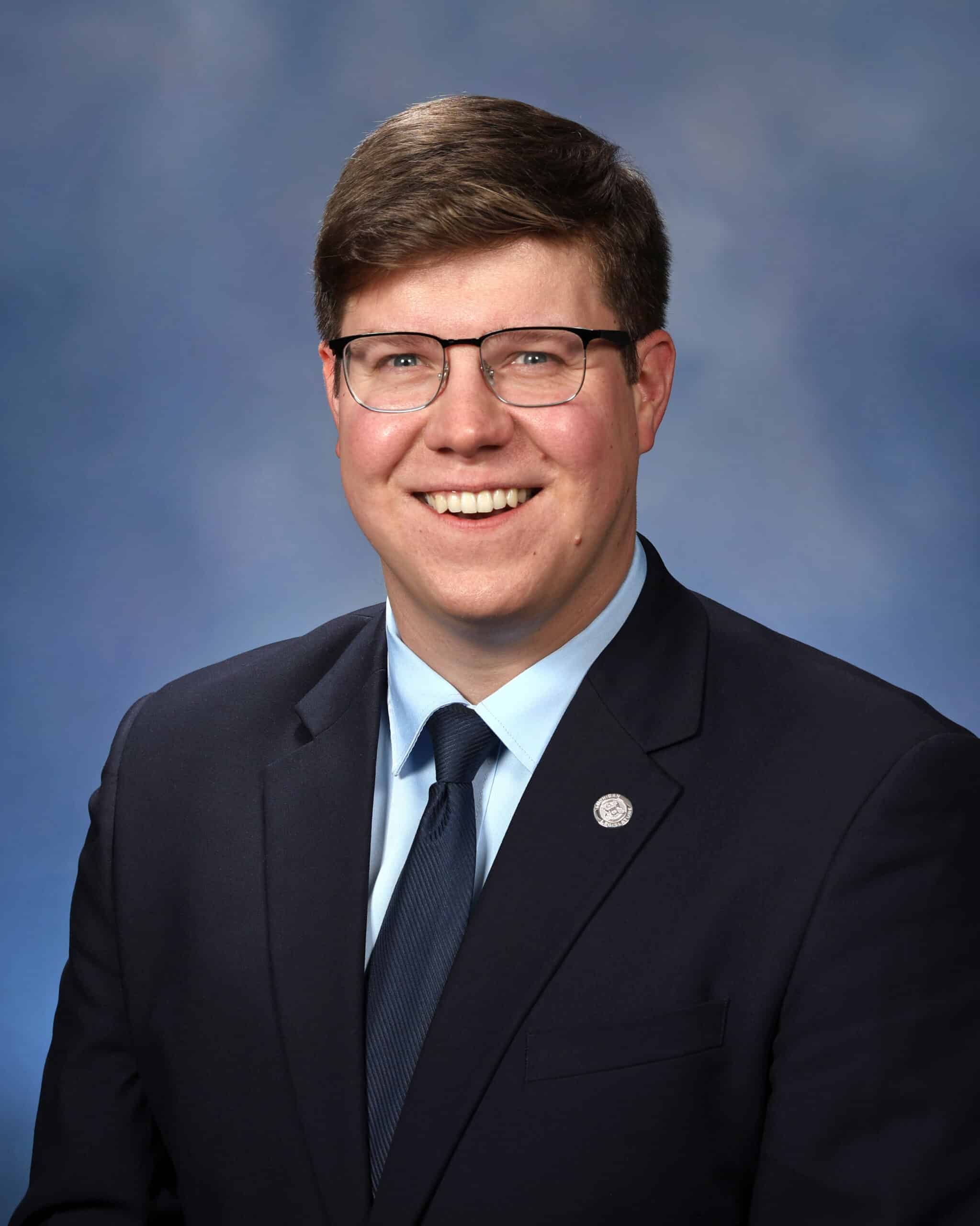
Rep. Stephen Wooden
Sponsored bills
Maddy summaryThis bill allows foreign insurance companies operating in Michigan to reduce their retaliatory tax liability by using housing opportunity tax credits. It directly affects alien or foreign insurers by permitting them to subtract the value of these credits from the taxes they must pay to the state treasurer. The key mechanism requires insurers to attach proof of their credit eligibility to their annual tax return to claim this subtraction. This change only applies to tax years beginning on or after January 1, 2027, and the bill will not take effect unless two companion bills are also passed.
Maddy summaryHB 5806 creates a new state tax credit for individuals and businesses that invest in affordable housing projects in Michigan starting in 2027. The bill allows these investors to reduce their income tax by a specific amount tied to their share of the project, provided they receive approval from the State Housing Development Authority. It also establishes rules for how investors must report the credit, handle situations where federal tax credits are lost, and carry forward any unused credit for up to 10 years.
Maddy summaryHB 5570 would allow single exit stairways in small multi-family buildings (up to 4 floors above ground or 3 floors with an occupiable roof) under strict safety conditions. It applies to buildings with no more than 4 units per floor and 4,000 square feet per floor. Required safety features include fire alarms, smoke detectors in common areas (like hallways and laundry rooms), and sprinklers meeting NFPA standards. This change would affect housing developers building qualifying new or renovated apartment buildings.
Maddy summaryHB 5571 allows single interior exit stairways in multi-family apartment buildings with 4-6 levels (or 3-5 levels with an occupiable roof), directly affecting developers and builders of such structures. The bill requires buildings to have no more than 4 units per level, limit floor area to 4,000 sq ft per level, and ensure exit access travel is ≤125 feet from any point. Key safety provisions include mandatory smoke detectors in common areas (like hallways and laundry rooms), manual fire alarms, automatic smoke detection systems, and sprinklers meeting NFPA standards. It also mandates that the building’s fire department must be accredited by the Commission on Fire Accreditation International and hold a Class 1-2 public protection rating. The bill is contingent on HB 5570 passing into law.
Maddy summaryHB 4072 requires hospitals and freestanding surgical outpatient facilities to offer patients any unused eye drops or eye ointments after ophthalmic surgical procedures or medical care. This applies when the facility-provided medication was administered to the patient and is required for their ongoing treatment upon discharge. The bill details labeling requirements if a pharmacist dispenses the drug, and assigns the responsibility for patient counseling on its use to the prescribing doctor. This allows patients to take home remaining eye medications for continued care.
Maddy summaryHB 4103 adds a new section to Michigan's health occupations law to implement an occupational therapy licensure compact. This bill allows occupational therapists licensed in Michigan to practice in other participating states without obtaining separate licenses, and vice versa for therapists from other compact states. It directly affects occupational therapists seeking to work across state lines, reducing barriers to practice. The compact mechanism establishes standardized licensing requirements among participating states, streamlining the process for therapists to provide services in multiple jurisdictions.
Maddy summaryHB 4104 updates Michigan's occupational therapy licensing rules to join a multi-state licensure compact. This would allow occupational therapists licensed in Michigan to practice in other participating states without obtaining separate licenses. The bill modifies existing law to align with the compact's standards and adds new sections for implementation. It directly affects occupational therapists seeking to work across state lines within the compact.
Maddy summaryHB 4724 transfers a specific 0.586-acre parcel of state-owned property (located at 345 Northland Drive, NE, Rockford, Kent County) currently managed by the Michigan State Police. The bill authorizes the state administrative board to convey this property via sale, transfer, or trade to local governments or other state agencies, requiring fair market value appraisal and including a 30-year public use restriction if sold to local entities. Revenue from sales must be deposited into the state general fund, and the property transfer includes provisions for mineral rights revenue sharing (50% to the state) and preservation of aboriginal antiquities. This bill directly affects the State Police (as current custodian), Kent County local government (as potential buyer), and future public users of the property.
Maddy summaryThis bill authorizes Michigan to join the National Popular Vote Interstate Compact, an agreement among states to award all their electoral votes to the presidential candidate who wins the most votes nationwide. The legislation declares that the one-person, one-vote principle requires the candidate with the highest national total to become President and outlines how Michigan's chief election official would count votes and designate the winner once the compact is active. The agreement only takes effect when states participating in it collectively hold a majority of the Electoral College votes, ensuring the current system remains in place until that threshold is met. If the compact becomes active, Michigan's laws regarding elector appointment will follow the compact's rules rather than conflicting state statutes.