

Maddy summaryThis resolution declares January 27, 2025, as Holocaust Remembrance Day in Michigan. It symbolically honors Holocaust victims, survivors, and liberators through a state-level recognition, emphasizing reflection on the historical atrocities committed during the Holocaust. The resolution encourages Michiganders to remember this history as a reminder to combat hatred through education and remembrance, without creating new legal requirements or affecting specific groups.
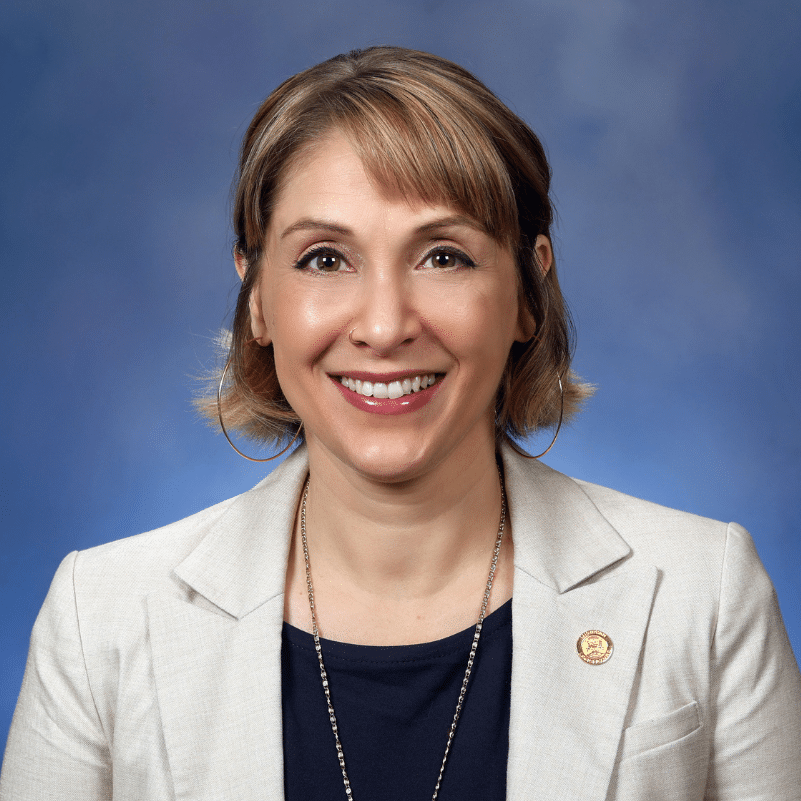
Rep. Emily Dievendorf
Sponsored bills
Maddy summaryHB 4020 creates a temporary commission to update African-American history curriculum for Michigan K-12 schools. The commission, appointed by the governor and including university representatives, NAACP, and museum staff, must review current standards within 365 days and recommend age-appropriate instruction covering Reconstruction, the Civil Rights Era, and African-American contributions to U.S. development. Starting in the 2026-2027 school year, Michigan school districts must provide this instruction, and state assessments will include related questions. The bill mandates curriculum updates to the state board within two years of the commission's recommendations. This directly affects all public K-12 schools in Michigan and their required social studies curriculum.
Maddy summaryHB 4009 repeals a 1988 state law (MCL 123.411) that previously prevented local governments in Michigan from establishing rent control policies for residential properties. This bill directly affects cities and counties, giving them the authority to create their own rent control programs if they choose. The key mechanism is simply removing the existing legal barrier, allowing local governments to develop and implement rent control measures without state restrictions. The repeal takes effect 90 days after the bill becomes law.
Maddy summaryHB 4005 repeals the 2012 "Local Financial Stability and Choice Act" (2012 PA 436, MCL 141.1541-141.1575), which was a previous law governing local government financial matters. This bill makes no new policy changes - it solely removes the existing statute from the Michigan Compiled Laws. It directly affects no individuals or entities, as it eliminates a repealed law with no current application. The bill was introduced on January 14, 2025, and referred to the Finance Committee.
Maddy summaryHB 4016 designates May of each year as "Huntington's Disease Awareness Month" in Michigan. This symbolic resolution aims to raise public and medical awareness about Huntington's disease, which affects thousands of Michiganders and has no cure. It does not create new funding, regulations, or policy changes - it simply aligns Michigan with national recognition efforts for this progressive neurological condition. The bill was introduced in January 2025 and referred to committee for further review.
Maddy summaryThis bill requires the Michigan Department of Health and Human Services to create and distribute a guide on safe firearm storage to all public and private schools. The guide, which must be available in English, Spanish, and Arabic, will explain current storage laws, answer common questions, and direct parents to resources for purchasing locks and safes. The department is tasked with developing this initial notice by July 1, 2025, and must update it annually by the following July 1 to reflect any legal changes.
Maddy summaryThis bill amends Michigan's sales tax law to change how a specific portion of sales tax revenue is distributed to the public safety and violence prevention fund. Starting in October 2023, the state will deposit 1.5% of the collections from the standard 4% sales tax into this new fund on a monthly basis. The legislation also outlines existing rules for distributing other sales tax revenues to schools, transportation projects, aviation, and health initiatives. By specifying these allocation percentages and timelines, the bill ensures that designated funds are collected and transferred to their intended programs without altering the overall tax rate.
Maddy summaryThis law updates the rules for who can serve on Michigan's state and county election canvassing boards. To be eligible, members must be registered voters who have taken an official oath of office and have never been convicted of specific election-related crimes. The bill defines these crimes to include various offenses such as perjury, voter intimidation, and certain felonies. Additionally, county board members cannot hold another elected public office while serving on the board. These changes take effect on April 2, 2025.
Maddy summaryThis bill modifies Michigan's name change laws to strengthen fraud prevention by requiring fingerprint checks for all applicants aged 22 or older. Under the new rules, individuals with a criminal record are presumed to be seeking a name change fraudulently and must prove otherwise, while the court covers the cost of background checks. The legislation also mandates that courts notify relevant state agencies if a name change is approved for someone with a criminal history, ensuring the change is recorded in correctional and law enforcement databases. Additionally, the bill clarifies consent requirements for minors, requiring those aged 14 or older to sign their own consent in front of the judge if the court deems them capable of expressing a preference.
Maddy summaryThis bill requires the state to create a program that offers extra reimbursement to public ground emergency medical transportation providers serving Medicaid recipients. To qualify, providers must be owned or operated by a government entity, such as a city, county, or fire authority, and be enrolled as Medicaid providers. The additional payments are calculated based on federal funding rules and are capped so that total reimbursement does not exceed the actual cost of the services provided. Participation in this supplemental reimbursement program is voluntary for eligible providers.