

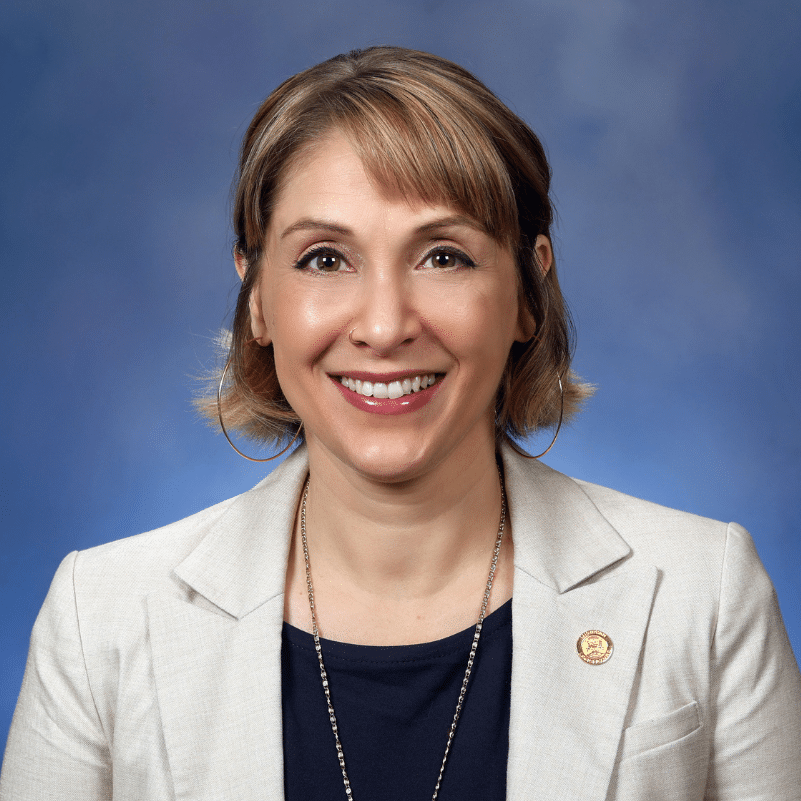
Photo of Emily Dievendorf
D Michigan House · District 77 On the 2026 ballot

Rep. Emily Dievendorf

Compare
Total votes
1,783
all sessions
Attendance
97%
50 missed
Near the chamber average
With party
93%
of cast votes
Lower than 92% of chamber peers
Bipartisan score
4%
crosses aisle rarely
Higher than 91% of chamber peers
Sponsored
1,094
bills & resolutions
Higher than 79% of chamber peers
Committees
2
assignments
1,094 bills and resolutions

Sponsored bills

Total
1,094
Primary
50
Co-sponsor
1,044
This page
1,094
matching current filters
Co-sponsor HB 5398
In committee · Michigan House · Co-sponsor
Property tax: exemptions; general property tax act; reflect repeal of data center tax exemptions. Amends sec. 7ff of 1893 PA 206 (MCL 211.7ff). TIE BAR WITH: HB 5396'25, HB 5397'25

Maddy summaryHB 5398 amends Michigan's General Property Tax Act to remove a tax exemption for data centers located in Renaissance Zones. Specifically, it eliminates the exemption previously available for "eligible data center property" in zones approved by the Michigan Strategic Fund in 2016 with at least $100 million in investment. This change directly affects data center operators in designated Renaissance Zones who previously qualified for reduced property taxes. The bill updates Section 7ff of the tax act to reflect this repeal, ensuring data centers no longer receive the tax break.

In committee Dec 18, 2025 1 co-sponsor
Co-sponsor HB 5389
Failed · Michigan House · Co-sponsor
State finance: budgets; certain work project appropriations; modify legislative disapproval process of. Amends sec. 451a of 1984 PA 431 (MCL 18.1451a).

Maddy summaryHB 5389 modifies how Michigan manages state funds for specific projects (called "work projects"). It requires that such projects must have a clear purpose, specific plan, estimated cost, and completion date to qualify. The bill also changes the timeframe for unused funds to expire (48 months after the fiscal year ends) and gives the director authority to propose lapsing project accounts, but requires both legislative committees to disapprove such proposals within 30 days. Additionally, it mandates annual reports to committees detailing all active work project accounts, their balances, and any funds that lapsed.

Failed Dec 18, 2025 1 co-sponsor
Co-sponsor HB 5394
In committee · Michigan House · Co-sponsor
Employment security: benefits; certain improperly paid benefits; require waiver of recovery as an administrative or clerical error. Amends sec. 62 of 1936 (Ex Sess) PA 1 (MCL 421.62).

Maddy summaryHB 5394 requires Michigan's unemployment insurance agency to automatically waive repayment of benefits improperly paid due to the agency's own administrative or clerical errors, rather than requiring claimants to seek a waiver through a separate process. This applies specifically when overpayments result from the agency's mistakes (e.g., data entry errors), excluding cases involving fraud, identity theft, or intentional misrepresentation by claimants. The bill ensures claimants affected by such agency errors do not face repayment demands or interest, streamlining relief for those who received benefits due to the state's administrative errors. It does not change eligibility rules or apply to overpayments caused by claimant error or fraud.

In committee Dec 18, 2025 1 co-sponsor
Co-sponsor HB 5393
In committee · Michigan House · Co-sponsor
Employment security: benefits; recovery waiver of an improperly paid benefit; require after a certain amount of time elapses. Amends sec. 62 of 1936 (Ex Sess) PA 1 (MCL 421.62).

Maddy summaryHB 5393 amends Michigan's unemployment benefits law to change how overpaid benefits are recovered. It requires the unemployment agency to issue a repayment demand within 3 years of a final determination about overpayment, and prohibits recovery actions after that deadline (except for suspected identity fraud). The bill creates specific waiver conditions where repayment may be forgiven, including cases of agency errors, low household income (below 150% of federal poverty guidelines), or unintentional wage reporting mistakes by employers. This directly affects unemployed Michiganders who received incorrect benefits, ensuring they aren't required to repay overpayments after the 3-year window unless fraud is involved.

In committee Dec 18, 2025 1 co-sponsor
Co-sponsor HB 5392
In committee · Michigan House · Co-sponsor
Employment security: administration; recovery of improperly paid benefits; allow claimant to provide evidence of waiver eligibility. Amends sec. 62 of 1936 (Ex Sess) PA 1 (MCL 421.62).

Maddy summaryHB 5392 updates Michigan's unemployment benefits recovery process by expanding eligibility for claimants to request waivers of repayment for improperly paid benefits. It allows claimants 60 days after receiving an overpayment notice to submit evidence showing repayment would be "contrary to equity and good conscience," such as administrative errors by the agency, employer-provided incorrect wage data, or household income below 150% of the federal poverty level. The bill clarifies that waivers apply retroactively from the date of the error or application, and requires refunds for payments made after the waiver request. This directly affects individuals who received unemployment benefits they later had to repay due to agency or employer errors.

In committee Dec 18, 2025 1 co-sponsor
Co-sponsor HB 5366
In committee · Michigan House · Co-sponsor
Occupations: real estate; real estate wholesaling and mandatory disclosures; provide for. Amends secs. 2501, 2502b, 2503 & 2512e of 1980 PA 299 (MCL 339.2501 et seq.) & adds sec. 2517a.

Maddy summaryHB 5366 requires real estate wholesalers to provide mandatory disclosures to buyers when transferring purchase agreements. It defines "assignment fee" as the payment for such transfers and mandates clear disclosure of these fees to buyers before closing. The bill directly affects real estate wholesalers and brokers who facilitate these transactions, ensuring buyers understand all financial terms upfront. This change aims to increase transparency in real estate wholesaling without altering licensing requirements.

In committee Dec 17, 2025 1 co-sponsor
Co-sponsor HB 5367
In committee · Michigan House · Co-sponsor
Property: recording; requirements for recording with register of deeds; modify. Amends sec. 1 of 1937 PA 103 (MCL 565.201). TIE BAR WITH: HB 5365'25

Maddy summaryThis bill amends Michigan's property recording rules to standardize formatting and privacy requirements for deeds, mortgages, and other property transfers recorded with county registers of deeds. Key changes include requiring documents to be printed on 20-pound white paper in 10-point font with clear addresses, obscuring the first five digits of Social Security numbers after specified dates, and mandating legible signatures with printed names beneath them. These rules apply to anyone submitting property documents for recording, ensuring consistent formatting and reducing privacy risks. The bill focuses on procedural clarity rather than substantive policy changes to property transactions.

In committee Dec 17, 2025 1 co-sponsor
Co-sponsor HB 5373
In committee · Michigan House · Co-sponsor
Trade: consumer goods and services; price cap on bottled water at mass entertainment venues; provide for. Amends sec. 3 of 1976 PA 331 (MCL 445.903) & adds sec. 3j.

Maddy summaryHB 5373 would limit how much mass entertainment venues (like stadiums, arenas, and concert halls) can charge for bottled water. It amends Michigan's Consumer Protection Act by adding a new provision (Section 3j) requiring venues to set a specific price cap on bottled water sold at these locations. This directly affects consumers purchasing bottled water at large events, ensuring they aren't charged excessive prices. The bill establishes a clear price limit for bottled water sales, aiming to protect consumers from inflated costs during events.

In committee Dec 17, 2025 1 co-sponsor
Co-sponsor HB 5365
In committee · Michigan House · Co-sponsor
Taxation: other; SFR tax and economics act; create. Creates new act. TIE BAR WITH: HB 5367'25

Maddy summaryHB 5365, the "SFR Tax and Economics Act," imposes a surtax on large investors (entities owning 50+ single-family homes) for acquiring, selling, or holding properties. It requires certified entities (like community land trusts or MSHDA-approved groups) to implement 15-year affordability covenants limiting rent/sale prices to 30-80% of local median income. The bill affects large real estate investors and entities receiving state benefits related to single-family homes, mandating reporting and compliance. Proceeds from surtaxes fund affordable housing initiatives, while exemptions apply to qualifying "mission buyers" like public housing agencies.

In committee Dec 17, 2025 1 co-sponsor
Showing 191 to 200 of 1,094 bills
Previous 1 … 19 20 21 … 110 Next