

Maddy summaryHB 4876 requires Michigan's legislature to appropriate annual funding starting in fiscal year 2026 to support career and technical education (CTE) and vocational-technical programs in public schools. It mandates that this funding must equal or exceed the total amount allocated for these programs in fiscal year 2025 under existing law (sections 61a, 61b, 61d, and 62 of the State School Aid Act of 1979). The bill directly affects school districts offering CTE programs by guaranteeing stable, inflation-matched funding levels. This provision aims to maintain current program resources without specifying new educational requirements or eligibility changes.
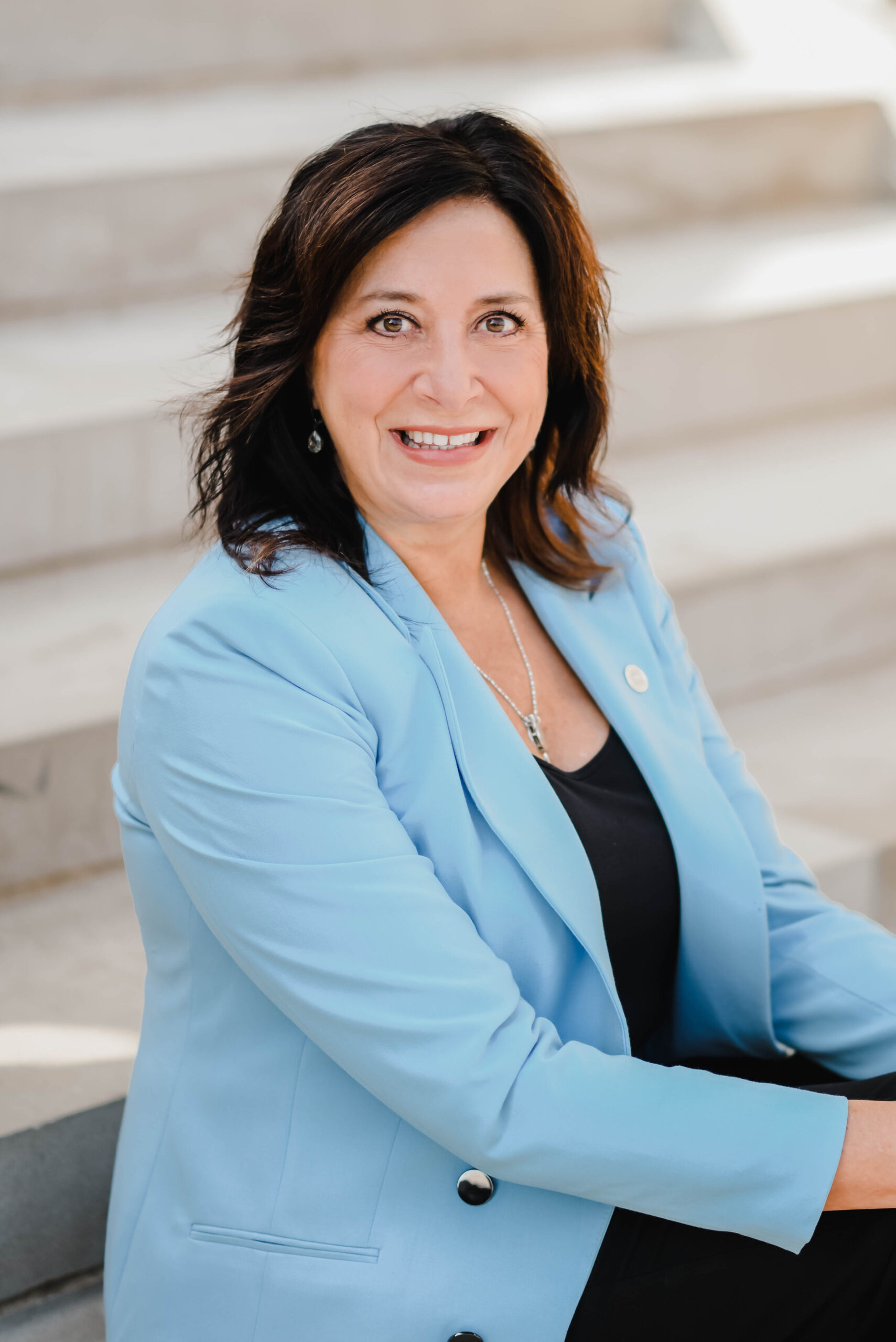
Rep. Angela Witwer
Sponsored bills
Maddy summaryHB 4869 mandates that Michigan's legislature appropriate at least $2.6 billion annually starting in the 2025-2026 fiscal year to fund special education services for public school students. This funding directly supports school districts providing services under specific sections of Michigan's State School Aid Act (MCL 388.1651a, 388.1651c, 388.1651d, 388.1651e, 388.1653a, 388.1654, and 388.1656). The bill requires the state to set aside this specific amount each year for special education programs, rather than relying on existing funding formulas. It applies to all public school districts serving students with disabilities under the referenced statutes. The bill was introduced on September 11, 2025, and referred to the Appropriations Committee.
Maddy summaryHB 4873 mandates annual state funding of $610 million for Michigan's Great Start Readiness Program (GSRP), beginning in fiscal year 2026. This program provides early childhood education and care for preschool-aged children, primarily affecting low-income families and communities with limited access to early learning services. The bill requires the legislature to appropriate this specific amount each year, guaranteeing stable funding for GSRP as defined under existing law (MCL 388.1632d). It does not create new eligibility rules but ensures consistent financial support for the existing program.
Maddy summaryHB 4877 requires Michigan's legislature to appropriate annual funds starting in fiscal year 2026 for public schools to support at-risk pupils, as defined under existing law. Each school would receive 35% of its base foundation allowance (the standard funding amount under the State School Aid Act) specifically for these students. The bill directly affects all public schools in Michigan by mandating dedicated supplemental funding for at-risk pupils, tied to their existing state funding allocation. This policy change creates a new, recurring funding mechanism for targeted student support beginning in 2026.
Maddy summaryHB 4871 increases Michigan's funding for free school meals, allocating up to $200 million for the 2024-2025 school year to cover costs not reimbursed by federal programs. It requires participating public schools (serving pre-K-12) to provide free breakfast and lunch to all students, maximize federal reimbursement through the Community Eligibility Provision (CEP), and collect family income data to determine eligibility. Schools must also offer accommodations for dietary needs like gluten-free, vegetarian, and allergy-specific meals upon request. This bill directly affects Michigan public school districts by changing how they receive state funding to support universal free meal programs.
Maddy summaryHB 4868 creates supplemental funding for Michigan school districts to support English language learners (ELLs) starting in the 2026 fiscal year. To qualify, districts must administer the WIDA ACCESS or WIDA Alternate ACCESS proficiency test to ELLs. Funding is distributed based on test scores: 75% of the target foundation allowance for scores 1.0-1.9, 50% for 2.0-2.9, and 35% for 3.0-3.9. This directly affects school districts serving ELLs who meet the assessment requirements under Michigan’s School Code.
Maddy summaryHB 4885 amends Michigan's Public Health Code (sections 333.16807 and 333.17601) to clarify that fitting and dispensing hearing aids remains regulated under Article 13 of the Occupational Code (not speech-language pathology practice). The bill directly affects hearing aid professionals and dealers by aligning the Public Health Code with existing occupational regulations. It updates references to ensure consistency, specifying that hearing aid fitting/disposal falls under Article 13 (MCL 339.1301-339.1309), not speech-language pathology provisions. This is a technical correction to the code, not a new policy change.
Maddy summaryThis resolution (HR 170) symbolically declares September 10, 2025, as "World Suicide Prevention Day" in Michigan. It recognizes suicide as a critical public health issue in the state, noting it is the second leading cause of death for Michiganders aged 10-24. The resolution aims to raise awareness, honor those lost to suicide, support survivors, and encourage community efforts in suicide prevention. It does not create new laws or funding but serves as a formal acknowledgment of ongoing mental health advocacy.
Maddy summaryThis resolution (HR 167) symbolically declares September 13, 2025, as "Recovery Day" in Michigan. It honors recovery community organizations and individuals managing substance use disorders, recognizing their long-term support efforts. The resolution does not create new laws or funding; it is a ceremonial acknowledgment. It specifically references Michigan's context, noting that only about 127,600 of 638,000 residents with substance use disorders receive treatment, while recovery organizations provide ongoing, cost-effective support. The resolution was adopted on September 10, 2025.
Maddy summaryThis resolution (HR 169) designates September 11-17, 2025, as "Patriot Week" in Michigan. It does not create new laws or policies but encourages Michigan residents, schools, and government agencies to honor American history, founding documents, and symbols during this week. The resolution specifically urges participation in activities that promote studying the nation's history and values, including recognition of the September 11, 2001, attacks and key historical figures and events. As a commemorative resolution, it has no direct legal or financial impact on individuals or entities.