

Maddy summaryHB 4035 requires counties with populations over 1 million that violate sewage discharge permits to create and implement a plan reducing average sewage overflows by 50% within 5 years. The plan must be submitted within one year of the first violation and approved by the state environmental department within 180 days. Counties failing to submit or complete the plan face monthly fines up to $1 million and potential permit denial for sewage operations. This bill directly affects large urban counties with sewage infrastructure issues, aiming to reduce pollution through enforceable reduction targets.
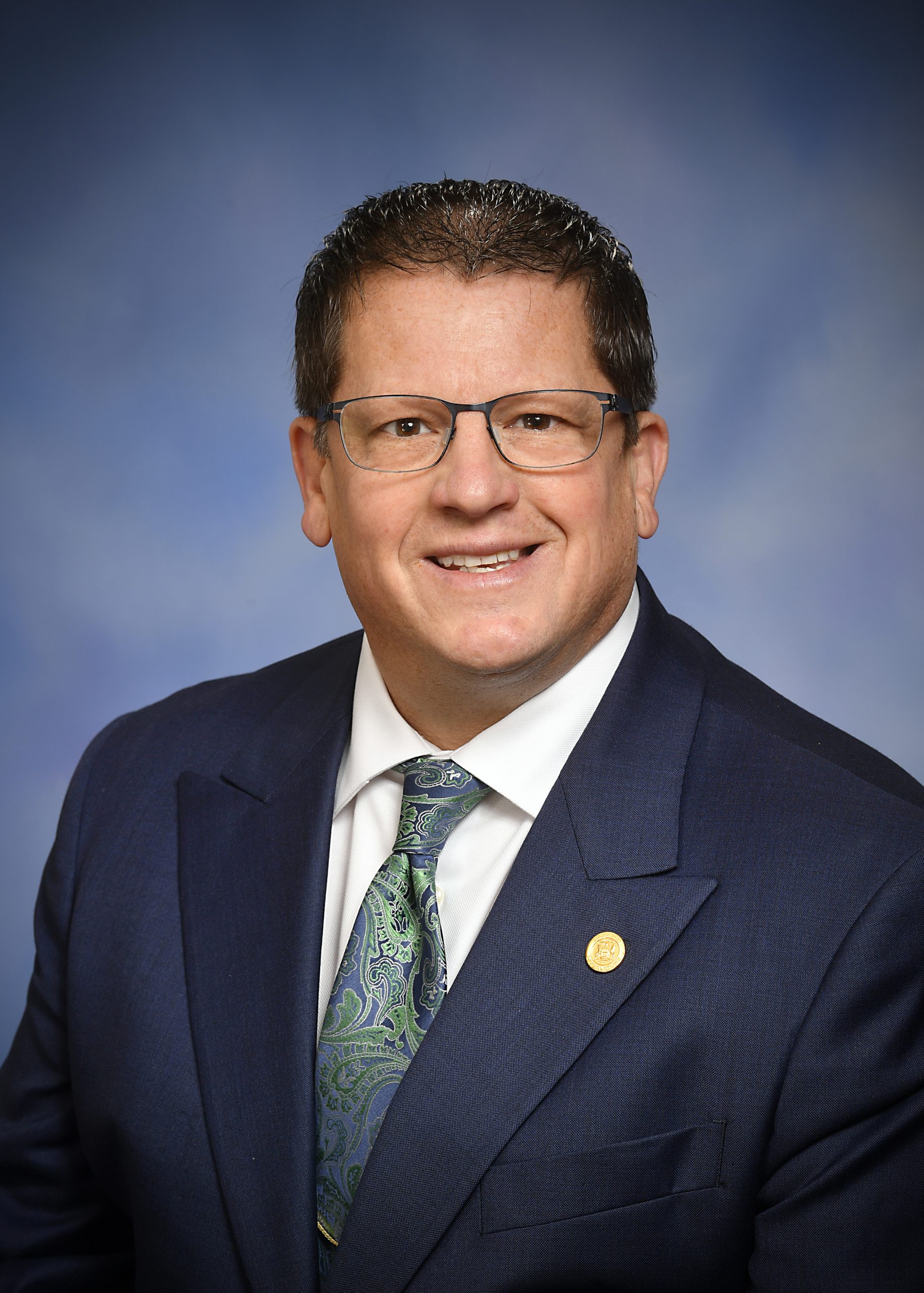
Rep. Brian BeGole
Sponsored bills
Maddy summaryHB 4030 amends Michigan's Youth Employment Standards Act to allow parents or legal guardians of homeschooled minors to issue work permits for their children. The bill changes the definition of "issuing officer" to explicitly include a minor's parent or guardian when the child is educated under Michigan's homeschooling law (MCL 380.1561). This directly affects homeschooled minors under 18 who seek employment, removing the prior requirement for school district authorization. The key mechanism updates the permit process to accommodate homeschooling families, streamlining access to work permits without school district involvement.
Maddy summaryThis Michigan House resolution (HR 14) establishes a procedure for publicly disclosing details about "enhancement grants" (legislatively directed spending items) before they can be included in budget bills. It requires sponsors to make specific information publicly available online by April 1 each year (May 1 for 2025), including the sponsor’s name, recipient details, project purpose, funding amount, and verification for nonprofit recipients. The resolution also prohibits for-profit entities from receiving such grants and mandates a 14-day public posting period before a bill’s final vote. This rule implements transparency requirements under Rule 52 of the House’s Standing Rules.
Maddy summaryHB 4015, the "Cash for Tolls Act," requires state and local governments to accept cash payments for tolls on public infrastructure like bridges, highways, and tunnels they own or operate. It mandates that cash must be accepted as a payment option and prohibits requiring electronic payments (like credit cards) instead. The bill applies only to tolls on publicly managed infrastructure, excluding privately owned toll roads. This change directly affects drivers who pay tolls with cash and public toll operators who must adjust their payment systems. The bill is currently in committee after being introduced on January 14, 2025.
Maddy summaryThis bill requires public and nonpublic schools in Michigan to adopt and implement a standardized plan for response terminology starting in the 2026-2027 school year. The law mandates that school boards and directors use consistent language when communicating about safety incidents to ensure clarity across the education system. However, the bill does not take effect unless it is passed together with a companion bill, HB 4096.
Maddy summaryThis bill designates a specific stretch of Interstate 94 in Wayne County as the "Corporal Mohamed Said Memorial Highway." The designated section runs between Oakwood Boulevard and Outer Drive W. By adding this new section to the Michigan Memorial Highway Act, the legislation officially names the road in honor of Corporal Mohamed Said.
Maddy summaryThis bill requires the Michigan State Police to create a standardized set of response terms and a color-coding system for schools by July 1, 2026. The new rules will guide how public and nonpublic schools, along with local law enforcement, communicate during specific incidents occurring on school property. By establishing a uniform language and visual code, the legislation aims to improve coordination between schools and police when handling emergencies.
Maddy summaryThis bill creates a new Rare Disease Advisory Council within the Michigan Department of Health and Human Services to advise the state on research, diagnosis, and treatment for rare diseases. The council will be composed of a diverse group of members, including medical professionals, patient advocates, industry representatives, and individuals with rare diseases, who will serve four-year terms. Once established, the council is authorized to hold public hearings, consult with experts, and apply for grants to develop recommendations for improving care and support for those affected by conditions that impact fewer than 200,000 people in the United States.
Maddy summaryThis bill expands legal protections for individuals who voluntarily provide emergency bleeding control, such as using pressure, dressings, or tourniquets, to people in medical distress. It states that these individuals cannot be sued for damages resulting from their actions unless they act with gross negligence or willful misconduct. The law applies to anyone without a pre-existing duty to help who responds in good faith to an emergency situation. This change aims to encourage bystanders to assist with life-saving bleeding control measures without fear of civil liability.
Maddy summaryThis bill requires townships in Michigan to adopt a written conflict of interest policy for their officials. Under the new rules, board members must publicly announce and record the factual reasons for any abstentions from voting due to conflicts, including situations where a member seeks to fill a vacancy. The legislation also mandates that members vote on all questions unless excused by unanimous consent and ensures that official records clearly reflect these voting procedures. These provisions aim to increase transparency and accountability in township governance by formalizing how officials handle potential conflicts.