

Maddy summaryHB 4821 requires Michigan municipalities imposing drainage fees that generate over $10 million annually or 5% of their general fund budget to create separate, segregated accounts for those revenues. The bill mandates that these funds cannot be mixed with general funds, must be spent only on direct drainage-related services (like infrastructure maintenance or stormwater management), and requires annual public reports detailing revenue, expenditures, fee proportionality, and account balances. Municipalities must also hold public hearings on these reports and face fines or suspension of fee collection for violations. The law aims to increase transparency and prevent municipalities from misclassifying drainage fees as non-tax revenue to avoid voter approval requirements.
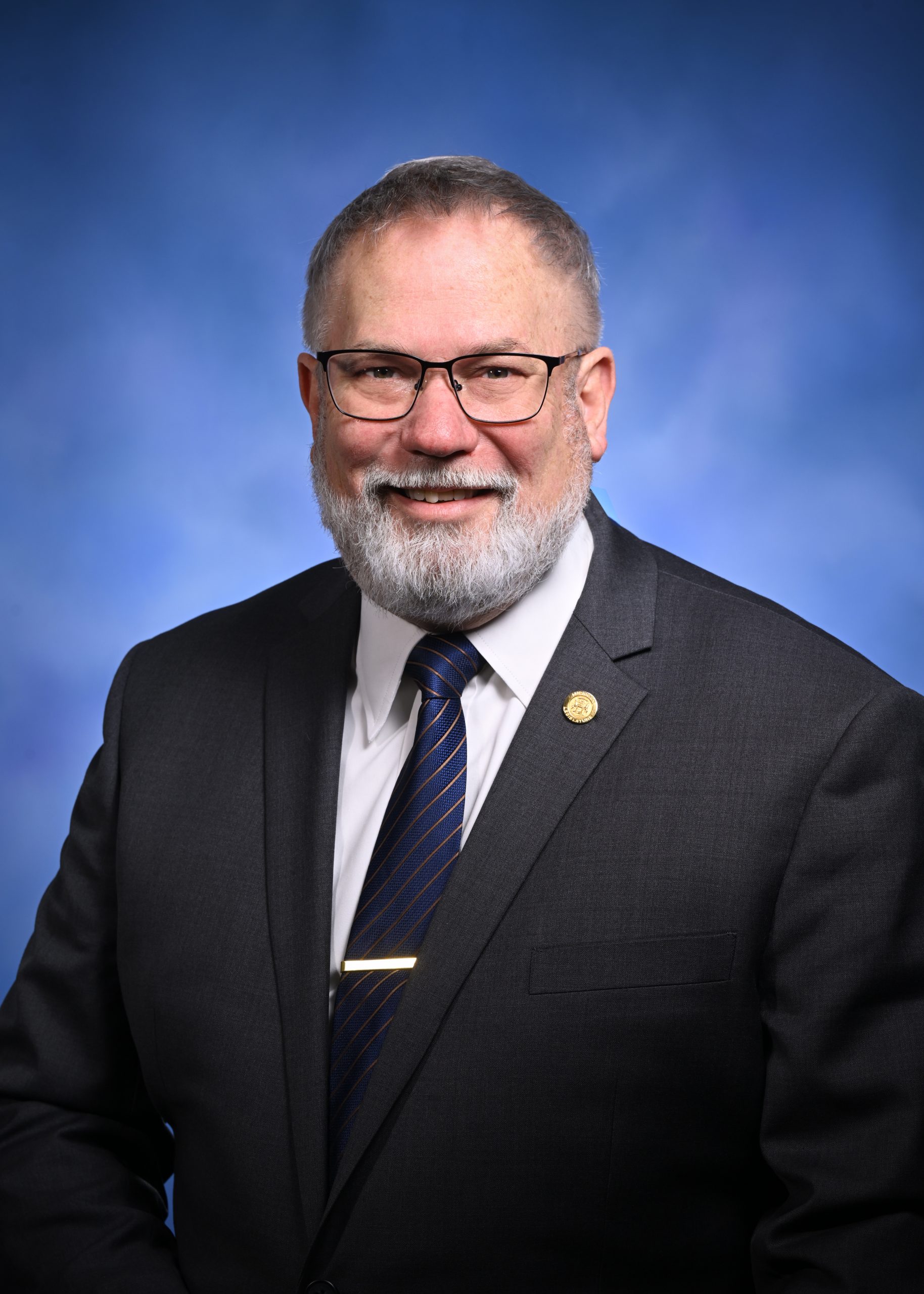
Rep. David Martin
Sponsored bills
Maddy summaryHB 4707 prohibits Michigan cities, townships, and the state from using ranked choice voting in any election. The bill amends Michigan's election law to explicitly ban this voting method, which allows voters to rank candidates in order of preference, and voids any existing local ordinances permitting it. It applies to all elections, including those for local offices, and defines "ranked choice voting" as any system where voters can select more than one candidate for a single position. The bill passed the House on August 20, 2025, with 57 votes in favor, and now awaits further action in the committee on Elections and Ethics.
Maddy summaryHB 4783 amends Michigan's Natural Resources and Environmental Protection Act to grant the Upper Peninsula Natural Resources Commission authority over fish management decisions in the Upper Peninsula. The bill transfers decision-making power from the state Department of Natural Resources to this regional commission for waters including Lake Superior, the St. Marys River, and all inland waters in the Upper Peninsula. Key provisions revise definitions and processes related to fish classification and management, specifically updating sections that govern trout streams and other water bodies. This change directly affects the commission's role in regulating fishing practices and protecting fish species within the designated Upper Peninsula waters.
Maddy summaryHB 4786 creates the Upper Peninsula Natural Resources Commission under Michigan's Natural Resources and Environmental Protection Act. The commission, appointed by the governor from lists provided by UP legislators, will make rules specifically about game and sport fish management that affect only the Upper Peninsula. Members serve two-year terms without pay but receive expense reimbursement. This bill requires three related bills (HB 4783, 4784, and 4785) to also pass before taking effect.
Maddy summaryHB 4784 gives Michigan's Upper Peninsula Natural Resources Commission (UP Commission) new authority to manage wildlife specifically in the Upper Peninsula. It authorizes the UP Commission to establish the first hunting seasons for moose and wolves in the region, while requiring all decisions to follow scientific wildlife management principles. The bill also grants the UP Commission exclusive authority over game species that primarily affect the Upper Peninsula or have minimal impact outside the region. This change directly affects the UP Commission's management decisions, hunters pursuing moose or wolves in the UP, and wildlife conservation efforts focused on the Upper Peninsula. The law mandates public hearings and scientific review before implementing hunting regulations.
Maddy summaryHB 4785 creates the Upper Peninsula natural resources commission (UP commission) by amending Michigan's Natural Resources and Environmental Protection Act to define it as a new entity. The bill also amends section 40102 to authorize the UP commission to issue orders regarding deer or elk feeding, a specific wildlife management issue. This commission will provide a regional decision-making body for natural resource matters in the Upper Peninsula, particularly concerning wildlife impacts on local ecosystems. The bill is tied to three other related bills (HB 4784, HB 4786, and HB 4783), requiring all to pass together.
Maddy summaryThis constitutional amendment (HJR K) proposes allowing either Michigan legislative house to suspend a member's salary or expense allowance by a two-thirds vote when the member acts unethically or is excessively absent from regular sessions. It amends Article IV, Sections 12 and 16 of the state constitution to establish this process, requiring the house to document the suspension reason in its journal with voting records. The change directly affects state legislators who face disciplinary action for misconduct or attendance issues. If approved, this would give legislative bodies a formal mechanism to withhold compensation for specific violations, rather than relying solely on expulsion.
Maddy summaryHB 4737 gradually reduces Michigan's corporate income tax rate over time. It sets a schedule where the rate starts at 6.0% for business activity before October 1, 2025, then steps down to 5.5% in 2025-2026, 5.25% in 2026-2027, 5.0% in 2027-2028, 4.75% in 2028-2029, 4.5% in 2029-2030, and finally 4.25% starting October 1, 2030. The bill directly affects corporations conducting business in Michigan, applying these changing rates to their taxable income base. It does not alter the tax base calculations or other provisions of the corporate income tax code.
Maddy summaryHB 4721 creates tax credits for biodiesel sales and production in Michigan, effective 2025-2030. Retail fuel dealers receive credits of $0.02-$0.07 per gallon for selling biodiesel blends (6-9%, 10-19%, or 20%+), while biodiesel producers get $0.02 per gallon. Total credits are capped at $16 million annually for retailers and $2 million for producers, with excess claims distributed proportionally. The bill directly affects Michigan fuel retailers and biodiesel producers by reducing their income tax liability based on specific blend volumes sold or produced.
Maddy summaryHB 4712 creates a new program through which the Michigan Department of Military and Veterans Affairs will reimburse eligible Michigan National Guard members for premiums paid toward Tricare Reserve Select or Tricare Dental coverage. The program allows the department to award grants to qualifying members who apply using a department-provided form, covering premiums for these specific health plans. It directly affects Guard members who are not on active duty and lack other employer or private health insurance. The bill establishes the framework for administering these reimbursements but does not specify funding amounts or application deadlines.