

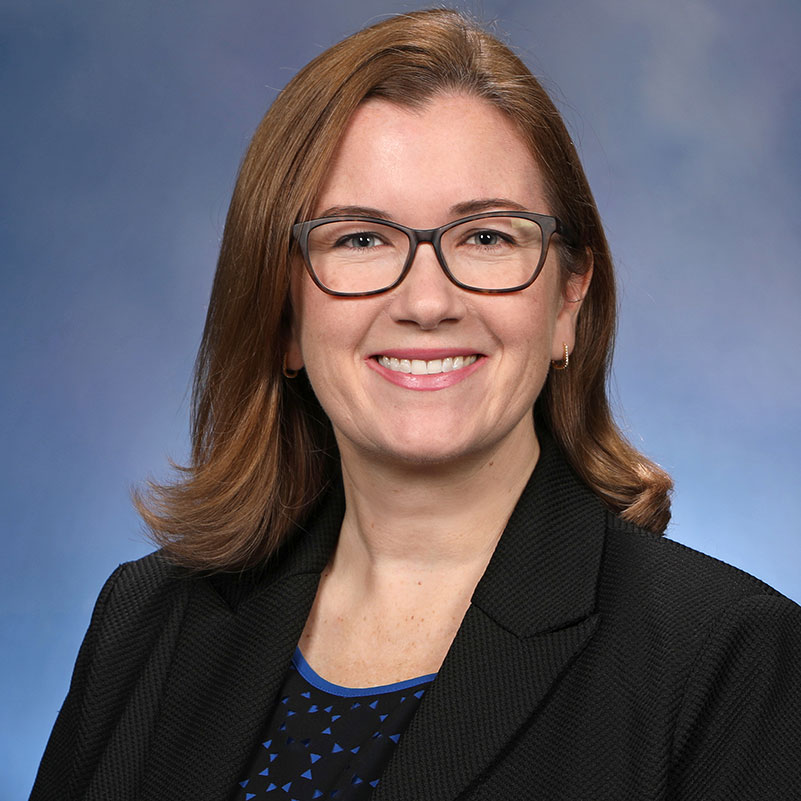
Photo of Natalie Price
D Michigan House · District 6

Rep. Natalie Price

Compare
Total votes
1,813
all sessions
Attendance
99%
23 missed
Near the chamber average
With party
96%
of cast votes
Near the chamber average
Bipartisan score
2%
crosses aisle rarely
Near the chamber average
Sponsored
1,197
bills & resolutions
Higher than 95% of chamber peers
Committees
0
assignments
1,197 bills and resolutions

Sponsored bills

Total
1,197
Primary
31
Co-sponsor
1,166
This page
1,197
matching current filters
Co-sponsor HB 4104
Signed into law · Michigan House · Co-sponsor
Health occupations: occupational therapists; licensure process for occupational therapists; modify to incorporate occupational therapy licensure compact. Amends secs. 16345, 18301 & 18305 of 1978 PA 368 (MCL 333.16345 et seq.) & adds secs. 18303a & 18303b. TIE BAR WITH: HB 4103'25

Maddy summaryHB 4104 updates Michigan's occupational therapy licensing rules to join a multi-state licensure compact. This would allow occupational therapists licensed in Michigan to practice in other participating states without obtaining separate licenses. The bill modifies existing law to align with the compact's standards and adds new sections for implementation. It directly affects occupational therapists seeking to work across state lines within the compact.

Signed into law Jul 29, 2026 1 co-sponsor
Co-sponsor HB 4101
Signed into law · Michigan House · Co-sponsor
Health occupations: physical therapists; physical therapy licensure compact; enact. Amends 1978 PA 368 (MCL 333.1101 - 333.25211) by adding sec. 16187a. TIE BAR WITH: HB 4102'25

Maddy summaryHB 4101 establishes Michigan's participation in the Physical Therapy Licensure Compact, enabling physical therapists licensed in Michigan to practice in other participating states without obtaining separate licenses. This directly affects physical therapists seeking to work across state lines, particularly those in states already part of the compact. The key mechanism is adopting a standardized licensing framework that allows reciprocal practice privileges among participating states. The bill amends Michigan's public health code to align with the compact's requirements, creating a streamlined process for interstate practice. It does not change existing licensure standards within Michigan but facilitates mobility for licensed physical therapists.

Signed into law Jul 29, 2026 1 co-sponsor
Co-sponsor HB 6213
In committee · Michigan House · Co-sponsor
Elections: other; agreement among the states to elect the President by national popular vote; enter into. Creates new act.

Maddy summaryThis bill authorizes Michigan to join the National Popular Vote Interstate Compact, an agreement among states to award all their electoral votes to the presidential candidate who wins the most votes nationwide. The legislation declares that the one-person, one-vote principle requires the candidate with the highest national total to become President and outlines how Michigan's chief election official would count votes and designate the winner once the compact is active. The agreement only takes effect when states participating in it collectively hold a majority of the Electoral College votes, ensuring the current system remains in place until that threshold is met. If the compact becomes active, Michigan's laws regarding elector appointment will follow the compact's rules rather than conflicting state statutes.

In committee Jul 14, 2026 1 co-sponsor
Co-sponsor HB 6214
In committee · Michigan House · Co-sponsor
Elections: presidential electors; presidential electors who are elected under the agreement among the states to elect the President by national popular vote; clarify. Amends secs. 42, 46 & 842 of 1954 PA 116 (MCL 168.42 et seq.). TIE BAR WITH: HB 6213'26

Maddy summaryThis bill clarifies how Michigan would appoint presidential electors if the state joins an agreement to choose the President based on the national popular vote rather than the Electoral College. It requires the state Board of State Canvassers to calculate the total national popular vote for each candidate and designate the winner accordingly, while also reporting these results to other participating states. If a tie occurs for the national popular vote, the bill specifies that Michigan would appoint electors based on which candidate received the most votes within Michigan itself. The legislation updates existing election laws to ensure these procedures are followed and includes requirements for issuing official certificates of appointment.

In committee Jul 14, 2026 1 co-sponsor
Co-sponsor HB 4833
Passed · Michigan House · Co-sponsor
Courts: district court; Oakland County district court seats; modify. Amends sec. 8123 of 1961 PA 236 (MCL 600.8123).

Maddy summaryHB 4833 modifies the number of judges for several Oakland County district courts in Michigan. It reduces the number of judges in the 48th district (Birmingham, Bloomfield Hills area) from 3 to 2, and in the 50th district (Pontiac) from 4 to 3, effective when a vacancy occurs or an incumbent does not seek re-election. The bill applies directly to residents of these specific communities by changing court staffing levels under defined conditions. These changes are administrative adjustments to court structure, not new policies affecting broader public services.

Passed Jul 2, 2026 1 co-sponsor
Co-sponsor HB 6151
In committee · Michigan House · Co-sponsor
Vehicles: automobiles; noise limitations; modify. Amends secs. 707d, 732 & 907 of 1949 PA 300 (MCL 257.707d et seq.) TIE BAR WITH: HB 6152'26

Maddy summaryHB 6151 modifies Michigan's vehicle code to adjust how noise violations are classified and penalized, directly affecting vehicle owners and dealers. The bill establishes that certain noise infractions will be treated as civil offenses with fines ranging from $500 to $1,000, while other specific violations remain misdemeanors with higher penalties. It also clarifies that dealers who knowingly install non-compliant exhaust systems are liable for fines and legal fees if a customer receives a citation. Additionally, the legislation updates record-keeping requirements for courts to ensure detailed reports on vehicle noise violations are sent to the secretary of state.

In committee Jul 1, 2026 1 co-sponsor
Primary HB 6152
In committee · Michigan House · Lead sponsor
Vehicles: automobiles; noise limitations; modify. Amends secs. 320a, 707b & 707c of 1949 PA 300 (MCL 257.320a et seq.). TIE BAR WITH: HB 6151'26

Maddy summaryThis bill proposes changes to Michigan's vehicle code regarding noise limitations for automobiles. It directly affects vehicle owners and manufacturers by modifying the rules found in sections 320a, 707b, and 707c of the state's traffic laws. The specific details of how these noise limits are altered are not included in the current text, but the bill is linked to a companion measure that likely contains the substantive policy changes.

In committee Jul 1, 2026 0 co-sponsors
Co-sponsor HB 5254
Passed · Michigan House · Co-sponsor
Consumer credit: interest rates; maximum interest rate allowed for medical debt; modify. Amends sec. 3 of 1976 PA 331 (MCL 445.903). TIE BAR WITH: HB 5255'25

Maddy summaryHouse Bill 5254 proposes to modify the maximum interest rate allowed for medical debt. It seeks to achieve this by amending Section 3 of the Michigan Consumer Protection Act. While the bill aims to impact consumers with medical debt and the entities that collect it, the provided text primarily details existing definitions of unfair trade practices within the act and does not include the specific language for the proposed interest rate modification.

Passed Jun 25, 2026 1 co-sponsor
Co-sponsor HB 5255
Passed · Michigan House · Co-sponsor
Civil procedure: foreclosure; foreclosure or garnishment of wages for medical debt; prohibit. Creates new act. TIE BAR WITH: HB 5254'25

Maddy summaryHB 5255, the "Medical Debt Protection Act," limits how medical debt can be collected in Michigan, directly affecting patients with medical debt and large healthcare providers (with $20 million+ annual revenue) or medical debt buyers. It prohibits charging interest or late fees for 90 days after a bill is due and caps annual interest at 3% on medical debt. The bill bans aggressive collection tactics like wage garnishment for patients qualifying for financial assistance under a healthcare facility's policy, and requires medical debt buyers to follow strict rules, including not using prohibited collection actions and returning debt if a patient qualifies for financial aid.

Passed Jun 25, 2026 1 co-sponsor
Primary HB 6122
In committee · Michigan House · Lead sponsor
State management: funds; report regarding federal funding and its impact on state revenue; provide for. Amends 1984 PA 431 (MCL 18.1101 - 18.1594) by adding sec. 142. TIE BAR WITH: HB 6123'26

Maddy summaryThis bill requires the state treasurer to create a monthly report tracking whether the federal government owes Michigan money due to ignored court orders and calculating any future payments Michigan must make to the federal government. The report will detail specific financial items such as federal taxes owed by state employers, debt offsets, and grant repayments, and it must be prepared in consultation with the state budget director. Additionally, the bill mandates that the state treasurer withhold federal payments if the amounts owed by the federal government exceed the amounts Michigan is required to pay. This legislation is currently tied to a companion bill, meaning it will not take effect unless both are passed by the legislature.

In committee Jun 24, 2026 0 co-sponsors
Showing 21 to 30 of 1,197 bills
Previous 1 … 2 3 4 … 120 Next