

Maddy summaryHB 4251, the "District Library Freedom to Read Act," requires Michigan district libraries to establish clear policies for selecting and removing materials from their collections. It prohibits libraries from removing books or media based on protected characteristics (like race, religion, or viewpoint) or the material's subject matter, except if a court deems it obscene. The bill mandates that libraries adopt compliant policies within 90 days, including procedures for residents to request reconsideration (with requirements like verifying they’ve read the material) and restrictions on how often the same material can be challenged. Violations can be addressed through legal action by the attorney general or residents. This directly affects public district libraries under Michigan law, excluding school or special libraries.
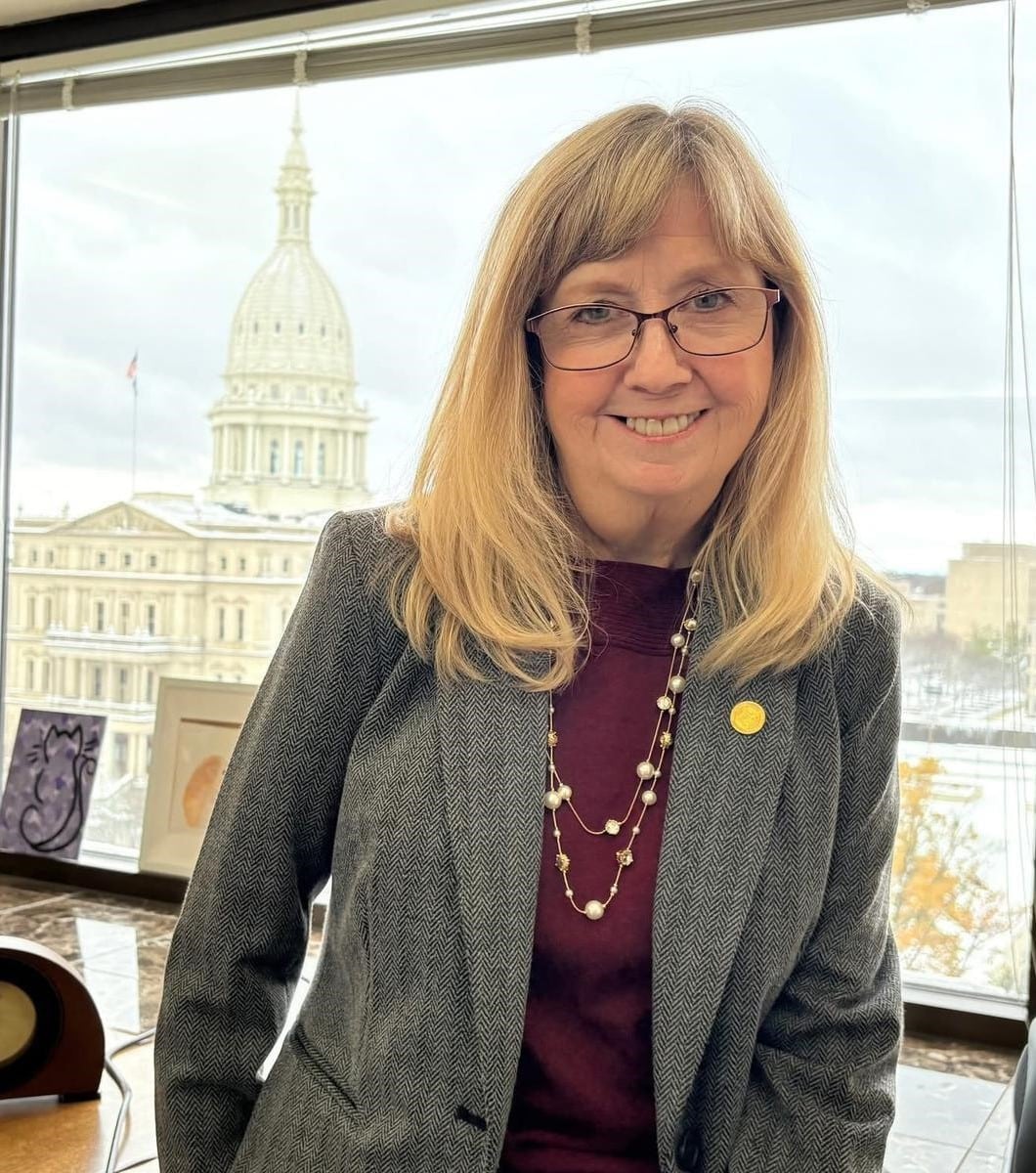
Rep. Sharon MacDonell
Sponsored bills
Maddy summaryThis resolution directs the Clerk of the House to present nine specific bills - passed by both legislative chambers in December 2024 and "enrolled" (formally prepared for the Governor) - to the Governor. It follows a court ruling (February 2025) that confirmed Michigan’s Constitution requires all passed bills to be presented to the Governor within 14 days, rejecting the House’s prior refusal to act. The resolution overrides a previous House attempt (Resolution 41) to delay this process and mandates immediate compliance with the court’s order. It affects the House Clerk, Governor, and the nine bills’ legislative timeline, ensuring they can proceed toward becoming law.
Maddy summaryThis resolution declares March 2025 as Disability Awareness Month in Michigan. It symbolically recognizes the contributions of people with disabilities and encourages Michigan residents, businesses, and institutions to improve accessibility and support disability rights. The resolution does not create new laws or funding but serves as a formal acknowledgment of ongoing efforts to promote inclusion, aligning with the state's commitment to the Americans with Disabilities Act.
Maddy summaryThis is a symbolic House resolution (not a law) introduced in Michigan. It formally supports the U.S. Supreme Court's *Obergefell v. Hodges* ruling, which established same-sex marriage as a constitutional right. The resolution reaffirms that marriage should be defined by constitutional principles like equality and due process, not by historical or religious definitions. It specifically references Michigan's state constitution (Article I, Section 25) as conflicting with the *Obergefell* decision. The resolution has no legal effect and does not change any existing laws or policies.
Maddy summaryThis resolution (HR 38) designates March 11, 2025, as "Community Volunteer Day" in Michigan to recognize local volunteers who support community well-being. It specifically acknowledges volunteers assisting families with children who have lost parents, providing guidance, stability, and financial aid. The resolution does not create new policies or funding but formally honors these volunteer efforts through a designated day of appreciation. It was introduced and adopted by the Michigan House on March 11, 2025.
Maddy summaryThis resolution symbolically designates March 9-15, 2025, as Multiple Sclerosis Awareness Week in Michigan. It recognizes the impact of multiple sclerosis on Michiganders (affecting nearly 1 million people nationwide) and encourages public awareness and support for those living with the disease. The resolution does not create new policies or allocate funds - it is a formal declaration by the Michigan House to highlight the work of the National MS Society and its local support groups.
Maddy summaryHB 4175 modifies Michigan's high school diploma requirements by adding specific course credits students must complete. It requires all students graduating after 2023 to complete a half-credit personal finance course (fulfilling part of math, arts, or language requirements), while maintaining existing requirements for 4 math credits (including algebra I, geometry, and algebra II), 3 social science credits (including U.S. history and geography), 1 health/PE credit, and 1 arts credit. The bill also mandates two credits in a language other than English (including American Sign Language) for all students by graduation, with schools encouraged to offer language courses in early grades. These changes directly affect Michigan high school students and school districts responsible for implementing diploma standards.
Maddy summaryHB 4173 is a supplemental funding bill that allocates state money specifically for testing commercial poultry facilities and backyard flocks in Michigan for H5N1 bird flu. It directly affects poultry farmers, commercial hatcheries, and state agricultural testing labs by providing resources to conduct these tests. The key mechanism is creating a new appropriation (funding line) within the state budget for this purpose, separate from regular funding. This bill focuses solely on enabling testing capacity, not on disease prevention or other policy changes.
Maddy summaryThis proposed constitutional amendment (HJR F) would remove gender-specific language from two Michigan constitutional provisions. It would repeal Article I, Section 25 - which defined marriage as "the union of one man and one woman" - and amend Article X, Section 1 to make property rights language gender-neutral. If approved, it would eliminate the constitutional ban on same-sex marriage and update outdated references to gender in property law. The amendment would require voter approval at the next general election. (Note: The bill is currently in committee referral, with no further action taken as of March 2025.)
Maddy summaryHB 4169 creates a Rare Disease Advisory Council within Michigan's Department of Health to advise on research, diagnosis, and treatment of rare diseases. The council, composed of 12-18 members including physicians, patients, caregivers, insurers, researchers, and industry representatives, must identify policy priorities to improve access to care and reduce discrimination for individuals with rare diseases (defined as affecting fewer than 200,000 people in the U.S.). Key duties include researching cost-effective treatments, sharing best practices from other states, and developing a public webpage with rare disease resources by March 2026. The bill establishes a formal advisory body but does not change existing laws or funding.