

Maddy summaryThis resolution urges the federal government to maintain funding and reinstate staff for the Low Income Home Energy Assistance Program (LIHEAP) while negotiating the "One Big Beautiful Bill Act." It directly affects Michigan residents who rely on the state's Home Heating Credit Program, which provided assistance to 248,765 Michiganders in 2022 - including low-income families, seniors, and people with disabilities - by helping cover heating costs. The resolution highlights that proposed federal budget cuts to LIHEAP and the recent firing of LIHEAP program staff threaten the program's continuation, potentially causing payment delays or termination. As a non-binding request, it asks federal leaders to prioritize LIHEAP funding to prevent disruption of this critical aid.
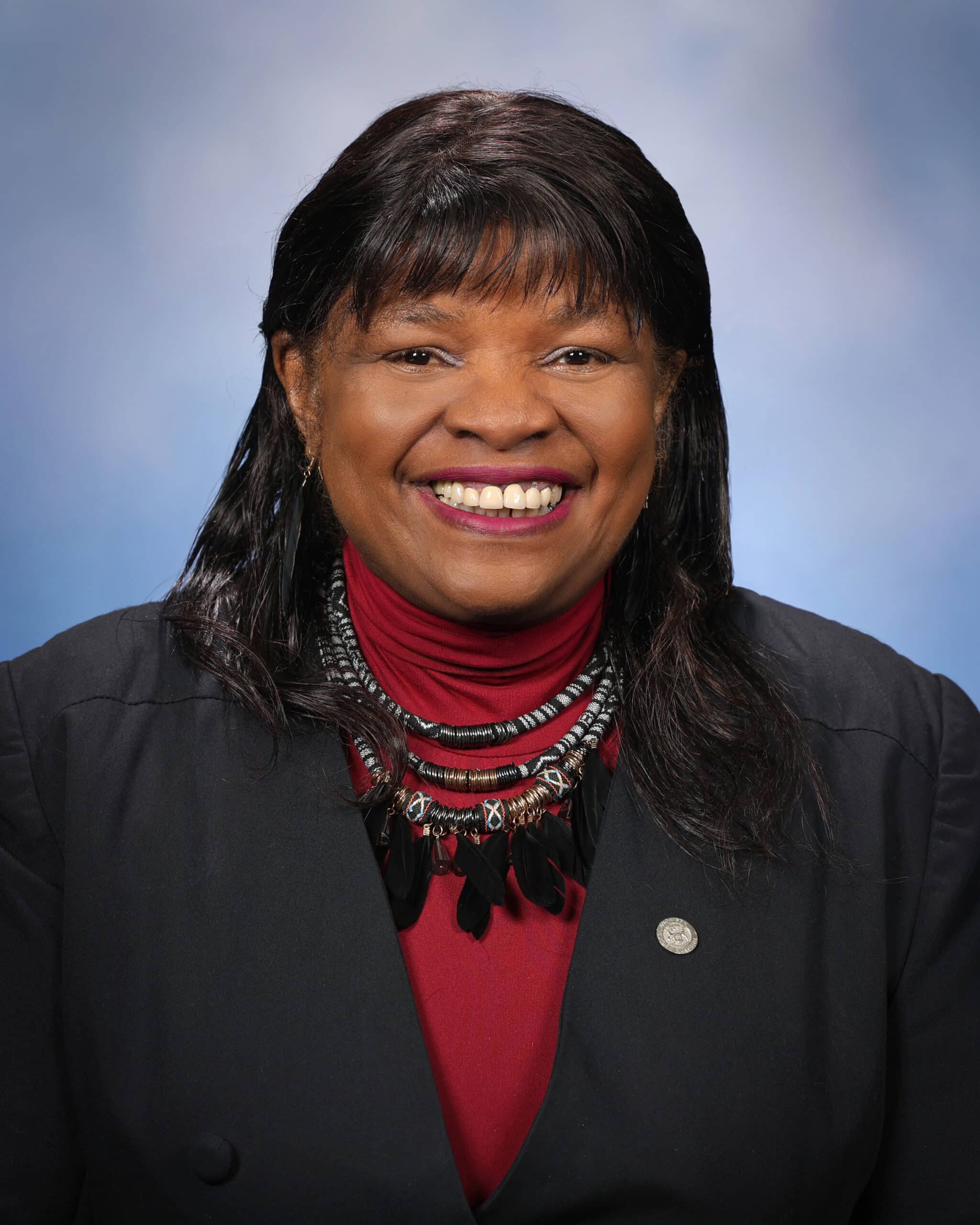
Rep. Brenda Carter
Sponsored bills
Maddy summaryThis House Resolution (HR 143) urges members of Congress to reject President Trump's proposed "One Big Beautiful Bill Act" and instead support policies that fully fund Medicaid, SNAP, and WIC. It directly affects millions of low-income Americans, including children, seniors, people with disabilities, and vulnerable communities who rely on these programs for healthcare, food assistance, and nutrition support. The resolution opposes cuts to Medicaid (which covers 1 in 4 Michiganders), SNAP (impacting 1.4 million Michiganders), and WIC, while criticizing tax breaks for wealthy households and reduced clean energy funding. It calls for expanding healthcare access, promoting clean energy, and ensuring a fair tax system as concrete policy alternatives.
Maddy summaryHB 4742 amends Michigan's environmental permit process to address projects in communities disproportionately affected by pollution (environmentally overburdened communities). It adds a new section (Subpart 2) requiring state agencies to consider community impacts when denying permits or imposing additional conditions for such projects. The bill also repeals the Environmental Permit Review Commission, which previously reviewed permit decisions. This directly affects developers seeking permits in these communities and state agencies responsible for environmental permitting under the Natural Resources and Environmental Protection Act.
Maddy summaryHB 4730 adds Krabbe disease to the list of conditions screened for in newborns in Michigan. The bill amends state law to require healthcare providers to test all newborns for Krabbe disease, a rare but treatable neurological disorder, alongside existing conditions like phenylketonuria and sickle cell anemia. This affects all newborns in Michigan and their healthcare providers, who must administer the test at birth without requiring parental consent under current rules. The change aligns Krabbe disease with other treatable conditions already included in the state's mandatory newborn screening program.
Maddy summaryHB 4739 removes age restrictions for Medicaid coverage of autism spectrum disorder (ASD) diagnosis and treatment in Michigan. It requires the state department to cover these services for all Medicaid-eligible individuals, including those aged 21 and older, within 180 days of the bill’s effective date. The bill mandates the department to seek federal approval to amend Michigan’s Medicaid plan to include these services for adults. This directly affects Medicaid recipients with ASD, ensuring continued access to diagnostic and treatment services regardless of age.
Maddy summaryHB 4741 modifies Michigan's property tax law by ending certain programs that reduced delinquent tax payments or prevented foreclosure. It adds a $175 fee for properties forfeited to county treasurers due to unpaid taxes (after 12+ months delinquent), changes interest calculations for residential properties under foreclosure avoidance agreements, and updates redemption rules. Homeowners with delinquent taxes, particularly those in residential properties covered by existing tax foreclosure avoidance agreements, will be directly affected by these changes. The bill sunsets specific programs that previously offered payment reductions, requiring property owners to pay full delinquent amounts plus fees to avoid losing their homes.
Maddy summaryHB 4712 creates a new program through which the Michigan Department of Military and Veterans Affairs will reimburse eligible Michigan National Guard members for premiums paid toward Tricare Reserve Select or Tricare Dental coverage. The program allows the department to award grants to qualifying members who apply using a department-provided form, covering premiums for these specific health plans. It directly affects Guard members who are not on active duty and lack other employer or private health insurance. The bill establishes the framework for administering these reimbursements but does not specify funding amounts or application deadlines.
Maddy summaryHB 4725 removes an exclusion that previously prevented student athletes at public universities in Michigan from being considered "public employees" under the state's collective bargaining law. The bill directly affects student athletes participating in intercollegiate athletics at public universities, granting them eligibility for collective bargaining rights under the same framework as other public employees. It amends Section 1 of the 1947 Public Employee Relations Act by deleting the specific provision (currently subsection (g)) that barred student athletes from public employee status for bargaining purposes. This change allows student athletes to negotiate terms like wages, working conditions, and benefits through recognized labor organizations, aligning them with other public employee groups covered by the law. The bill does not create new rights but removes a legal barrier to existing collective bargaining protections.
Maddy summaryThis resolution (HR 141) symbolically declares July 1, 2025, as "Invisible Wounds Day" in Michigan to raise awareness about Post-Traumatic Stress Disorder (PTSD). It aims to highlight the invisible mental health impacts of trauma - such as flashbacks, hypervigilance, and emotional numbness - experienced by both veterans and civilians, while addressing the stigma surrounding PTSD. The resolution has no legal effect or new funding; it is purely a symbolic gesture to validate those affected and encourage community support. It was introduced and adopted by the Michigan House of Representatives on July 1, 2025.
Maddy summaryHB 4689 creates a Cultural History Advisory Board within Michigan's Department of Education. The board, appointed by the superintendent of public instruction, must include 2 members from each of 8 cultural communities (Asian-American/Pacific Islander, Latino/Hispanic, Black, Middle Eastern/North African/Chaldean, Indigenous, Caribbean-American, Jewish-American, European-American), plus educators, school administrators, labor representatives, and higher education members. The board must recommend a K-12 curriculum tool kit and professional development on cultural history within two years, collaborating with cultural organizations and schools. This bill establishes the framework for developing educational resources but does not mandate specific curriculum changes.