

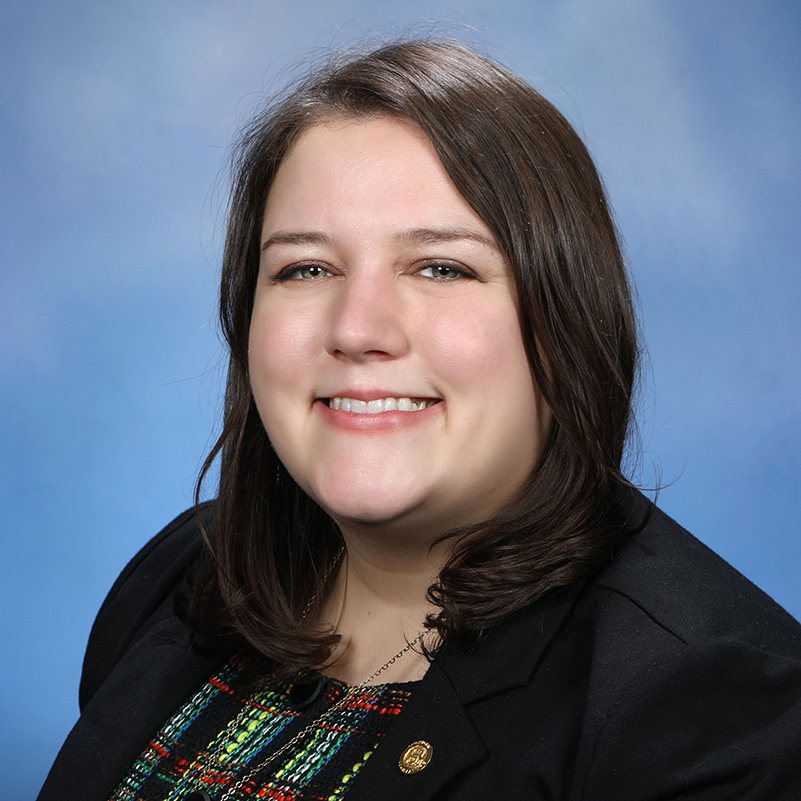
Photo of Regina Weiss
D Michigan House · District 5

Rep. Regina Weiss

Compare
Total votes
2,867
all sessions
Attendance
97%
97 missed
Lower than 87% of chamber peers
With party
94%
of cast votes
Lower than 89% of chamber peers
Bipartisan score
3%
crosses aisle rarely
Higher than 87% of chamber peers
Sponsored
1,788
bills & resolutions
Higher than 96% of chamber peers
Committees
2
assignments
1,788 bills and resolutions

Sponsored bills

Total
1,788
Primary
83
Co-sponsor
1,705
This page
1,788
matching current filters
Co-sponsor HB 5013
Passed · Michigan House · Co-sponsor
Insurance: health insurers; coverage for the dispensing of a 12-month supply of birth control; require. Amends 1956 PA 218 (MCL 500.100 - 500.8302) by adding sec. 3406z.

Maddy summaryThis bill requires health insurance plans in Michigan to cover a 12-month supply of prescription birth control at once, provided the medication is on the plan's list of covered drugs. The law mandates that insurers also cover related medical services, such as doctor visits and exams, needed to prescribe and dispense these contraceptives. While the coverage must be available regardless of when the patient first started the plan, standard cost-sharing rules like copayments and deductibles still apply, and the requirement does not extend to the final month of a plan year. The policy takes effect on December 31, 2025, affecting all health insurance policies issued or renewed in the state or covering Michigan residents.

Passed Dec 12, 2024 1 co-sponsor
Co-sponsor HB 4480
In committee · Michigan House · Co-sponsor
Environmental protection: sewage; onsite wastewater treatment systems; regulate and provide for assessments and evaluations. Amends 1978 PA 368 (MCL 333.1101 - 333.25211) by adding secs. 12815, 12817 & 12829.

Maddy summaryThis bill creates a new Technical Advisory Committee within the Michigan Department of Health and Human Services to guide regulations on onsite wastewater treatment systems. The committee will consist of 21 members representing local health departments, engineers, scientists, manufacturers, installers, and other stakeholders to advise on standards, testing, and ethical guidelines. It establishes specific requirements for registering and continuing education for evaluators and practitioners who design, construct, maintain, or manage these systems. The committee will also provide guidance on how local health departments should handle older systems that were permitted before the new statewide sewage code took effect.

In committee Dec 12, 2024 1 co-sponsor
Co-sponsor HB 4917
Passed · Michigan House · Co-sponsor
Criminal procedure: sentencing guidelines; sentencing guidelines for assault and battery on certain vehicle operators and employees; provide for. Amends sec. 16d, ch. XVII of 1927 PA 175 (MCL 777.16d).

Maddy summaryThis bill updates Michigan's sentencing guidelines to specify recommended prison terms for assaulting or obstructing certain public safety workers, including transit operators, utility employees, and law enforcement officers. It establishes specific sentencing categories based on the severity of the injury caused, ranging from minor offenses with a two-year maximum to serious assaults resulting in death with a maximum of life imprisonment. The legislation also clarifies sentencing ranges for domestic violence and assault against pregnant individuals, ensuring consistent penalties for these specific crimes. By modifying the Code of Criminal Procedure, the bill provides judges with clearer standards for determining appropriate sentences in cases involving these protected groups.

Passed Dec 12, 2024 1 co-sponsor
Co-sponsor HB 4198
In committee · Michigan House · Co-sponsor
Weapons: other; local units of government imposing certain restrictions on firearms; allow. Amends sec. 3 of 1990 PA 319 (MCL 123.1103).

Maddy summaryThis bill allows local governments in Michigan to impose specific restrictions on firearms, pneumatic guns, and related ammunition within their jurisdictions. It explicitly permits municipalities to regulate how employees carry weapons at work, set age limits for children possessing air guns, ban threatening displays of such weapons, and prohibit open carry inside government buildings. The legislation also clarifies that these local rules cannot override existing state criminal laws and must allow law enforcement officers to openly carry firearms.

In committee Dec 11, 2024 1 co-sponsor
Co-sponsor HB 4399
In committee · Michigan House · Co-sponsor
Labor: fair employment practices; certain noncompete agreements; prohibit employers from requiring employees to enter into unless certain conditions are met. Amends sec. 4a of 1984 PA 274 (MCL 445.774a).

Maddy summaryThis bill prohibits employers in Michigan from requiring employees, independent contractors, or interns to sign noncompete agreements, which are contracts that prevent workers from working for competitors after leaving their current job. The law allows noncompetes only in specific situations, such as when a business owner sells their company or when a worker is highly compensated and restricted from soliciting clients rather than competing directly. Agreements that violate these rules are declared unenforceable, and workers who face penalties for breaking them can sue for lost wages and legal fees. However, the bill does not ban agreements protecting trade secrets or those restricting client solicitation under strict conditions, such as a high salary and a one-year limit.

In committee Dec 11, 2024 1 co-sponsor
Co-sponsor HB 4405
In committee · Michigan House · Co-sponsor
Labor: fair employment practices; deductions from wages without written consent of employee; revise notice period for certain deductions related to garnishment. Amends sec. 7 of 1978 PA 390 (MCL 408.477).

Maddy summaryHB 4405 updates Michigan's wage deduction laws by clarifying when employers can take money from employee paychecks without written permission. The bill specifically allows employers to deduct overpayments caused by mathematical or clerical errors and to satisfy court-ordered debt judgments without prior consent, provided they give employees written notice at least one pay period in advance. These deductions are limited to 15% of gross wages per pay period and cannot reduce an employee's pay below the applicable minimum wage. Additionally, the law requires employers to keep clear records for each deduction and prohibits prorating these amounts across multiple employees.

In committee Dec 11, 2024 1 co-sponsor
Primary HB 4402
In committee · Michigan House · Lead sponsor
Criminal procedure: sentencing guidelines; sentencing guideline for wage and fringe benefit payment violations; enact. Amends sec. 14b, ch. XVII of 1927 PA 175 (MCL 777.14b). TIE BAR WITH: HB 4403'23

Maddy summaryThis bill proposes adding a specific sentencing guideline to Michigan's criminal code for violations related to wage and fringe benefit payments. By amending the state's sentencing guidelines, it aims to provide judges with a standardized framework for determining penalties in cases where employers fail to pay workers correctly. The legislation does not create new crimes or change existing laws but instead offers a tool for courts to apply consistent sentencing in these specific employment disputes.

In committee Dec 11, 2024 0 co-sponsors
Co-sponsor HB 4403
In committee · Michigan House · Co-sponsor
Labor: fair employment practices; penalty for wage and fringe benefit payment violations with the intent to defraud; increase. Amends sec. 15 of 1978 PA 390 (MCL 408.485).

Maddy summaryThis bill increases penalties for employers in Michigan who intentionally fail to pay owed wages and fringe benefits to employees. The law establishes a tiered punishment system where the severity of the crime and the potential prison sentence depend on the total value of the unpaid money. Smaller unpaid amounts result in misdemeanor charges with shorter jail terms, while larger sums can lead to felony convictions with prison sentences of up to 20 years. Additionally, the bill allows fines to be up to three times the value of the unpaid wages, and repeat offenders face harsher penalties than first-time violators.

In committee Dec 11, 2024 1 co-sponsor
Co-sponsor HB 4404
In committee · Michigan House · Co-sponsor
Labor: hours and wages; employer violations regarding the payment of wages and fringe benefits; increase sanctions for. Amends sec. 18 of 1978 PA 390 (MCL 408.488).

Maddy summaryThis bill increases the financial penalties that employers in Michigan face for failing to pay owed wages or fringe benefits. Under the new rules, if an employer is found guilty of such violations, they must pay the employee the full amount owed plus a penalty equal to 100% of that amount for every year the payment is delayed. Additionally, the bill allows the state to award up to three times the owed amount as extra damages if the violation is considered flagrant or repeated, and it raises the maximum fine for breaking the law from $1,000 to $10,000. These changes apply to any employer who violates existing state laws regarding wage payment, record-keeping, or dispute resolution.

In committee Dec 11, 2024 1 co-sponsor
Co-sponsor HB 4406
In committee · Michigan House · Co-sponsor
Labor: fair employment practices; wage information of similarly situated employees; require an employer to disclose to an employee under certain circumstances. Amends sec. 13a of 1978 PA 390 (MCL 408.483a).

Maddy summaryThis bill requires employers in Michigan to provide wage information to employees who request it, specifically data on pay for similarly situated workers within the same job classification or with comparable duties. Under the new rules, employers must respond to such requests within 30 days and may share details like salary, bonuses, and overtime pay while redacting specific employee names but including their sex and seniority. The legislation also prohibits employers from forcing employees to sign nondisclosure agreements about their wages or from punishing workers who share their compensation information. These changes aim to increase transparency in the workplace by ensuring employees have access to comparative pay data and protecting them from retaliation when discussing their earnings.

In committee Dec 11, 2024 1 co-sponsor
Showing 691 to 700 of 1,788 bills
Previous 1 … 69 70 71 … 179 Next