

Maddy summaryThis bill creates a new Office of Tribal Legislative Liaison within Michigan's Legislative Council to strengthen government-to-government relationships between the state legislature and federally recognized tribes. The office will be led by a liaison appointed by the council from a list provided by the United Tribes of Michigan, who will be supported by at least two policy advisors. Key duties include visiting each tribe annually, advising lawmakers on how proposed legislation impacts tribal communities, and providing mandatory training for legislators on tribal history and consultation processes. Additionally, the office must submit an annual public report detailing tribal concerns raised during the legislative process to the governor and legislative leaders.
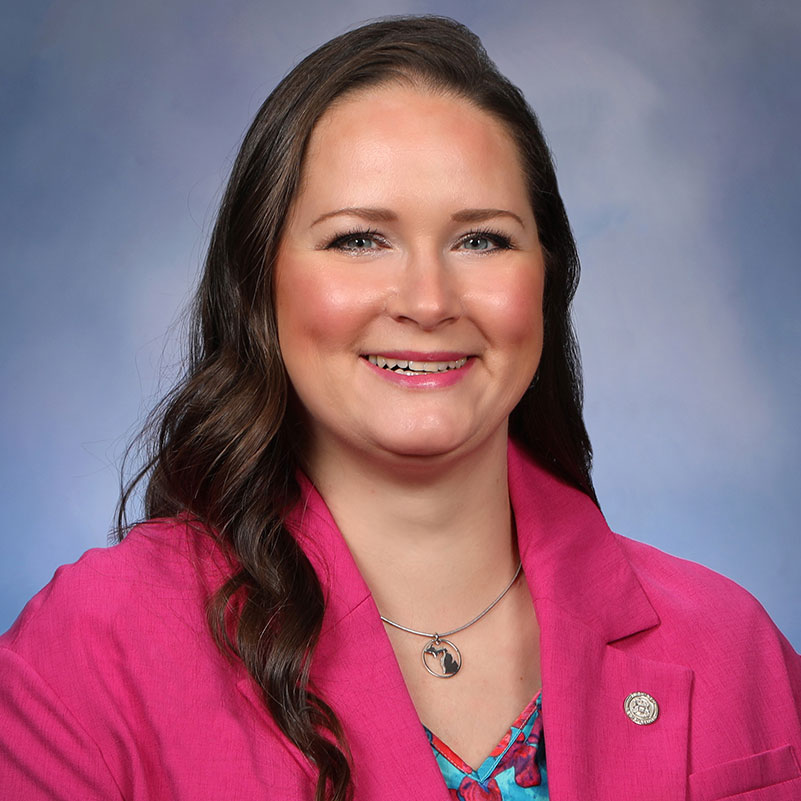
Rep. Carrie Rheingans
Sponsored bills
Maddy summaryThis bill amends Michigan law to establish a process for disposing of weapons seized by law enforcement agencies. It requires the State Police director to determine if a seized firearm was reported lost or stolen before taking action, providing a 30-day window for the original owner to claim it if they are legally authorized to possess it. If the weapon is not claimed, the director may sell it at a public auction to eligible buyers, destroy it, or use another lawful disposal method. The legislation also grants the department of state police immunity from civil lawsuits regarding how they dispose of these seized items.
Maddy summaryThis bill modifies Michigan election laws to allow county clerks to use statistical random sampling to verify the signatures on nominating petitions rather than checking every single one. It also clarifies the process for investigating complaints about fraudulent signatures and permits clerks to disqualify petitions that contain obviously invalid entries. Under the proposed changes, clerks could use digitized voter registration records to compare signatures and must make investigation reports public before making final decisions on a petition's validity. The legislation would apply to candidates running for office who rely on nominating petitions to get on the ballot.
Maddy summaryThis bill removes two specific sections of Michigan's social welfare law that previously required workforce engagement for participants in the Healthy Michigan plan. By repealing these sections, the legislation eliminates the legal mandate that individuals receiving medical assistance must engage in work-related activities as a condition of their coverage. The change directly affects the administration of the state's health program by altering the rules that govern eligibility requirements for enrolled participants.
Maddy summaryThis bill prohibits health insurance companies in Michigan from discriminating against licensed healthcare providers who are acting within the scope of their professional licenses. While insurers must not unfairly exclude these providers from their policies, the law does not force them to contract with every willing provider or to pay the same reimbursement rates to all. The legislation defines discrimination based on existing federal standards and clarifies that "health professional" includes anyone authorized to practice under the state's public health code.
Maddy summaryThis bill establishes a program to issue driver's licenses and state identification cards to individuals who are on parole. It directly affects parolees by allowing them to obtain these documents, which are necessary for daily activities like driving or proving identity. The legislation amends the Michigan Vehicle Code to create the legal framework for this issuance. Although the bill passed both houses of the legislature, it was ultimately vetoed by the Governor.
Maddy summaryThis bill updates Michigan's sentencing guidelines to specify the prison terms for sexual extortion and aggravated sexual extortion. It directly affects individuals charged with these crimes by establishing a tiered system where penalties increase based on whether it is a first, second, or subsequent offense, and by adding higher maximum sentences for cases involving specific aggravating factors. The legislation also adjusts sentencing ranges for other related felonies, such as impersonating public officials and various types of fraud, to align with current legal standards. By amending the Code of Criminal Procedure, the bill provides judges with clearer instructions on how long offenders must serve for these specific violations.
Maddy summaryThis law requires health professionals in Michigan to offer mental health screenings to new mothers during postpartum visits or well-child checkups for their infants. Starting in January 2026, doctors and nurses in pediatric or obstetric settings must provide these screenings, while other licensed health workers may offer them until the child turns one year old. The state is authorized to create a screening tool, but providers can also use existing evidence-based methods to assess maternal mental health risks. If a professional identifies potential mental health needs, they can provide information on symptoms, treatment options, and referrals to support services. The law defines "health professional" to include anyone licensed to practice medicine, nursing, or other regulated health professions in the state.
Maddy summaryThis bill creates two new entities within the Michigan state government: the Bureau of Community Action and Economic Opportunity and the Commission on Community Action and Economic Opportunity. The Bureau is tasked with coordinating state efforts to reduce poverty, providing technical assistance to designated community action agencies, and administering specific programs like weatherization assistance. The Commission serves as an advisory body that includes elected officials, private sector members, and low-income individuals to help develop policies and programs aimed at fostering self-sufficiency. Together, these organizations will work to identify poverty-related issues, evaluate existing state programs, and recommend changes to improve economic and social opportunities for low-income residents.
Maddy summaryThis law requires hospitals in Michigan to give parents or guardians a specific guide on how to enroll their newborns in health insurance if the baby is not already covered by a plan. The state's insurance and health departments will create this informational document to help families navigate the enrollment process. This rule applies only to live children born in hospitals and does not change the underlying insurance laws or create new penalties for hospitals.