

Maddy summaryHB 5276 extends eligibility for Michigan's Vietnam veteran era bonus to veterans who received the National Defense Service Medal between September 1, 1973, and May 7, 1975. It adds Section 6a to the existing law, creating a new eligibility path for veterans meeting the service period requirements and medal award criteria. The bill also extends the application deadline for these veterans to May 7, 2028, instead of the original 1980 cutoff. This change directly affects Michigan veterans who served during the Vietnam era and were awarded the specified medal during the extended timeframe.
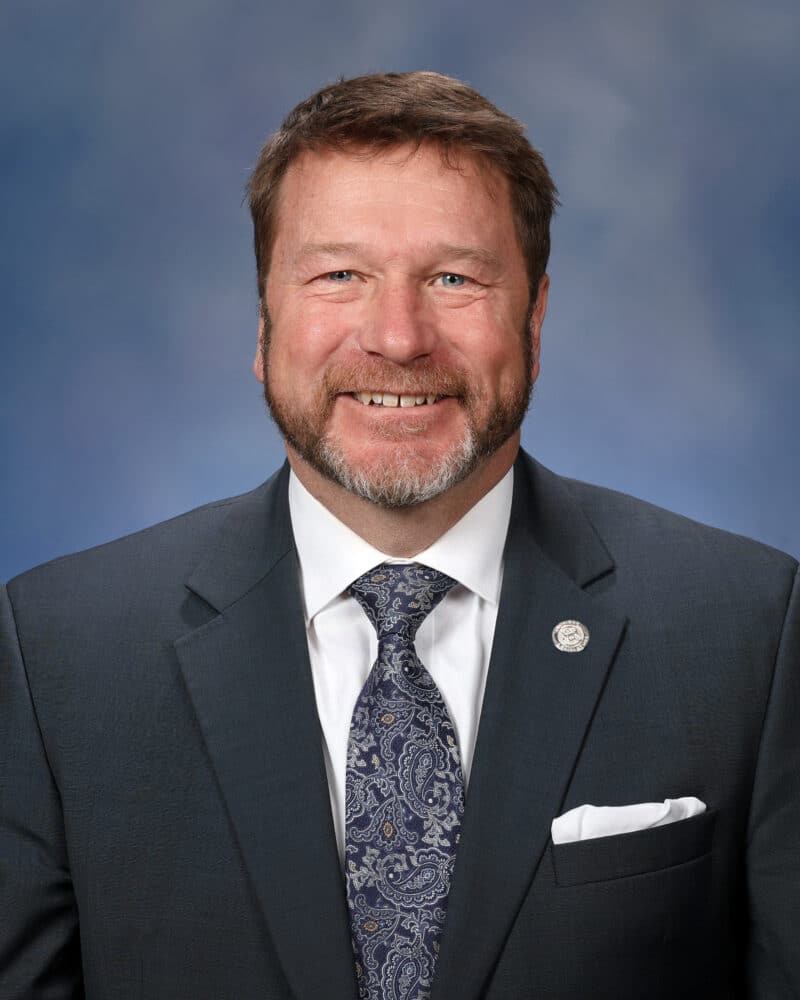
Rep. Matt Longjohn
Sponsored bills
Maddy summaryHB 5272 proposes to create a new property tax credit for disabled veterans and surviving spouses (widows/widowers) of disabled veterans who rent or lease a home in Michigan. It amends Michigan’s income tax law to add this credit and specifically exclude it from the state’s income tax cap. This would directly benefit qualifying renters who are disabled veterans or surviving spouses, providing them with a tax reduction they currently cannot access under existing rules. The bill does not change other tax credits or the overall tax structure.
Maddy summaryThis resolution urges the federal government not to extend two Department of Energy emergency orders (202-25-3 and 202-25-7) that are preventing the planned closure of Michigan's J.H. Campbell Power Plant. The orders, issued to address an alleged energy emergency, conflict with MISO's approval for the plant's suspension by 2028 and have already cost Consumers Energy ratepayers $29 million in 38 days. The resolution highlights that continuing operations imposes financial burdens, worsens air/water pollution (releasing millions of pounds of pollutants annually), and causes estimated $389-879 million in annual health impacts. It directly affects Michigan ratepayers, public health, and environmental quality in the plant's local area.
Maddy summaryHB 5266 creates Michigan's Office of Veteran Homelessness within the Department of Military and Veterans Affairs to coordinate support for homeless veterans. The office will identify, align, and connect veterans to existing state, federal, and local resources and programs addressing homelessness, including mental health, substance use, and housing services. It establishes a $1 million Veteran Homelessness Fund for the office's operations and requires annual reports detailing the scope of veteran homelessness, resource gaps, and recommendations for improvement. The bill directly affects homeless veterans in Michigan by streamlining access to services and improving coordination across government programs.
Maddy summaryThis resolution declares November 12-18, 2025, as "Community Foundation Week" in Michigan. It formally recognizes the work of Michigan’s 60+ community foundations, which support local communities through partnerships, crisis response, and addressing issues like poverty and disaster recovery. The resolution does not create new laws or funding but serves as a ceremonial acknowledgment of these organizations' role in strengthening communities across urban, suburban, and rural areas. It was introduced by multiple state representatives and adopted by the House on November 12, 2025.
Maddy summaryHCR 3 is a Michigan legislative resolution urging Congress to amend two federal laws (38 U.S.C. § 5304 and 10 U.S.C. § 12316) that currently prevent National Guard and reserve members from receiving both active duty pay and VA disability compensation simultaneously. Under current law, veterans must choose between these two payments, forcing them to waive disability benefits to maintain reserve pay or vice versa. If enacted, the amendment would allow service members to receive both payments concurrently, supporting veterans with service-connected disabilities who serve part-time in the reserves or National Guard. This resolution is a recommendation to Congress, not a law, and does not change existing policy.
Maddy summaryHR 216 is a procedural resolution urging Congress to support a National Infrastructure Bank as described in H.R. 5356. It does not create new funding but proposes a public bank capitalized through existing Treasury debt to finance infrastructure projects like road repairs, school upgrades, lead pipe replacement, and affordable housing. The resolution highlights Michigan's infrastructure challenges - such as 33% of roads in poor condition and 11% of bridges deemed structurally deficient - and cites widespread support from state legislatures and organizations. As a non-binding resolution, it formally requests congressional action but does not enact policy changes itself.
Maddy summaryThis resolution (HR 212) requests that the U.S. Congress adopt Section 143 from H.R. 3838 (the 2026 National Defense Authorization Act). Section 143 would require the Air Force to maintain at least 162 A-10 aircraft until 2029 and mandate reports to Congress about transition plans before retiring the fleet. It specifically aims to prevent an operational gap at Michigan's Selfridge Air National Guard Base, where A-10s were scheduled for retirement in 2026 but replacement F-15EX fighters won't arrive until 2028. The resolution does not change policy itself but urges Congress to incorporate these protections into law.
Maddy summaryThis resolution declares November 10-16, 2025, as Michigan Historical Music Week to honor the state's musical heritage. It directly affects Michiganders, cultural institutions, schools, and community organizations by encouraging them to host events celebrating Michigan's contributions to music genres like Motown, rock, techno, and hip-hop. The resolution highlights Michigan's role in producing influential artists (e.g., Motown founders, The White Stripes, Eminem) and institutions (e.g., Motown Museum, Rock Hall), urging educational and cultural groups to observe the week with programs. It does not create new laws or funding but serves as a symbolic recognition of the state's cultural impact.
Maddy summaryThis is a symbolic resolution designating November 2025 as "Michigan Assisted Living Month." It recognizes assisted living communities for providing care to seniors, supporting families, and contributing to Michigan's economy (with 4,300+ facilities and a $2.5 billion industry). The resolution has no policy changes, funding, or direct impact on residents or providers - it serves only as a formal acknowledgment. Introduced and adopted by the House on November 6, 2025.