

Maddy summaryThis bill creates a new Transformational Projects Authority within the state Department of Transportation to oversee and fund major transportation initiatives. The authority will be led by a five-member board appointed by the governor, with specific requirements for expertise in public transportation and balanced representation from different legislative leaders. It grants the power to award financial assistance, such as grants and loans, to public transportation providers and local governments for projects that meet specific eligibility criteria based on regional population sizes. The legislation also establishes the rules for how the authority operates independently of the department director while remaining under the director's overall budget and procurement supervision.
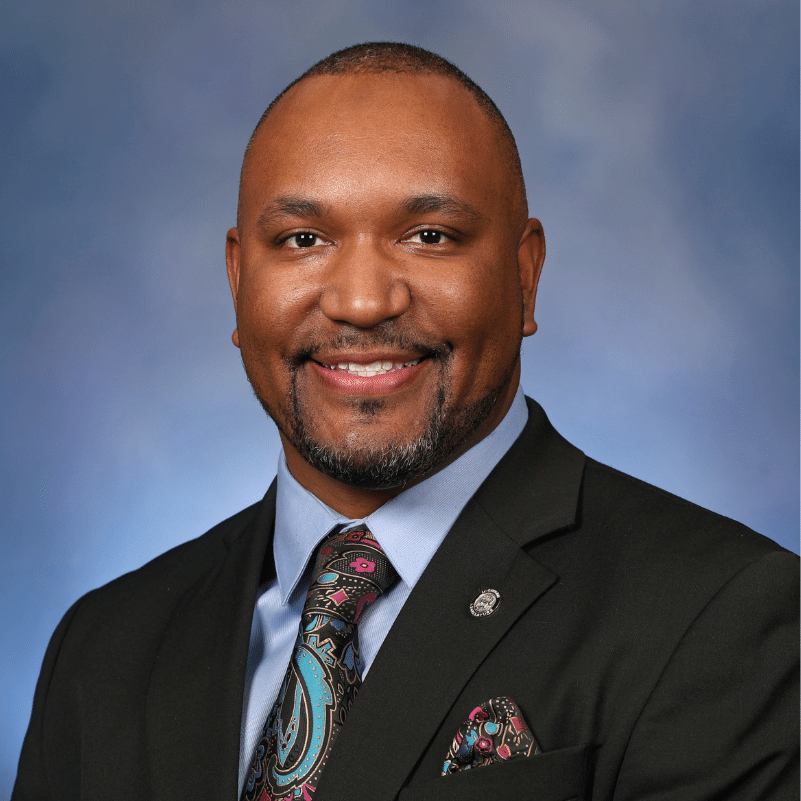
Rep. Jimmie Wilson
Sponsored bills
Maddy summaryThis bill creates a new Michigan Mobility Trust Fund within the state treasury to support transportation projects. It allows the state treasurer to accept money from various sources, including existing tax revenues, and directs that all interest earned on these investments be added to the fund. Money in the fund will not be lost at the end of each fiscal year but will remain available for future use. The bill designates the Transformational Projects Authority as the administrator responsible for auditing and spending the fund, but only after a specific appropriation is made. This legislation does not take effect unless several other related bills are also passed by the legislature.
Maddy summaryThis bill modifies how Michigan distributes revenue collected from the corporate income tax, establishing a specific allocation plan for the years 2025 through 2035. Under the new rules, funds are prioritized to support the general fund, housing initiatives, local revitalization projects, transportation improvements, and economic development programs before any remaining money goes back to the general fund. The legislation also repeals an older section of the tax act and includes a condition that it will only become effective if several related bills are passed into law.
Maddy summaryThis bill proposes changes to Michigan's Public Health Code to update the licensure requirements for respiratory therapists. It directly affects individuals seeking to become licensed respiratory therapists and the state agencies responsible for overseeing their certification. The legislation modifies existing sections of the law and adds new provisions to clarify or adjust how these professionals are regulated. By altering specific statutes within the public health code, the bill aims to formalize the standards for practicing respiratory therapy in the state.
Maddy summaryThis bill updates the legal definition of a veteran in Michigan to explicitly include commissioned officers from the Public Health Service Commissioned Corps. Currently, the state's definition covers those who served in the U.S. Armed Forces, but this change ensures that public health service officers are recognized under the same veteran status laws. The amendment aligns Michigan's statutes with federal criteria, allowing these officers to access benefits and protections previously reserved for military service members. This change directly affects public health service officers and the state agencies responsible for administering veteran benefits.
Maddy summaryThis bill adds a new legal definition for "vulnerable transportation device" to the Michigan Vehicle Code. It classifies human-powered vehicles, electric bikes, electric skateboards, and electric personal assistive mobility devices as vulnerable transportation devices. The law is designed to work in conjunction with related bills that establish traffic rules for these vehicles. If the other linked bills are not passed, this specific definition will not take effect.
Maddy summaryThis bill amends Michigan's criminal code to increase penalties for moving violations that result in physical injury or death to vulnerable roadway users, such as pedestrians and cyclists. It specifically raises the severity of charges and potential prison sentences for accidents occurring in work zones or school bus areas, as well as for incidents involving operators of farm equipment. The legislation requires the simultaneous passage of three companion bills to take effect, ensuring a coordinated approach to strengthening accountability for traffic offenses involving vulnerable road users.
Maddy summaryThis bill requires health insurance companies in Michigan to cover telemedicine services at the same level as in-person visits, ensuring patients do not face higher costs or reduced benefits for remote care. Under the new rules, insurers cannot mandate face-to-face contact for services that are clinically appropriate to deliver via secure audio or video technology, provided the healthcare professional is licensed in the patient's state. The law applies to all health insurance policies delivered or renewed in Michigan and defines telemedicine as remote communication using interactive audio, video, or store-and-forward messaging systems. While insurers retain the right to set standard copayments and deductibles, they must allow coverage for telemedicine without requiring physical examinations unless specifically needed for clinical safety.
Maddy summaryThis bill requires health insurance companies in Michigan to reimburse telehealth visits at the same rate as in-person office visits. It mandates that insurers cannot deny coverage for remote care if the service is appropriate and provided by a licensed professional in the patient's state. The law defines telemedicine as remote communication using secure audio or video technology or online messaging. While patients still pay the same copays and deductibles as they would for a physical appointment, the insurance coverage itself must be equal to that of face-to-face care.
Maddy summaryThis bill creates a new program to enforce federal standards for asbestos emissions during building renovations and demolitions in Michigan. It requires owners or operators to pay a $100 notification fee and a $10 modification fee for each change to their project plans, with public entities allowed to pass these costs to contractors under certain conditions. The state will use the collected fees to fund mandatory inspections, starting with 15% of projects in 2023 and 2024, and gradually increasing to 25% of projects by 2027. All revenue generated from these fees will be deposited into a dedicated state fund used exclusively for asbestos-related inspection activities.