

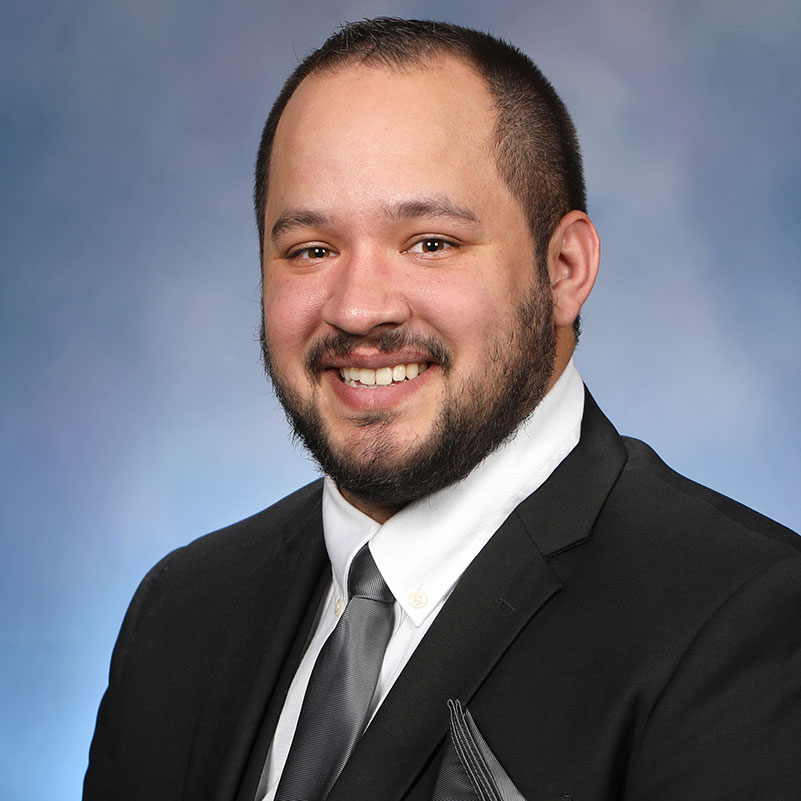
Photo of Dylan Wegela
D Michigan House · District 26 On the 2026 ballot

Rep. Dylan Wegela

Compare
Total votes
1,831
all sessions
Attendance
100%
5 missed
Higher than 83% of chamber peers
With party
81%
of cast votes
Lower than 99% of chamber peers
Bipartisan score
9%
crosses aisle rarely
Higher than 97% of chamber peers
Sponsored
755
bills & resolutions
Near the chamber average
Committees
3
assignments
755 bills and resolutions

Sponsored bills

Total
755
Primary
42
Co-sponsor
713
This page
755
matching current filters
Co-sponsor HB 5005
In committee · Michigan House · Co-sponsor
Employment security: claimants; employee who involuntarily leaves employment; strike provision regarding absences without notice. Amends sec. 29 of 1936 (Ex Sess) PA 1 (MCL 421.29).

Maddy summaryHB 5005 amends Michigan's unemployment benefits law to clarify when workers who leave jobs without notice may still qualify for benefits. It adds a new exception (subsection (iv)) allowing domestic violence victims to claim benefits without disqualification, provided they meet requirements under Section 29a. The bill also reinforces that workers absent for 3+ consecutive days without contacting their employer are presumed to have left voluntarily - unless they qualify for one of the specified exceptions. This change directly affects workers who leave employment due to domestic violence or other qualifying circumstances, ensuring they can access benefits without penalizing their former employers financially.

In committee Sep 24, 2025 1 co-sponsor
Co-sponsor HB 5007
In committee · Michigan House · Co-sponsor
Employment security: administration; determination of whether services performed by an individual are employment; modify. Amends sec. 42 of of 1936 (Ex Sess) PA 1 (MCL 421.42).

Maddy summaryHB 5007 amends Michigan's Employment Security Act to update how "employment" is defined for unemployment benefits eligibility. It changes the standard for classifying workers as employees (requiring benefits coverage) versus independent contractors, effective January 1, 2026. Under the new rule, most workers must be classified as employees unless they meet all three strict criteria: no employer control, services outside the employer's usual business, and the worker operating as an independent business. This directly affects employers and workers in Michigan who currently classify individuals as independent contractors, particularly in gig economy and service roles. The bill maintains current rules (using the IRS 20-factor test) until 2026, with specific exceptions for certain visa holders and federally certified employers.

In committee Sep 24, 2025 1 co-sponsor
Co-sponsor HB 5003
In committee · Michigan House · Co-sponsor
Employment security: other; eligibility for restitution waivers; increase income and asset thresholds. Amends sec. 62 of 1936 (Ex Sess) PA 1 (MCL 421.62).

Maddy summaryHB 5003 amends Michigan's unemployment benefits law to make it easier for low-income recipients to avoid repaying wrongly paid benefits. It increases the income threshold for hardship waivers from 150% to 200% of the federal poverty guidelines, meaning more individuals with modest household incomes qualify for relief. The bill also maintains existing waiver conditions for cases involving employer errors or agency clerical mistakes, but explicitly excludes intentional fraud. This change directly affects Michigan unemployment benefit recipients who overpaid due to administrative errors or low income, reducing their financial burden.

In committee Sep 24, 2025 1 co-sponsor
Co-sponsor HB 5002
In committee · Michigan House · Co-sponsor
Employment security: administration; plain language; require the unemployment agency to use in communications and determinations. Amends sec. 2 & 32b of 1936 (Ex Sess) PA 1 (MCL 421.2 & 421.32b) & adds sec. 32e.

Maddy summaryHB 5002 requires Michigan's unemployment agency to use simple, clear language in all communications with claimants and employers about benefits, taxes, and agency decisions. It mandates that explanations of denials, modifications, or benefit changes include specific facts about the case and the legal basis for the decision, all at a fourth-grade reading level. The bill also requires the agency to provide clear summaries of appeal rights and consolidate related decisions into single notifications. This directly affects individuals filing for unemployment and businesses managing unemployment tax accounts. The law aims to make the process more understandable without changing benefit eligibility rules.

In committee Sep 24, 2025 1 co-sponsor
Co-sponsor HB 4974
In committee · Michigan House · Co-sponsor
Public utilities: consumer services; eligibility for utility power outage credits; provide for. Amends 1939 PA 3 (MCL 460.1 - 460.11) by adding sec. 9f.

Maddy summaryHB 4974 requires electric utilities in Michigan to reimburse certain individuals and local governments for costs incurred during power outages. It directly affects renters (whose landlords pay utilities) and local governments, providing $50 for outages lasting 4-24 hours (or actual food/lodging costs, whichever is higher) and $200 for outages over 24 hours. Local governments can also claim reimbursement for emergency services, warming/cooling centers, backup power, or other outage-related costs. Utilities must pay approved amounts within 30 days after the Michigan Public Service Commission reviews cost claims submitted within 90 days of the outage. This is an additional remedy beyond existing legal options.

In committee Sep 18, 2025 1 co-sponsor
Co-sponsor HB 4973
In committee · Michigan House · Co-sponsor
Public utilities: consumer services; eligibility for utility power outage credits; provide for. Amends 1939 PA 3 (MCL 460.1 - 460.11) by adding sec. 9g. TIE BAR WITH: HB 4974'25

Maddy summaryHB 4973 requires electric utilities in Michigan to automatically provide bill credits to customers experiencing power outages during a billing cycle. Residential customers receive credits ranging from $5 per hour for short outages up to $25 per hour for outages lasting 72+ hours, while nonresidential credits use a formula based on the customer's average hourly energy use. Credits apply to the next bill and carry forward if they exceed the current bill amount. The credits adjust every five years using the Consumer Price Index to account for inflation, as specified in the bill's Section 9g.

In committee Sep 18, 2025 1 co-sponsor
Co-sponsor HB 4978
In committee · Michigan House · Co-sponsor
Public utilities: electric utilities; distribution grid plans created by electric utilities; require. Amends sec. 6a of 1939 PA 3 (MCL 460.6a).

Maddy summaryHB 4978 amends Michigan's Public Utilities Act to change the process for utilities seeking rate increases. It requires electric utilities serving over 1 million customers to coordinate with the Public Service Commission (PSC) before filing rate cases to avoid overlapping filings, and the PSC may order a 21-day spacing between such filings. Gas utilities serving fewer than 1 million customers can now request partial, immediate rate relief, with the PSC required to decide within 180 days. If the PSC doesn't issue a final order within 180 days for a rate case, the utility may implement the proposed rate increase but must refund overpayments if the final order is lower.

In committee Sep 18, 2025 1 co-sponsor
Co-sponsor HB 4977
In committee · Michigan House · Co-sponsor
Public utilities: consumer services; disclosure on electric utility bills of the number of power outages that occurred within that billing cycle; require. Amends 1939 PA 3 (MCL 460.1 - 460.11) by adding sec. 9e.

Maddy summaryHB 4977 requires Michigan electric utilities to include standardized outage information on customer bills, directly affecting residential and business electricity users. The bill mandates disclosure of three specific metrics per billing cycle: the number of service interruptions lasting over 5 minutes, total interruption duration, and the number of momentary interruptions (under 5 minutes). Utilities must also annually report outage causes affecting over 1,000 customers, tree trimming efforts, grid reliability projects, and worst-performing circuits to the public service commission. Violations can result in fines up to $1,000 per incident, with customer reports or meter data used as evidence.

In committee Sep 18, 2025 1 co-sponsor
Co-sponsor HB 4976
In committee · Michigan House · Co-sponsor
Public utilities: consumer services; prohibition for an electric utility to reclaim revenue they were required to pay in service outage credits; provide for. Amends sec. 6a of 1939 PA 3 (MCL 460.6a).

Maddy summaryHB 4976 prohibits electric utilities in Michigan from seeking to recover revenue they were required to pay as service outage credits to customers. This directly affects electric utilities serving Michigan residents and businesses, as it prevents them from later reclaiming refunds paid for power outages. The key provision states that once an electric utility issues outage credits (refunds for service interruptions), it cannot attempt to get that money back through future rate adjustments. This ensures customers who received outage credits retain the full benefit without utilities offsetting those payments against future bills.

In committee Sep 18, 2025 1 co-sponsor
Co-sponsor HB 4975
In committee · Michigan House · Co-sponsor
Public utilities: consumer services; eligibility for utility power outage credits; provide for. Amends 1939 PA 3 (MCL 460.1 - 460.11) by adding sec. 9e.

Maddy summaryHB 4975 requires Michigan electric utilities to automatically provide residential customers with $100 credits on their bills if they experienced 4 or more power outages lasting over an hour in the past year, or $200 credits for more than 4 outages. The bill mandates these credits be applied without customer action, directly benefiting households with frequent service disruptions. Credits will adjust every five years based on inflation using the Detroit-area Consumer Price Index, with changes announced by June 1 each adjustment year. This policy change aims to compensate for unreliable service through automatic billing adjustments under Michigan's utility regulations.

In committee Sep 18, 2025 1 co-sponsor
Showing 201 to 210 of 755 bills
Previous 1 … 20 21 22 … 76 Next