

Maddy summaryThis bill allows Michigan taxpayers to claim a state income tax credit of 50% for donating feminine hygiene products to public schools. The credit is capped at $100 for individual filers and $200 for joint returns, with higher limits for estates and trusts, and applies to donations made starting in 2025. To qualify, donors must receive a written acknowledgment from the school detailing the type and quantity of items donated, along with their value. The legislation defines eligible products as items such as tampons, panty liners, and menstrual cups, and requires that the donation be deductible under federal tax law. If the calculated credit exceeds the taxpayer's liability, the excess amount will be refunded.
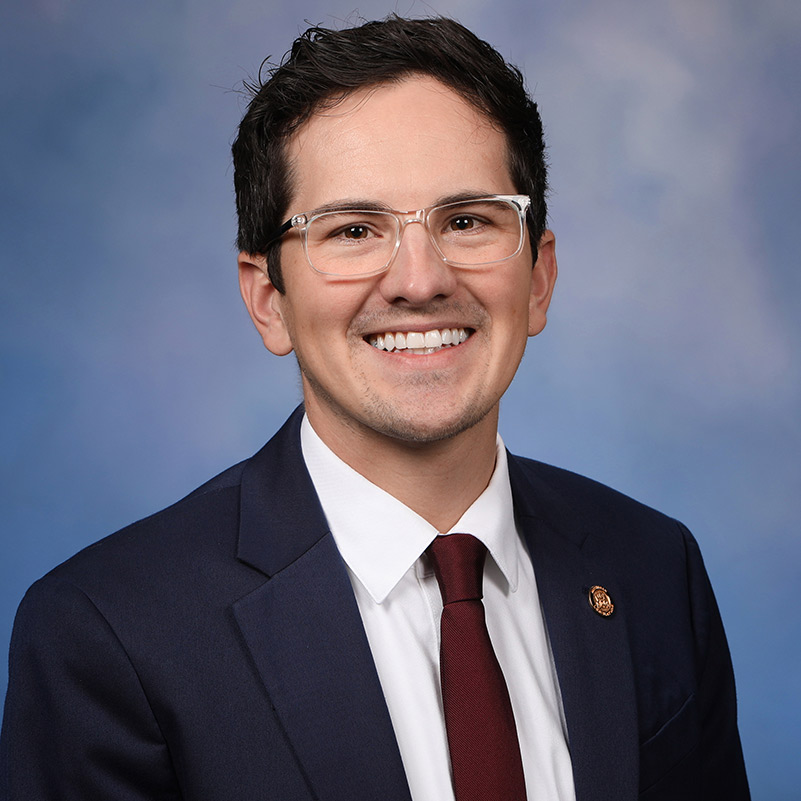
Rep. Jason Morgan
Sponsored bills
Maddy summaryThis bill directs the Michigan Department of Environment, Great Lakes, and Energy to create a program that tests public drinking water for microplastics between July 2025 and July 2028. The department must sample water sources quarterly using established methods and focus on areas such as Great Lakes shorelines, agricultural groundwater, and sites near landfills. After the testing period, the department is required to submit a final report by January 2029 that details findings and offers recommendations for future action.
Maddy summaryThis bill proposes changes to how prisoners in Michigan pay for medical, dental, and vision care. It would require inmates who request nonemergency services to pay a copayment fee, with the cost shared by parents or guardians if the inmate is a minor. Additionally, the bill mandates that prisoners who intentionally harm themselves and receive emergency care must pay the full cost of that treatment instead of a copayment. The legislation also directs the state corrections department to decide whether to house self-injuring inmates in facilities equipped for on-site medical care and requires a report on the feasibility and cost of this arrangement within six months.
Maddy summaryThis bill allocates $10 million from the state school aid fund to reimburse Michigan school districts for providing free menstrual hygiene products to eligible students. To qualify for funding, districts must have designated bathrooms for females and males or both in their school buildings and must supply at least 20 tampons or pads per month to students who request them. The reimbursement amount is based on the percentage of students in the district who qualify for free or reduced-price meals, with a minimum guarantee of covering 50% of the program costs. Funding will be distributed across urban, suburban, and rural areas, including specific requirements for districts in Wayne, Eaton, Grand Traverse, Kent, Macomb, and Marquette counties.
Maddy summaryThis bill updates Michigan's laws regarding the protection and management of critical sand dunes by amending and adding sections to the Natural Resources and Environmental Protection Act. It directly affects local governments, property owners, and developers by refining definitions of land use, such as what constitutes a "contour change" or a "special use project," and clarifying the roles of state and local agencies. Key provisions include establishing clearer criteria for when permits are required, defining how dune areas are identified in official maps, and ensuring that any development balances environmental preservation with economic needs. The legislation also repeals several outdated sections and adds new ones to modernize the regulatory framework for these fragile ecosystems.
Maddy summaryHB 6150 updates the Recreational Authorities Act by renaming it the "Recreational Authorities and Natural Resources Authority Act" and adding new definitions to clarify terms used in the law. The bill explicitly defines concepts such as "authority," "district," "participating municipality," and various types of public lands, including parks, natural resource areas, historic farms, and swimming pools. These changes aim to provide clearer language for local governments and recreational authorities regarding the scope of their operations and the types of areas they manage. The legislation does not alter existing operational rules but rather refines the terminology within the statute to ensure consistency.
Maddy summaryThis bill requires Michigan school districts to provide free feminine hygiene products to students identified as "at-risk" starting in the 2025-2026 school year. Under the new provision, any eligible student who requests these items must receive at least 20 tampons or menstrual pads per month at no cost. The term "at-risk pupil" is defined by existing state laws regarding school aid eligibility, and the requirement applies to public school districts, intermediate school districts, and public school academies.
Maddy summaryThis bill modifies Michigan's foreclosure laws to clarify how deeds must be recorded and to adjust the timeline for when a property can be legally sold if the owner fails to redeem it. It requires that deeds be recorded within 20 days of a foreclosure sale, ensuring that if this deadline is missed, the sale remains valid but the clock for the owner to reclaim the property starts only after recording. The legislation also updates the rules for calculating redemption amounts by explicitly including fees for taxes, senior liens, and insurance premiums, while allowing purchasers to designate a representative to help buyers compute these costs. Additionally, the bill mandates that registers of deeds mark deeds with the word "Redeemed" once a property is successfully reclaimed, providing a clear record of the transaction's status.
Maddy summaryThis bill directs the Michigan Department of Environment, Great Lakes, and Energy to create a comprehensive statewide strategy for researching and monitoring microplastics in the Great Lakes and drinking water supplies. The plan will involve contracting with state universities to study the ecological and health impacts of these tiny plastic particles while strictly avoiding private corporate involvement in sampling and detection methods. By July 2026, the department must submit the initial plan to the legislature, which will include baseline data, risk assessments, and recommendations for reducing microplastic pollution, with full implementation targeted for 2028 if funding is available.
Maddy summaryThis bill prohibits individuals from carrying firearms within 100 feet of locations where absentee ballots are being counted during processing. The restriction applies to anyone not in law enforcement or holding a valid concealed carry license, while allowing exceptions for security personnel and those with owner permission. Violating this rule is classified as a misdemeanor punishable by up to 90 days in jail, a fine of $100, or both.