

Maddy summaryThis bill proposes to allow the state to use statistical random sampling to verify the signatures on petitions submitted by groups seeking to form a new political party. Instead of requiring every single signature to be manually checked, election officials would randomly select a portion of the signatures to validate, which could speed up the process for new parties. The measure directly affects citizens attempting to establish new political organizations and the election authorities responsible for processing their paperwork. Although the bill passed the legislature, it was vetoed by the Governor and did not become law.
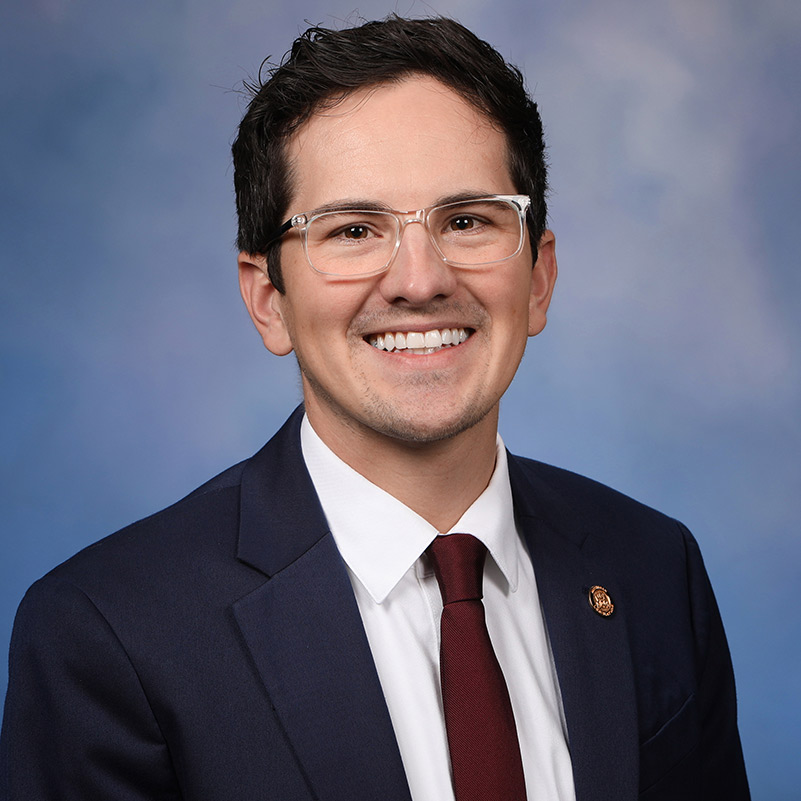
Rep. Jason Morgan
Sponsored bills
Maddy summaryThis law requires the Michigan State Police to destroy any firearms that are collected and turned over to the department through municipal gun buyback programs. Starting April 2, 2025, the department must ensure every part of these weapons is destroyed and is prohibited from reselling them. The rule applies to any weapon designed to fire projectiles using an explosive charge, such as guns, and directly affects local governments that run buyback events and the state agency responsible for disposing of the collected items.
Maddy summaryThis bill designates a specific stretch of Interstate 94 in Wayne County as the "Corporal Mohamed Said Memorial Highway." The designated section runs between Oakwood Boulevard and Outer Drive W. By adding this new section to the Michigan Memorial Highway Act, the legislation officially names the road in honor of Corporal Mohamed Said.
Maddy summaryThis bill creates a new Office of Tribal Legislative Liaison within Michigan's Legislative Council to strengthen government-to-government relationships between the state legislature and federally recognized tribes. The office will be led by a liaison appointed by the council from a list provided by the United Tribes of Michigan, who will be supported by at least two policy advisors. Key duties include visiting each tribe annually, advising lawmakers on how proposed legislation impacts tribal communities, and providing mandatory training for legislators on tribal history and consultation processes. Additionally, the office must submit an annual public report detailing tribal concerns raised during the legislative process to the governor and legislative leaders.
Maddy summaryThis bill amends Michigan law to establish a process for disposing of weapons seized by law enforcement agencies. It requires the State Police director to determine if a seized firearm was reported lost or stolen before taking action, providing a 30-day window for the original owner to claim it if they are legally authorized to possess it. If the weapon is not claimed, the director may sell it at a public auction to eligible buyers, destroy it, or use another lawful disposal method. The legislation also grants the department of state police immunity from civil lawsuits regarding how they dispose of these seized items.
Maddy summaryThis bill modifies Michigan election laws to allow county clerks to use statistical random sampling to verify the signatures on nominating petitions rather than checking every single one. It also clarifies the process for investigating complaints about fraudulent signatures and permits clerks to disqualify petitions that contain obviously invalid entries. Under the proposed changes, clerks could use digitized voter registration records to compare signatures and must make investigation reports public before making final decisions on a petition's validity. The legislation would apply to candidates running for office who rely on nominating petitions to get on the ballot.
Maddy summaryThis bill prohibits health insurance companies in Michigan from discriminating against licensed healthcare providers who are acting within the scope of their professional licenses. While insurers must not unfairly exclude these providers from their policies, the law does not force them to contract with every willing provider or to pay the same reimbursement rates to all. The legislation defines discrimination based on existing federal standards and clarifies that "health professional" includes anyone authorized to practice under the state's public health code.
Maddy summaryThis bill updates Michigan's sentencing guidelines to specify the prison terms for sexual extortion and aggravated sexual extortion. It directly affects individuals charged with these crimes by establishing a tiered system where penalties increase based on whether it is a first, second, or subsequent offense, and by adding higher maximum sentences for cases involving specific aggravating factors. The legislation also adjusts sentencing ranges for other related felonies, such as impersonating public officials and various types of fraud, to align with current legal standards. By amending the Code of Criminal Procedure, the bill provides judges with clearer instructions on how long offenders must serve for these specific violations.
Maddy summaryThis bill modifies Michigan's state housing development authority to update rules regarding the sale prices of affordable housing units. It allows the authority to make loans for projects where the average purchase price is capped at a specific limit relative to the average purchase price of similar units in the area. The changes primarily affect nonprofit housing corporations, cooperatives, and developers who build or rehabilitate homes for low- and moderate-income individuals. By adjusting these pricing constraints, the legislation aims to provide more flexible financing options while maintaining affordability standards for residents.
Maddy summaryThis bill amends Michigan's public health code to explicitly allow licensed pharmacists to prescribe and dispense certain contraceptives. The law defines key terms such as "emergency contraceptive" and "hormonal contraceptive patch" to clarify which medications are covered under this new authority. By adding a new section to the statute, the legislation formalizes the pharmacist's role in providing these reproductive health services without requiring a separate referral from a physician.