

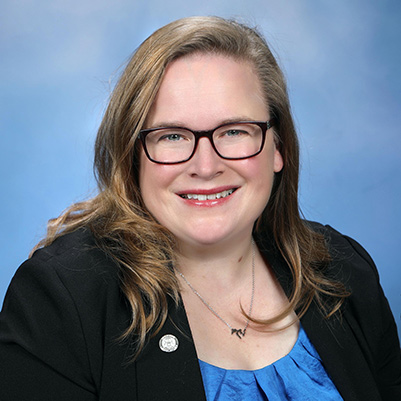
Photo of Kelly Breen
D Michigan House · District 21 On the 2026 ballot

Rep. Kelly Breen

Compare
Total votes
2,942
all sessions
Attendance
100%
11 missed
Near the chamber average
With party
95%
of cast votes
Near the chamber average
Bipartisan score
2%
crosses aisle rarely
Near the chamber average
Sponsored
1,914
bills & resolutions
Higher than 97% of chamber peers
Committees
2
assignments
1,914 bills and resolutions

Sponsored bills

Total
1,914
Primary
74
Co-sponsor
1,840
This page
1,914
matching current filters
Co-sponsor HB 5864
Passed · Michigan House · Co-sponsor
Crimes: prostitution; penalties for and references to prostitute and prostitution crimes in sentencing guidelines; amend. Amends sec. 16w, ch. XVII of 1927 PA 175 (MCL 777.16w).

Maddy summaryHB 5864 amends Michigan's sentencing guidelines to ensure that crimes involving prostitution are consistently classified as felonies rather than misdemeanors. This change directly affects judges, prosecutors, and defendants by requiring them to apply stricter sentencing standards for prostitution-related offenses. The bill removes previous language that allowed for the classification of these crimes as less serious felonies or misdemeanors, thereby standardizing how such cases are handled within the state's legal system.

Passed Dec 18, 2024 1 co-sponsor
Co-sponsor HB 4758
Passed · Michigan House · Co-sponsor
Liquor: liquor control commission; certain liquor code violations not held against a licensee after a certain time; provide for. Amends 1998 PA 58 (MCL 436.1101 - 436.2303) by adding sec. 910.

Maddy summaryThis bill modifies the Michigan Liquor Control Code to prevent the Liquor Control Commission from using certain past violations to deny, suspend, or revoke liquor licenses. Specifically, it states that if at least two years have passed since a violation occurred, the commission cannot consider it when making licensing decisions. The law defines a "qualified violation" as any breach of the liquor code that is not a criminal offense or a state civil infraction. This change aims to ensure that older, non-criminal mistakes do not permanently bar individuals or businesses from holding liquor licenses.

Passed Dec 18, 2024 1 co-sponsor
Primary HB 5836
Passed · Michigan House · Lead sponsor
Criminal procedure: expunction; criminal convictions that may be set aside on grounds of being a victim of human trafficking; expand. Amends sec. 1 of 1965 PA 213 (MCL 780.621).

Maddy summaryThis bill expands the ability of individuals in Michigan to have their criminal convictions set aside, specifically adding a provision for people who were convicted of crimes while being victims of human trafficking. Under the new rules, a person who was a victim of human trafficking can apply to clear any conviction they received as a direct result of that trafficking, provided they still meet the general limits on the number of offenses that can be expunged. The legislation also clarifies how certain deferred and dismissed charges are counted toward these limits and defines specific types of crimes, such as assaultive offenses and domestic violence, that are subject to stricter restrictions. By amending existing state law, the bill allows eligible individuals to petition the court for relief without changing the fundamental eligibility criteria for other applicants.

Passed Dec 18, 2024 0 co-sponsors
Co-sponsor HB 5842
Passed · Michigan House · Co-sponsor
Crimes: prostitution; references to prostitute and prostitution; modify in the DNA identification profiling system act. Amends sec. 6 of 1990 PA 250 (MCL 28.176).

Maddy summaryThis bill updates Michigan's DNA identification profiling laws to require the permanent collection of DNA samples from individuals arrested for specific sex-related offenses, including prostitution and commercial sexual activity. It mandates that law enforcement collect these samples after an arrest but before sentencing, with the resulting DNA profiles retained in the state database unless the charges are dismissed or the person is acquitted. Additionally, the legislation imposes a $60 assessment fee on those convicted of these crimes, with the collected funds distributed between local law enforcement agencies and the state justice system to cover sample collection costs. The bill also clarifies that individuals do not need to provide a new sample or pay the fee if the state already possesses their DNA profile from a prior arrest for the same types of offenses.

Passed Dec 18, 2024 1 co-sponsor
Co-sponsor HB 5847
Passed · Michigan House · Co-sponsor
Crimes: prostitution; references to prostitute and prostitution; modify in the fourth class city act. Amends sec. 1, ch. XI of 1895 PA 215 (MCL 91.1).

Maddy summaryHB 5847 amends Michigan's Fourth Class City Act to update the language regarding a city's power to regulate prostitution and commercial sexual activity. The bill replaces the term "prostitution" with "commercial sexual activity" in the list of general powers granted to city councils to prevent vice and immorality. This change allows local governments in fourth-class cities to pass ordinances targeting these activities using more modern terminology. The legislation does not create new crimes or penalties but clarifies the scope of existing municipal authority.

Passed Dec 18, 2024 1 co-sponsor
Co-sponsor HB 4757
Passed · Michigan House · Co-sponsor
Liquor: other; discount for specially designated distributors and on-premises licensees; increase. Amends sec. 233 of 1998 PA 58 (MCL 436.1233).

Maddy summaryThis bill increases the discount that specially designated distributors and on-premises licensees receive on alcoholic liquor from 17% to 23%. It also establishes a new certification program for small distillers that use at least 40% Michigan-grown grain, allowing them to sell their products with a lower required profit margin for the state. The law requires the department of agriculture and rural development to certify these distillers, maintain records of their grain sources, and submit annual reports listing certified entities. Additionally, the bill includes penalties for providing false information during the certification process and mandates that distillers keep accurate accounts of their qualified grain transactions for inspection.

Passed Dec 18, 2024 1 co-sponsor
Primary HB 5833
Passed · Michigan House · Lead sponsor
Probate: other; designation of a patient surrogate for health care decisions; allow. Amends 1998 PA 386 (MCL 700.1101 - 700.8206) by adding pt. 6 to art. V & repeals sec. 66h of 1939 PA 280 (MCL 400.66h).

Maddy summaryThis bill updates Michigan's health care laws to create a clear process for designating a surrogate to make medical decisions for adults or emancipated minors who cannot do so themselves. It establishes a specific priority list for potential surrogates, starting with out-of-state designations, followed by spouses, adult children, parents, and siblings, while excluding individuals subject to protective orders or pending abuse charges. The legislation requires that a surrogate's authority ends when the patient regains decision-making capacity and mandates that the surrogate sign an acceptance form confirming they will act in the patient's best interest without receiving payment. Additionally, the bill allows patients to disqualify specific individuals from serving as surrogates and ensures that surrogates are informed of the patient's known treatment preferences.

Passed Dec 18, 2024 0 co-sponsors
Co-sponsor HB 5845
Passed · Michigan House · Co-sponsor
Crimes: prostitution; references to prostitute and prostitution; modify in the youth rehabilitation services act. Amends sec. 7a of 1974 PA 150 (MCL 803.307a).

Maddy summaryThis bill modifies the Youth Rehabilitation Services Act to require DNA samples from minors under state supervision who are found responsible for specific crimes involving prostitution, child enticement, or indecent exposure. Under the new rules, youth agencies must collect these samples without the minor's consent or a prior court order, and the collected data can only be shared with law enforcement or in specific legal and research contexts. The legislation also mandates a $60 fee for these minors to cover the costs of DNA profiling and retention, unless the state already possesses their genetic information from a previous case.

Passed Dec 18, 2024 1 co-sponsor
Co-sponsor HB 5616
Passed · Michigan House · Co-sponsor
Health: pharmaceuticals; allow patients to take unused portion of eye drops or eye ointments after certain procedures for continued patient care; provide for. Amends 1978 PA 368 (MCL 333.1101 - 333.25211) by adding secs. 17773, 20817 & 21537.

Maddy summaryThis bill requires hospitals and surgical outpatient facilities in Michigan to offer any leftover eye drops or ointments to patients after certain eye surgeries or treatments. The rule applies specifically when the medication was provided by the facility, used during an inpatient stay, and is needed for the patient's continued care at home. If a pharmacist dispenses the remaining medication, they must label it properly and do not need to provide additional usage instructions if the doctor already did so. This change aims to ensure patients have access to necessary post-procedure medications without needing to purchase them elsewhere.

Passed Dec 18, 2024 1 co-sponsor
Co-sponsor HB 5840
Passed · Michigan House · Co-sponsor
Criminal procedure: trial; qualifications of expert witnesses in human trafficking cases; modify. Amends sec. 462g of 1931 PA 328 (MCL 750.462g).

Maddy summaryThis bill modifies Michigan's human trafficking laws to allow courts to accept expert testimony from witnesses with specialized knowledge in criminal justice, behavioral sciences, or victim services. These experts can explain how trafficking victims often behave differently than expected and help juries understand the complex dynamics of trafficking cases. While the law already permits victim testimony without corroboration, this change specifically enables qualified experts to offer opinions on victim responses and behaviors during trials. However, the bill explicitly prohibits these experts from giving opinions on the credibility of other witnesses, including the victim, to maintain a clear distinction between behavioral analysis and character judgment. Both the prosecution and defense are permitted to call such experts to testify in human trafficking prosecutions.

Passed Dec 18, 2024 1 co-sponsor
Showing 691 to 700 of 1,914 bills
Previous 1 … 69 70 71 … 192 Next