

Maddy summaryHB 5144 amends Michigan's building permit process to allow qualified interior designers to submit applications for residential construction projects. Specifically, it adds interior designers (licensed under Michigan's occupational code) to the list of professionals permitted to file building permit applications, alongside architects and engineers. The bill requires these interior designers to include their license number and expiration date on all residential permit applications. This change directly affects interior designers working on residential buildings, streamlining their ability to initiate construction projects without requiring an architect or engineer's involvement. The amendment updates Section 10 of the 1972 Construction Code Act to reflect this expanded eligibility.
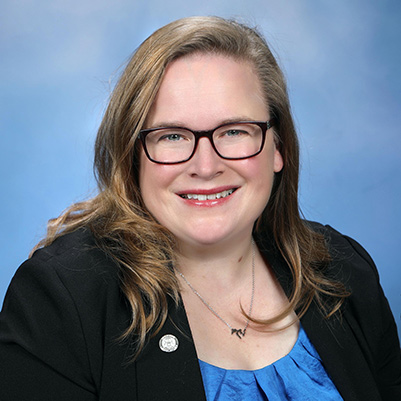
Rep. Kelly Breen
Sponsored bills
Maddy summaryHB 5143 would establish new fee requirements for interior design license applicants and holders in Michigan. It sets a $175 application processing fee and a $125 annual license fee under the State License Fee Act (MCL 338.2201-338.2277). The bill directly affects individuals seeking or maintaining an interior design license in the state, as defined under Michigan's occupational code. This amendment requires the fees to be paid to the licensing authority for each license cycle. The bill is currently pending in the Regulatory Reform Committee after its introduction on October 28, 2025.
Maddy summaryHB 5118 would create a Michigan income tax credit for employers hiring residents from specific federal "targeted groups" (like veterans or long-term unemployed individuals). The credit equals 50% of the federal work opportunity tax credit amount, applied to qualified wages paid to Michigan residents certified by the state unemployment agency as part of these groups. It applies to tax years beginning January 1, 2026, and cannot exceed an employer's total tax liability for that year. The bill directly affects Michigan employers (excluding tax-exempt organizations) who hire eligible employees meeting federal and state certification criteria.
Maddy summaryHB 5119 allows tax-exempt organizations in Michigan (like nonprofits) to claim a state tax credit equal to 50% of the federal Work Opportunity Tax Credit (WOTC) they earn for hiring employees from specific targeted groups. The credit applies to wages paid to employees certified by Michigan’s unemployment agency as members of these groups, starting in tax years beginning January 1, 2026. Employers must claim this credit on their annual tax returns, and it can only offset state income tax withholding - any excess credit isn’t refunded. The bill directly affects tax-exempt employers hiring eligible employees, aligning Michigan’s credit with federal WOTC rules.
Maddy summaryHB 5136 requires Michigan's Medicaid program (medical assistance) to cover preventive care, diagnosis, and treatment for children with PANDAS (pediatric autoimmune neuropsychiatric disorders associated with strep) and PANS (pediatric acute onset neuropsychiatric syndrome). It mandates no higher copays or deductibles than other Medicaid services, requires timely coverage for urgent cases, and prohibits denials based on prior treatments or different diagnoses. The bill also bans lifetime limits on covered treatments like antibiotics, behavioral therapy, or IVIG therapy. This directly affects Medicaid-enrolled children diagnosed with these specific conditions.
Maddy summaryHB 4665 allows Michigan public school students to miss class without penalty for attending events sponsored by the National FFA Organization, Michigan FFA, 4-H clubs, or livestock-related activities. It amends Michigan’s education law (MCL 380.1-380.1852) by adding a new section (1138a) that explicitly lists these activities as excused absences. The bill directly affects students participating in these programs and school staff responsible for tracking attendance. It passed the Michigan House overwhelmingly (101-4) on October 23, 2025, with immediate effect.
Maddy summaryThis resolution declares October 23, 2025, as Detroit-Windsor Tunnel Day in Michigan to commemorate the 95th anniversary of the tunnel's opening. It recognizes the tunnel as a vital cross-border infrastructure link between Detroit and Windsor, Ontario, highlighting its role in moving over 3.7 million vehicles annually and supporting 325 jobs and $595 million in economic impact for Detroit. The resolution serves as a symbolic acknowledgment of the tunnel's historical significance and ongoing economic contributions.
Maddy summaryThis resolution declares October 25, 2025, as World Spina Bifida and Hydrocephalus Day in Michigan. It directly honors individuals living with spina bifida and hydrocephalus, their families, and support organizations like the Spina Bifida Association within the state. The resolution aims to raise public awareness about these conditions, promote earlier detection and support, and recognize ongoing efforts to improve care and research. As a symbolic gesture with no new policies or funding, it does not impose obligations but seeks to foster community recognition.
Maddy summaryThis resolution declares October 15, 2025, as Pregnancy and Infant Loss Remembrance Day in Michigan. It directly honors families affected by miscarriage, stillbirth, or infant loss - impacting all Michiganders who experience these losses or support affected individuals. The bill aims to raise public awareness about pregnancy and infant loss, encouraging communities and professionals (like healthcare workers and educators) to provide more compassionate support. It does not create new laws or allocate funding, but serves as a symbolic gesture to acknowledge these experiences.
Maddy summaryThis is a ceremonial resolution (not a law), introduced by Rep. Snyder and adopted on October 22, 2025. It declares October 8, 2025, as "National APEX Day" in Michigan to commemorate the 40th anniversary of the federal APEX program (which helps small businesses navigate government contracting). The resolution honors Michigan APEX Accelerators for supporting 3,420 businesses and securing $2.23 billion in contracts in the previous year. It has no binding effect or policy changes - it solely recognizes the program's economic contributions.