

Maddy summaryHB 4280 extends the renewal period for limited licenses that allow social workers to gain supervised experience toward full licensure. Specifically, it changes the existing rule from allowing limited license renewals for "not more than 6 years" to "not more than 10 years." This directly affects social workers pursuing bachelor's or master's level licensure who need to complete post-degree supervised practice. The bill does not alter educational requirements or supervision standards - only the duration they can hold the limited license while gaining experience.
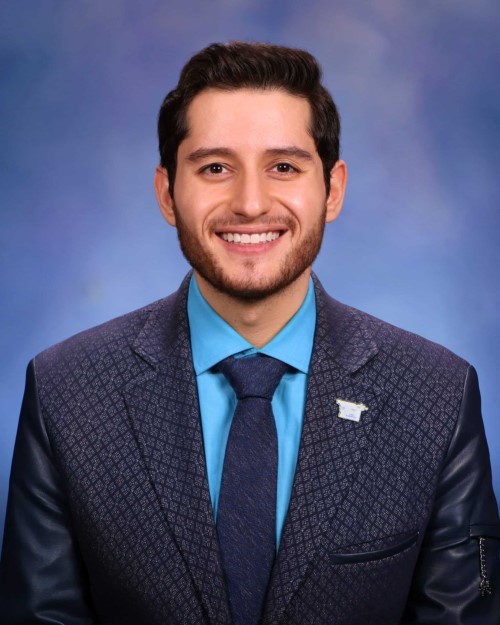
Rep. Noah Arbit
Sponsored bills
Maddy summaryHB 4281 creates the "used motor vehicle warranty act" to give consumers a 2-day right to return a used car purchased from a dealer for any reason, provided the vehicle costs $50,000 or less. Dealers must offer a contract cancellation agreement at a capped fee (up to $250), allowing buyers to drive the car up to 150 miles during the window and receive a full refund minus a restocking fee (capped at $500). This applies to most used car purchases but excludes motorcycles, off-highway vehicles, sales over $50,000, and private-party transactions. The law requires dealers to include specific terms in the sales agreement and provides consumers a legal remedy for violations.
Maddy summaryThis resolution (HR 54) is a ceremonial declaration by the Michigan House of Representatives to commemorate April 4, 2025, as "North Atlantic Treaty Day" in Michigan. It honors the 76th anniversary of the 1949 signing of the North Atlantic Treaty establishing NATO, highlighting NATO's role in collective security and Michigan's military and defense industry connections. The resolution has no legal effect or policy changes - it solely serves to recognize this historical date and symbolically acknowledge Michigan's ties to NATO through its veterans and defense sector. It does not directly affect any individuals, organizations, or government programs.
Maddy summaryHB 4272 would create specific sentencing rules for people convicted of campaign finance violations in Michigan. It amends the state’s criminal procedure code to add a new sentencing guideline for these offenses, requiring judges to follow set sentencing ranges instead of general guidelines. This bill directly affects candidates, political committees, or individuals who break campaign finance laws by changing how judges impose penalties for such violations. The bill is currently in committee referral after being introduced on March 19, 2025.
Maddy summaryHB 4269 requires political nonprofits - specifically 527 organizations (like issue advocacy groups) and 501(c)(4) social welfare groups - to publicly disclose detailed financial information. These groups must electronically file annual reports by January 31 and July 31, listing donor names, occupations, addresses (for contributions over $100), and itemized expenditures over $100. Organizations with less than $5,000 in annual activity may request a filing waiver. Failure to comply risks fines (up to $5,000) or dissolution for repeated violations, including intentional underreporting of contributions or expenditures.
Maddy summaryHB 4273 amends Michigan's lobbying law (MCL 4.415) to clarify definitions and registration requirements for lobbyists and legislative staff. It specifically defines "lobbying" as communicating to influence government action using information or data, and sets thresholds: anyone spending over $1,000 annually on lobbying must register, or $250 for lobbying a single official. The bill adds exemptions for certain government employees (like university staff, school board workers, and state department employees) who are not required to register. This is a procedural update to existing law, focusing on precise definitions rather than new policy.
Maddy summaryHB 4270 amends Michigan's Campaign Finance Act to clarify disclosure requirements for certain political nonprofits. It redefines "501(c)(4)" and "527" organizations to include those controlled by state candidates, elected officials, appointed officials, or their family members. These nonprofits would then be required to disclose their funding sources and activities, directly affecting organizations with ties to Michigan's political figures. The bill takes effect January 1, 2027, pending passage of companion legislation (HB 4269).
Maddy summaryHB 4271 modifies Michigan's campaign finance law to treat all independent committees established, financed, maintained, or controlled by a candidate for the Michigan House or Senate as a single committee for contribution limit purposes. This means a candidate cannot circumvent contribution limits by creating multiple committees under their name; all such committees will be counted together. The bill explicitly excludes House and Senate political party caucus committees from this rule. Violations carry penalties including up to 3 years in prison or a $5,000 fine for individuals, or a $10,000 fine for organizations. The bill directly affects candidates running for state legislative office who use independent committees.
Maddy summaryHB 4268 amends Michigan's Campaign Finance Act to give the Secretary of State authority to seek court orders (injunctive relief) to stop campaign finance violations. It adds specific circumstances for waiving late filing fees, such as medical emergencies, natural disasters, or loss of records, and requires the Secretary to provide public notice and comment periods for official interpretations of the law. The bill also establishes clear deadlines for handling complaints about violations, including requirements for signed complaints with factual certifications and structured timelines for responses and rebuttals. These changes aim to improve enforcement transparency and streamline compliance for campaign finance reporters.
Maddy summaryThis House Resolution (HR 51) is a symbolic request urging the U.S. Department of Homeland Security to release $56 million in FEMA disaster relief funds already allocated to Michigan. It directly affects Michigan's emergency management agencies, local governments, and nonprofits that rely on these funds for disaster response, recovery, and public safety programs. The resolution states delays in releasing these funds strain state resources and risk disrupting critical emergency services following natural disasters. As a non-binding resolution, it does not change funding policy but formally requests federal action.