

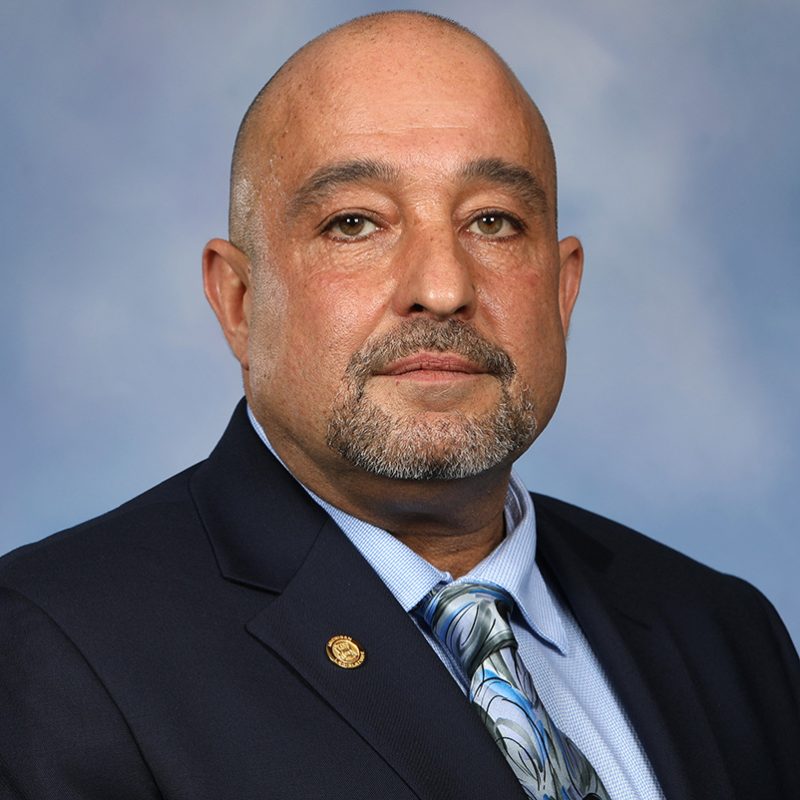
Photo of Tullio Liberati
D Michigan House · District 2

Rep. Tullio Liberati

Compare
Total votes
2,878
all sessions
Attendance
97%
73 missed
Near the chamber average
With party
95%
of cast votes
Lower than 79% of chamber peers
Bipartisan score
3%
crosses aisle rarely
Higher than 77% of chamber peers
Sponsored
556
bills & resolutions
Near the chamber average
Committees
3
assignments
556 bills and resolutions

Sponsored bills

Total
556
Primary
26
Co-sponsor
530
This page
556
matching current filters
Co-sponsor HB 4605
Passed · Michigan House · Co-sponsor
Sales tax: distribution; distribution of certain sales tax revenue into the public safety and violence prevention fund; provide for. Amends sec. 25 of 1933 PA 167 (MCL 205.75).

Maddy summaryThis bill amends Michigan's sales tax law to change how a specific portion of sales tax revenue is distributed to the public safety and violence prevention fund. Starting in October 2023, the state will deposit 1.5% of the collections from the standard 4% sales tax into this new fund on a monthly basis. The legislation also outlines existing rules for distributing other sales tax revenues to schools, transportation projects, aviation, and health initiatives. By specifying these allocation percentages and timelines, the bill ensures that designated funds are collected and transferred to their intended programs without altering the overall tax rate.

Passed Dec 31, 2024 1 co-sponsor
Co-sponsor HB 5695
Signed into law · Michigan House · Co-sponsor
Human services: medical services; participation in the ground emergency medical transport reimbursement program; require. Amends 1939 PA 280 (MCL 400.1 - 400.119b) by adding sec. 109p.

Maddy summaryThis bill requires the state to create a program that offers extra reimbursement to public ground emergency medical transportation providers serving Medicaid recipients. To qualify, providers must be owned or operated by a government entity, such as a city, county, or fire authority, and be enrolled as Medicaid providers. The additional payments are calculated based on federal funding rules and are capped so that total reimbursement does not exceed the actual cost of the services provided. Participation in this supplemental reimbursement program is voluntary for eligible providers.

Signed into law Dec 31, 2024 1 co-sponsor
Co-sponsor HB 5031
Signed into law · Michigan House · Co-sponsor
Housing: housing development authority; restrictions on resident member voting rights; remove. Amends sec. 21 of 1966 PA 346 (MCL 125.1421).

Maddy summaryThis bill modifies the Michigan State Housing Development Authority by removing the requirement for a resident member to have voting rights on the board. The resident member, who must be an adult living in federally assisted housing, can now attend meetings and provide input but cannot vote on any matters. This change ensures that while the perspective of a housing recipient is represented on the authority, all official decisions are made by the appointed officials. The amendment applies to the authority's governance structure and does not alter the funding or operational powers of the agency.

Signed into law Dec 31, 2024 1 co-sponsor
Co-sponsor HB 4665
Passed · Michigan House · Co-sponsor
Retirement: state police; membership in the retirement system of certain law enforcement officers first hired after certain date; provide for, and allow for purchasing service credit for certain law enforcement officers' service under the state employees' retirement system. Amends secs. 3 & 4 of 1986 PA 182 (MCL 38.1603 & 38.1604).

Maddy summaryThis bill updates the Michigan State Police retirement system to clarify definitions and rules for transferring retirement funds. It directly affects law enforcement officers by expanding the list of approved financial accounts where they can move their retirement money, including newer options like Roth IRAs. The legislation also changes how final average compensation is calculated for certain officers hired after June 10, 2012, by using the average salary from their last five years instead of two. Additionally, the bill provides clearer definitions for terms such as "banked leave time" and "direct rollover" to ensure consistency in how the retirement system operates.

Passed Dec 31, 2024 1 co-sponsor
Co-sponsor HB 5649
Signed into law · Michigan House · Co-sponsor
Education: curriculum; public high schools to offer a computer science course; require. Amends 1976 PA 451 (MCL 380.1 - 380.1852) by adding sec. 1166c.

Maddy summaryThis law requires every public high school in Michigan to offer at least one computer science course starting in the 2027-2028 school year. The courses must meet state educational standards and be listed on the school's catalog, with a preference for in-person instruction unless a school operates entirely virtually. The legislation defines computer science as a field focused on creating new technologies rather than just using them, ensuring the curriculum covers principles, design, and societal impact.

Signed into law Dec 31, 2024 1 co-sponsor
Co-sponsor HB 4485
Signed into law · Michigan House · Co-sponsor
Criminal procedure: statute of limitations; statute of limitations for certain criminal sexual conduct violations; eliminate. Amends sec. 24, ch. VII of 1927 PA 175 (MCL 767.24).

Maddy summaryThis bill updates Michigan's criminal procedure laws by establishing specific time limits for filing indictments against individuals accused of various crimes. It directly affects prosecutors, victims, and defendants by clarifying when legal charges must be brought to court. The key provisions set a 25-year limit for certain sexual offenses, a 10-year limit for crimes like kidnapping and identity theft, and a 15-year limit for offenses involving real property fraud. Additionally, the law allows for indictments to be filed at any time if DNA evidence links an unidentified suspect to a crime, but requires charges to be filed within a set period once the suspect is identified.

Signed into law Dec 31, 2024 1 co-sponsor
Co-sponsor HB 4192
Vetoed · Michigan House · Co-sponsor
Corrections: other; program to provide driver license and state identification cards to parolees; provide for. Amends sec. 34c of 1953 PA 232 (MCL 791.234c). TIE BAR WITH: HB 4191'23, HB 4193'23

Maddy summaryThis bill requires the Michigan Department of Corrections to help prisoners obtain driver's licenses and state identification cards before they are released on parole or complete their sentences. The department must collect necessary documents and photos at least 60 days prior to release and forward them to the Secretary of State, while also informing inmates about this assistance upon entry into the system. To support these efforts, the legislation creates a dedicated "reentry success fund" to cover the costs of the program. The bill also allows the Secretary of State to access prisoner information electronically to verify identities during the application process.

Vetoed Dec 31, 2024 1 co-sponsor
Co-sponsor HB 4666
Passed · Michigan House · Co-sponsor
Retirement: state employees; election process to transfer certain law enforcement officers to the Michigan state police retirement system; provide for. Amends sec. 55 of 1943 PA 240 (MCL 38.55) & adds secs. 50b, 50c, 50d, 64a, 64b & 64c.

Maddy summaryThis bill allows certain Michigan state employees in law enforcement roles to voluntarily switch from their current retirement plan to the Michigan State Police retirement system. Between August 4, 2025, and October 17, 2025, eligible workers can submit a written, irrevocable election to make this change, with the transfer taking effect on January 3, 2026. The process requires the signature of the employee's spouse unless waived for special circumstances, and it applies specifically to corrections officers, conservation officers, and state police members who meet specific criteria. Employees who do not submit an election during the designated window will remain in their existing retirement plans.

Passed Dec 31, 2024 1 co-sponsor
Co-sponsor HB 4193
Vetoed · Michigan House · Co-sponsor
State: identification cards; program to provide state identification cards to parolees; provide for. Amends sec. 1 of 1972 PA 222 (MCL 28.291). TIE BAR WITH: HB 4191'23, HB 4192'23

Maddy summaryThis bill amends Michigan law to allow the Secretary of State to issue official state identification cards directly to individuals currently on parole or recently released from correctional facilities. The program requires the Secretary of State to electronically verify a prisoner's identity using records from the Department of Corrections and issue the card before the individual's projected release date. If the card cannot be delivered in time, the bill mandates that it be mailed to the Department of Corrections for handover to the individual. The legislation also clarifies that applicants who are not U.S. citizens must provide documents proving their legal presence in the United States and prohibits the Secretary of State from displaying Social Security numbers on the cards.

Vetoed Dec 31, 2024 1 co-sponsor
Co-sponsor HB 5600
Signed into law · Michigan House · Co-sponsor
Legislature: legislative agencies; office of tribal legislative liaison; create. Creates new act.

Maddy summaryThis bill creates a new Office of Tribal Legislative Liaison within Michigan's Legislative Council to strengthen government-to-government relationships between the state legislature and federally recognized tribes. The office will be led by a liaison appointed by the council from a list provided by the United Tribes of Michigan, who will be supported by at least two policy advisors. Key duties include visiting each tribe annually, advising lawmakers on how proposed legislation impacts tribal communities, and providing mandatory training for legislators on tribal history and consultation processes. Additionally, the office must submit an annual public report detailing tribal concerns raised during the legislative process to the governor and legislative leaders.

Signed into law Dec 31, 2024 1 co-sponsor
Showing 231 to 240 of 556 bills
Previous 1 … 23 24 25 … 56 Next