

Maddy summaryHB 4622 updates Michigan's divorce law to use gender-neutral language by replacing terms like "husband," "wife," and "his" or "her" with "spouse" throughout Sections 1 and 2 of the 1909 divorce statute (MCL 552.101-552.102). It specifically revises provisions about dividing insurance benefits, pensions, retirement assets, and real estate ownership in divorce judgments to apply equally to all spouses. The bill does not change how divorce settlements are calculated or affect legal outcomes - it only modernizes the language to be inclusive. This is a procedural update to the statute, not a substantive policy change.
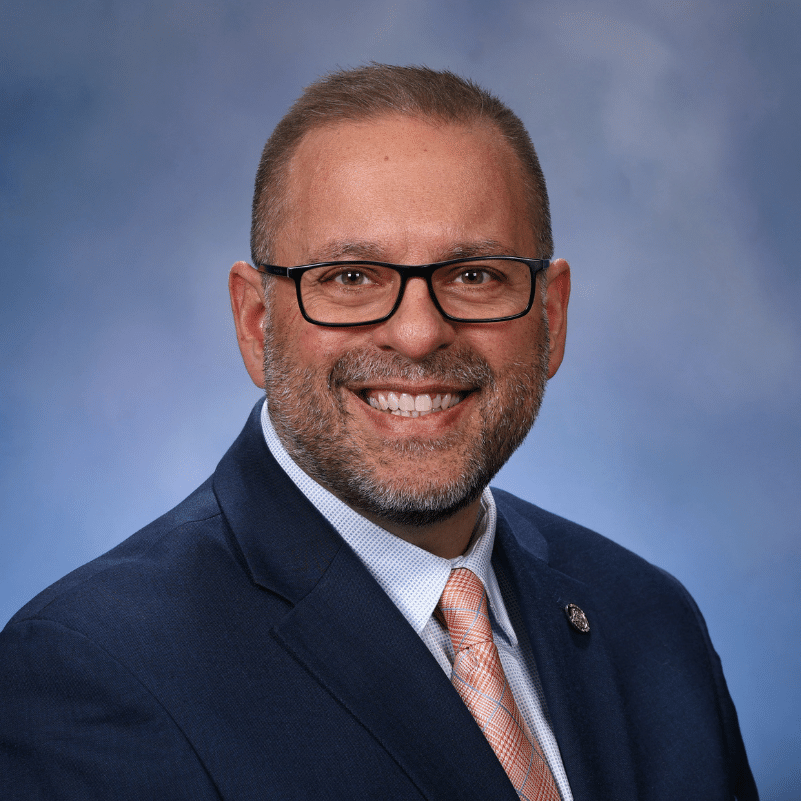
Rep. Mike McFall
Sponsored bills
Maddy summaryHR 127 is a resolution urging the U.S. Department of Labor to reverse its decision to pause all Job Corps center operations by June 30, 2025, with specific focus on the Detroit center. It directly affects approximately 217 enrolled youth at the Detroit Job Corps Center, who were reportedly told to leave immediately on May 30, 2025, with reports of some facing homelessness. The resolution cites the program’s 60-year history of providing career training, high school completion, and wraparound services (like mental health support) to disadvantaged youth aged 16-24. It emphasizes that the sudden pause disrupts critical services for Detroit youth and communities, as 321 Michigan participants were enrolled at the Detroit center as of 2023. The resolution has no binding effect but formally requests the Department of Labor reverse its operational pause.
Maddy summaryHB 4612 updates Michigan's divorce law to use gender-neutral language, changing references to "divorced women" to "divorced individuals" in the law governing name changes during divorce proceedings. The bill modifies the title and Section 1 of the 1905 law (MCL 552.391) to allow any divorcing person - regardless of gender - to request restoration of their birth name, their pre-marriage surname, or adoption of a new surname during divorce. The key mechanism remains the same: circuit courts can grant these name changes upon request without requiring fraudulent intent. This is a procedural language update, not a policy change to eligibility or process. The bill requires approval of a related constitutional amendment request before taking effect.
Maddy summaryHB 4619 updates Michigan's marriage license law to remove gendered language. It changes references like "man or woman" in the residency requirement for obtaining a marriage license to gender-neutral terms. This affects anyone applying for a marriage license in Michigan by ensuring the process uses inclusive language. The bill amends Section 1 of the 1887 Marriage Act (MCL 551.101) without altering eligibility for marriage. It is a procedural language change, not a policy shift on marriage rights.
Maddy summaryHB 4550 amends Michigan's bingo and charitable gaming law (MCL 432.105d) to prohibit qualified organizations from offering firearms as prizes in raffles held on school grounds. This directly affects schools, charities, and other groups hosting raffles on public or private K-12 school property. The key provision adds a specific ban: raffles at schools cannot include firearms as prizes, with "firearm" defined under existing law and "school" excluding homeschools. The amendment clarifies that this prohibition applies to all raffles conducted on school grounds, regardless of the raffle's size or prize value.
Maddy summaryHB 4546 requires health insurers in Michigan providing prescription drug coverage to comply with Section 12 of the Prescription Drug Cost and Affordability Review Act. This bill directly affects health insurance companies operating in Michigan that offer prescription drug benefits. The key provision mandates these insurers to follow specific cost and affordability review requirements already established under the Review Act. The bill is tied to companion legislation (HB 4544) and is currently pending in the House Committee on Government Operations.
Maddy summaryHB 4545 requires Michigan's medical assistance program to comply with Section 12 of the Prescription Drug Cost and Affordability Review Act. This bill directly affects low-income residents enrolled in Michigan's medical assistance program by mandating adherence to state drug cost review requirements. The key provision adds Section 109o to Michigan's Social Welfare Act, making compliance with the drug cost review act a program requirement. The bill is conditional, stating it will not take effect unless companion legislation (HB 4544) is enacted into law. The bill was introduced on June 3, 2025, and referred to the Government Operations Committee.
Maddy summaryHB 4544 creates Michigan's Prescription Drug Affordability Board and Stakeholder Council to review and set price limits for prescription drugs. The Board will establish upper payment limits for brand-name, generic, biologic, and biosimilar drugs, requiring manufacturers to justify price increases above the Consumer Price Index. This directly affects drug manufacturers, health insurers, pharmacy benefit managers, and patients by limiting how much they can charge for covered medications. The law aims to improve drug affordability through state oversight, with the Board required to conduct annual reviews and set rules for pricing.
Maddy summaryHB 4531 requires all mandated reporters of child abuse or neglect (such as teachers, healthcare workers, and social workers) to complete department-developed training every three years on recognizing abuse/neglect and fulfilling reporting duties. This amendment to Michigan’s Child Protection Law updates Section 9 of the 1975 law, replacing the prior training requirement with a specific 3-year cycle. The bill directly affects professionals legally obligated to report suspected child abuse or neglect. It focuses on ensuring consistent, updated knowledge about detection and reporting procedures through mandatory, recurring training.
Maddy summaryHB 4520, the "hunger-free campus act," creates a program to designate Michigan college and university campuses as "hunger-free" if they meet specific requirements. It directly affects all public and private institutions of higher education in Michigan, including tribal colleges, by requiring them to establish student-administration task forces, provide SNAP enrollment assistance, ensure access to food pantries or stigma-free food options, and hold hunger awareness events. The bill mandates annual student surveys on food insecurity and requires campuses to develop meal credit donation programs or free food vouchers. The program aims to address student hunger through concrete campus-level actions and partnerships, with the state department overseeing implementation and reporting.