

Maddy summaryHB 4276 modifies Michigan's liquor control law to allow certain licensees to own and operate motor fuel pumps on or near their licensed premises under specific conditions. It primarily affects liquor retailers (specially designated distributor and merchant license holders) in smaller communities, requiring them to maintain minimum inventory levels ($250,000 for most, $12,500 for rural areas) and ensure a 5-foot separation between fuel dispensing and alcohol service points. The bill also adds provisions for secondary locations (like satellite stores) and clarifies transfer rules for licenses involving existing fuel pump operations. These changes relax prior restrictions but impose clear, measurable requirements for compliance.
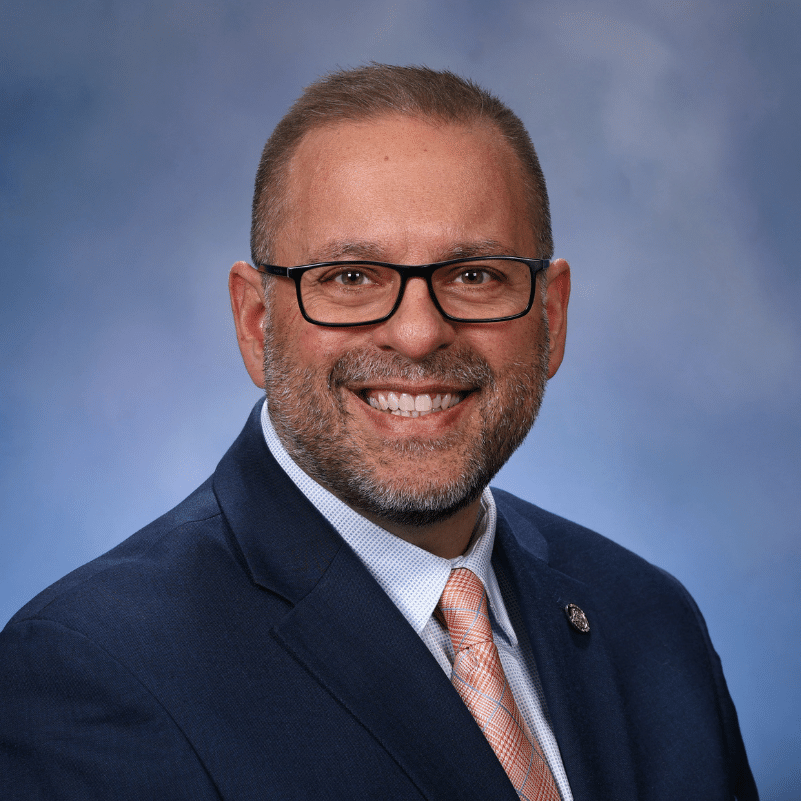
Rep. Mike McFall
Sponsored bills
Maddy summaryHR 217 is a House resolution urging the U.S. Congress, Department of War, and Department of Veterans Affairs to prioritize research and funding for non-technology mental health treatments for veterans and servicemembers with psychological trauma from military service. It specifically highlights promising approaches like buddy-to-buddy programs, clinical psychedelic therapy, outdoor therapy, and service animal access, while also calling for resources to support families affected by veterans' behavioral health challenges. The resolution does not create new law or funding but formally requests federal agencies focus on these alternative treatment options. It was introduced by Rep. Mike McFall and referred to the Government Operations Committee in November 2025.
Maddy summaryThis resolution declares November 12-18, 2025, as "Community Foundation Week" in Michigan. It formally recognizes the work of Michigan’s 60+ community foundations, which support local communities through partnerships, crisis response, and addressing issues like poverty and disaster recovery. The resolution does not create new laws or funding but serves as a ceremonial acknowledgment of these organizations' role in strengthening communities across urban, suburban, and rural areas. It was introduced by multiple state representatives and adopted by the House on November 12, 2025.
Maddy summaryHCR 3 is a Michigan legislative resolution urging Congress to amend two federal laws (38 U.S.C. § 5304 and 10 U.S.C. § 12316) that currently prevent National Guard and reserve members from receiving both active duty pay and VA disability compensation simultaneously. Under current law, veterans must choose between these two payments, forcing them to waive disability benefits to maintain reserve pay or vice versa. If enacted, the amendment would allow service members to receive both payments concurrently, supporting veterans with service-connected disabilities who serve part-time in the reserves or National Guard. This resolution is a recommendation to Congress, not a law, and does not change existing policy.
Maddy summaryHR 216 is a procedural resolution urging Congress to support a National Infrastructure Bank as described in H.R. 5356. It does not create new funding but proposes a public bank capitalized through existing Treasury debt to finance infrastructure projects like road repairs, school upgrades, lead pipe replacement, and affordable housing. The resolution highlights Michigan's infrastructure challenges - such as 33% of roads in poor condition and 11% of bridges deemed structurally deficient - and cites widespread support from state legislatures and organizations. As a non-binding resolution, it formally requests congressional action but does not enact policy changes itself.
Maddy summaryThis resolution (HR 212) requests that the U.S. Congress adopt Section 143 from H.R. 3838 (the 2026 National Defense Authorization Act). Section 143 would require the Air Force to maintain at least 162 A-10 aircraft until 2029 and mandate reports to Congress about transition plans before retiring the fleet. It specifically aims to prevent an operational gap at Michigan's Selfridge Air National Guard Base, where A-10s were scheduled for retirement in 2026 but replacement F-15EX fighters won't arrive until 2028. The resolution does not change policy itself but urges Congress to incorporate these protections into law.
Maddy summaryThis is a symbolic resolution designating November 2025 as "Michigan Assisted Living Month." It recognizes assisted living communities for providing care to seniors, supporting families, and contributing to Michigan's economy (with 4,300+ facilities and a $2.5 billion industry). The resolution has no policy changes, funding, or direct impact on residents or providers - it serves only as a formal acknowledgment. Introduced and adopted by the House on November 6, 2025.
Maddy summaryHB 5204 requires health insurers in Michigan to cover prescription drugs for advanced metastatic cancer without first forcing patients to fail other treatments or prove prior drug failures. It directly affects patients diagnosed with advanced metastatic cancer (cancer that has spread beyond its original site) and their health insurance plans. The law prohibits insurers from imposing conditions like "fail first" requirements or demanding proof of previous drug ineffectiveness before approving coverage for these drugs or related symptoms. This applies to all health insurance policies covering prescription drugs for such cancer cases. The bill defines "advanced metastatic cancer" and "associated conditions" (symptoms or side effects worsening without treatment) to clarify coverage requirements.
Maddy summaryHB 5205 requires Michigan health insurers to cover specific breast cancer-related services without cost-sharing. It mandates coverage for diagnostic exams, screening mammograms (every 5 years for ages 35-39, annually for 40+), outpatient treatment, and rehabilitation services like reconstructive surgery. The law prohibits deductibles, copays, or dollar limits on these services, aligning coverage terms with general medical care. This directly affects Michigan health insurance policyholders, particularly women needing breast cancer screening or treatment.
Maddy summaryHB 4427 requires counties to issue a "brown alert" when sewage or E. coli levels in waterways reach dangerous public health levels. This directly affects county officials responsible for environmental monitoring and residents who use or live near affected waterways. The bill amends existing law by adding a new section mandating this alert system, replacing previous voluntary protocols. It creates a specific, actionable requirement for counties to notify the public during hazardous conditions. The law passed the House with strong support (94-10) and is now under review by the Local Government Committee.