

Maddy summaryThis bill requires local zoning laws to allow farms and agricultural land to host commercial weddings and similar events. It prevents municipalities from banning these activities on properties zoned for agriculture, though it permits local rules regarding noise, traffic, and operating hours. The law applies to any zoning ordinance created under Michigan's zoning enabling act and takes effect 90 days after becoming law.
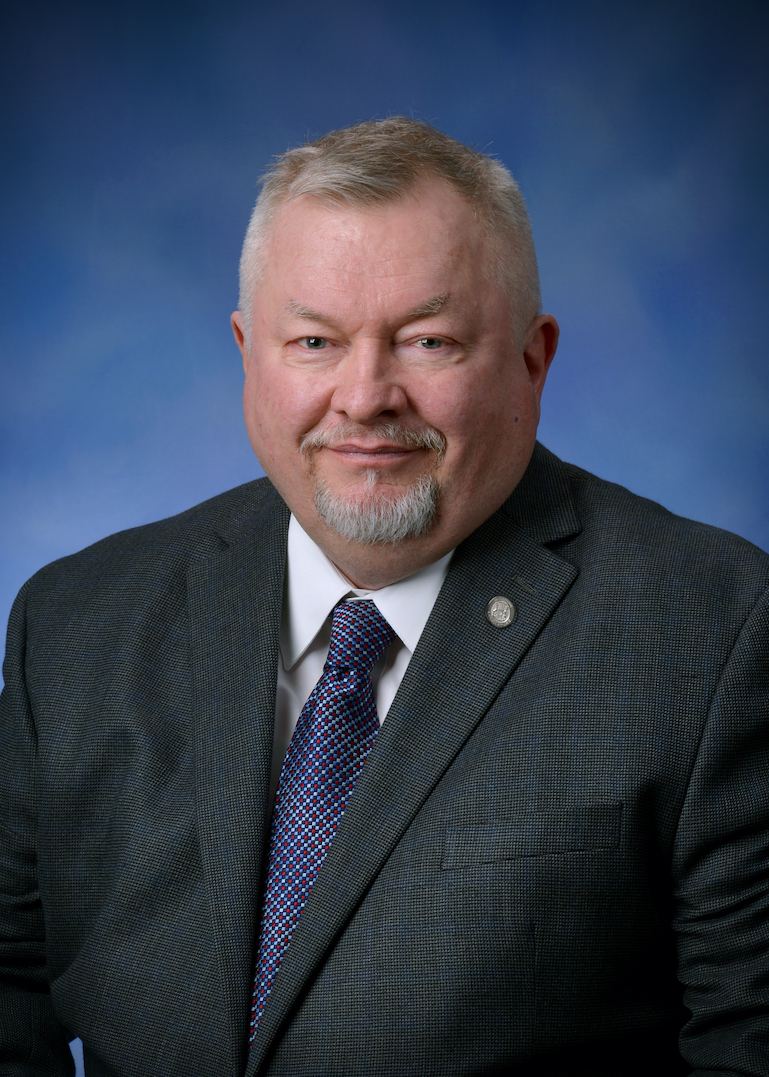
Rep. Greg Markkanen
Sponsored bills
Maddy summaryThis bill designates a specific section of highway M-26 in Adams Township as the "Private Wesley Vietti Karna Memorial Highway." The designated stretch runs from Academy Street south to Hubbard Avenue. By adding a new section to the Michigan Memorial Highway Act, the legislation formally assigns this name to the road to honor Private Wesley Vietti Karna.
Maddy summaryThis bill proposes adding a new section to the Michigan state constitution to formally recognize the right of all citizens to hunt, fish, trap, and harvest wildlife. The amendment states that this right is subject only to regulations designed to promote sound conservation and management, while also declaring public hunting as a preferred method for managing nonthreatened species. It explicitly clarifies that these constitutional changes do not alter existing laws regarding trespass, private property rights, eminent domain, or firearms unrelated to hunting. Ultimately, the bill seeks to enshrine these outdoor activities as a protected heritage right within the state's highest legal document.
Maddy summaryThis bill amends Michigan's income tax law to establish specific definitions for calculating research and development tax credits. It clarifies who qualifies as an "authorized business" for these credits, distinguishing between flow-through entities and general taxpayers based on their increase in qualifying research expenses. The legislation also defines key terms such as "base amount," which is calculated from the average of prior years' research spending, and "research university," which includes public institutions and independent nonprofits. By setting these clear definitions, the bill aims to streamline how businesses and universities claim tax incentives for conducting research within the state.
Maddy summaryThis bill modifies Michigan's public health laws to allow the state health department to issue nonrenewable temporary licenses to individuals who have met all licensure requirements for emergency medical roles except for specific exams. These temporary licenses are valid for one year and permit the holder to practice only under direct supervision. The measure directly affects aspiring medical first responders, emergency medical technicians, and paramedics who need time to complete their required examinations. It also includes a provision stating that the law does not take effect unless a companion bill, HB 4614, is also enacted.
Maddy summaryThis bill officially designates a specific stretch of M-53 in Macomb County as the "Officer Leroy Imus Memorial Highway" to honor a fallen law enforcement officer. The legislation affects the Michigan State Transportation Department by amending state laws to recognize this new name for the road segment running from 17 Mile Road to Hall Road. Once signed into law, the change immediately updates official records and signage to reflect the memorial title.
Maddy summaryThis bill proposes to explicitly state in Michigan election law that individuals who are not U.S. citizens are ineligible to register to vote or participate in any election within the state. The key provision adds a new section to the existing election code to clarify that non-citizens cannot vote in federal, state, or local races. By codifying this restriction, the bill aims to reinforce current legal standards regarding voter eligibility without changing the underlying requirement of citizenship.
Maddy summaryThis bill repeals the specific section of Michigan's Clean and Renewable Energy Act that previously allowed for expedited zoning exemptions for large-scale solar, wind, and energy storage facilities. By removing these exemptions, the legislation effectively eliminates the special zoning protections that were in place to streamline the development of such renewable energy projects. The bill also updates the official title of the broader energy law and modifies a few definitions, but its primary impact is the removal of the regulatory pathway that facilitated faster permitting for major renewable energy infrastructure.
Maddy summaryHB 5868 amends the Michigan Tax Tribunal Act to update the definitions of key terms used in property tax disputes. The bill clarifies what constitutes an "agency," "mediation," "mediator," and "proceeding" within the context of the tribunal's jurisdiction. It also specifies that the term "entire tribunal" refers to the hearing division excluding the residential property and small claims divisions. Additionally, the legislation excludes the drain code from the definition of "property tax laws" for the purposes of the act. This measure does not take effect unless two other related bills are also enacted into law.
Maddy summaryThis bill requires Michigan's property tax tribunal to issue detailed, independent written explanations when deciding disputes over property valuations. Under the new rules, the tribunal must separately analyze market conditions, the property's highest and best use, construction costs, and comparable sales data before determining a value. The legislation also mandates that the tribunal explain its reasoning for accepting or rejecting specific valuation methods and stipulations from the parties involved. By enforcing these transparency measures, the bill aims to ensure that property tax assessments are based on verified evidence and clearly articulated legal findings.