

Maddy summaryHB 4376 modifies Michigan's sales tax rules for trade-in values on vehicle purchases. It increases the annual adjustment for the maximum deductible trade-in value from $500 to $1,000, starting January 1, 2020. This change allows car buyers trading in vehicles to reduce the taxable sales price by more when purchasing new or used cars from dealers. The provision applies only when the trade-in value is separately stated on the sales invoice.
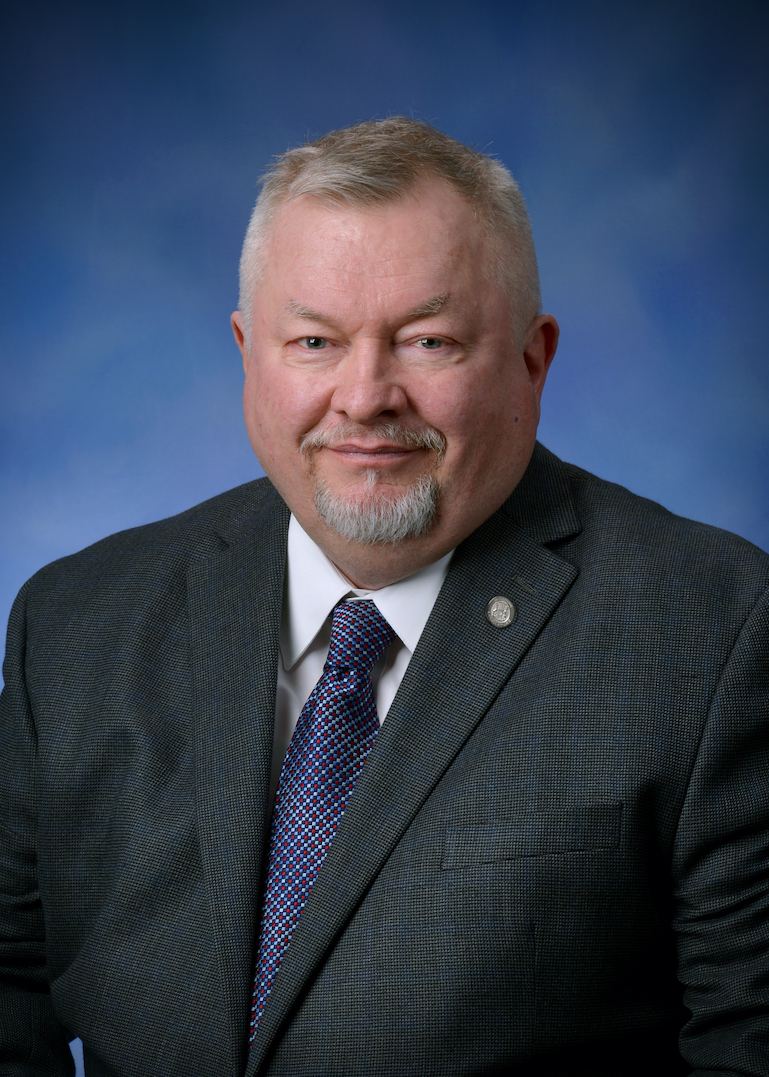
Rep. Greg Markkanen
Sponsored bills
Maddy summaryHB 4375 amends Michigan's Use Tax Act to limit the tax credit for trade-in value when purchasing new vehicles. It caps the deductible trade-in value at $5,000 for motor vehicles or recreational vehicles (previously $2,000, increased annually until 2018). This change directly affects vehicle buyers and dealers in transactions involving trade-ins, as it reduces the amount that can be offset against the purchase price for tax calculation purposes. The bill updates Section 2(f)(xii) of the Use Tax Act to reflect this $5,000 maximum. The change became effective immediately after the bill passed the Michigan House on October 23, 2025.
Maddy summaryThis resolution declares October 12-18, 2025, as "Homeschool Week" in Michigan. It symbolically recognizes homeschooling families and affirms parental rights to choose this educational path under Michigan law. The resolution has no legal effect - it does not create new laws, change funding, or alter school policies. It serves solely as a ceremonial acknowledgment of homeschooling families' contributions to education. The declaration directly affects homeschooling parents and guardians across the state.
Maddy summaryThis is a ceremonial resolution (HR 189) passed by the Michigan House of Representatives to honor the Detroit Red Wings hockey team on its 100th season. It does not create new laws or affect any policies; it simply recognizes the team's historical significance to Michigan. The resolution cites the Red Wings' founding in 1926, 11 Stanley Cup championships, cultural impact as "Hockeytown," and community work through their foundation. The House formally resolved to commemorate the team and transmitted a copy to the Red Wings organization as a gesture of appreciation.
Maddy summaryThis resolution declares October 2025 as Italian-American Appreciation Month in Michigan. It directly recognizes the cultural contributions, historical impact, and community involvement of Italian-Americans in Michigan's development. The resolution does not create new laws or policies but formally designates a month for celebrating Italian-American heritage, including their roles in Michigan's neighborhoods, economy, and civic life. The declaration is symbolic and applies statewide.
Maddy summaryHB 4526 amends Michigan's condemnation law to clarify how courts review the "public necessity" of utility projects (like power lines) when property owners challenge them. It requires courts to hold hearings within 30 days of a challenge and decide within 60 days, prioritizing transmission line routes near public land, existing rights-of-way, or property boundaries. For private utility projects, courts must determine necessity based on evidence, while certificates from the Public Service Commission create a "prima facie" case for necessity. The bill also limits appeals of court rulings on necessity to require court permission, streamlining the process for utility companies and property owners.
Maddy summaryHB 4709 prohibits the construction of commercial wind turbines for electricity production in the Great Lakes or their connecting waters, and bans operating any such turbines built in violation of this rule. It directly affects commercial wind energy developers planning projects in these waters, preventing new installations. The bill also states that renewable energy credits cannot be issued for electricity generated by prohibited turbines, and allows the attorney general to seek court injunctions to stop violations. This amendment adds a specific environmental protection measure to Michigan's Clean Energy Act.
Maddy summaryHB 4590 adds Part 9 to Michigan's Clean and Renewable Energy Act, requiring the Michigan Public Service Commission (MPSC) to create rules for "Locally Distributed Shared Solar Facilities" (LDSS). This bill directly affects community solar projects and subscribers, mandating that LDSS facilities must use solar panels not made in China, North Korea, or Iran, have at least three subscribers, limit any single subscriber to 40% of output, and meet specific size caps (5 MW or 20 MW). Key provisions include requiring facilities to provide bill credits proportional to each subscriber's contribution and ensuring 60% of capacity is subscribed by small users (40 kW or less). The MPSC must establish these rules to govern community solar programs under this new framework.
Maddy summaryThis bill (HB 4182) amends Michigan's use tax law to add a new exemption for motor fuel sales. It specifically creates a new section (4gg) in the law to exempt certain motor fuel transactions from use tax. The bill directly affects businesses selling motor fuel, potentially reducing their tax burden on qualifying sales. However, the provided context does not specify the exact scope of the exemption or who qualifies for it, so the summary cannot detail the precise mechanisms or affected parties beyond the general tax exemption for motor fuel.
Maddy summaryHB 4180 removes the sales tax requirement for motor fuel sales in Michigan by amending the state tax code. It directly affects gas stations and fuel retailers by exempting motor fuel transactions from the standard sales tax. The bill creates a new tax exemption provision (Section 4gg) in the tax code, specifically excluding motor fuel sales from taxable transactions. This change became effective immediately upon the Governor's approval on October 7, 2025.