

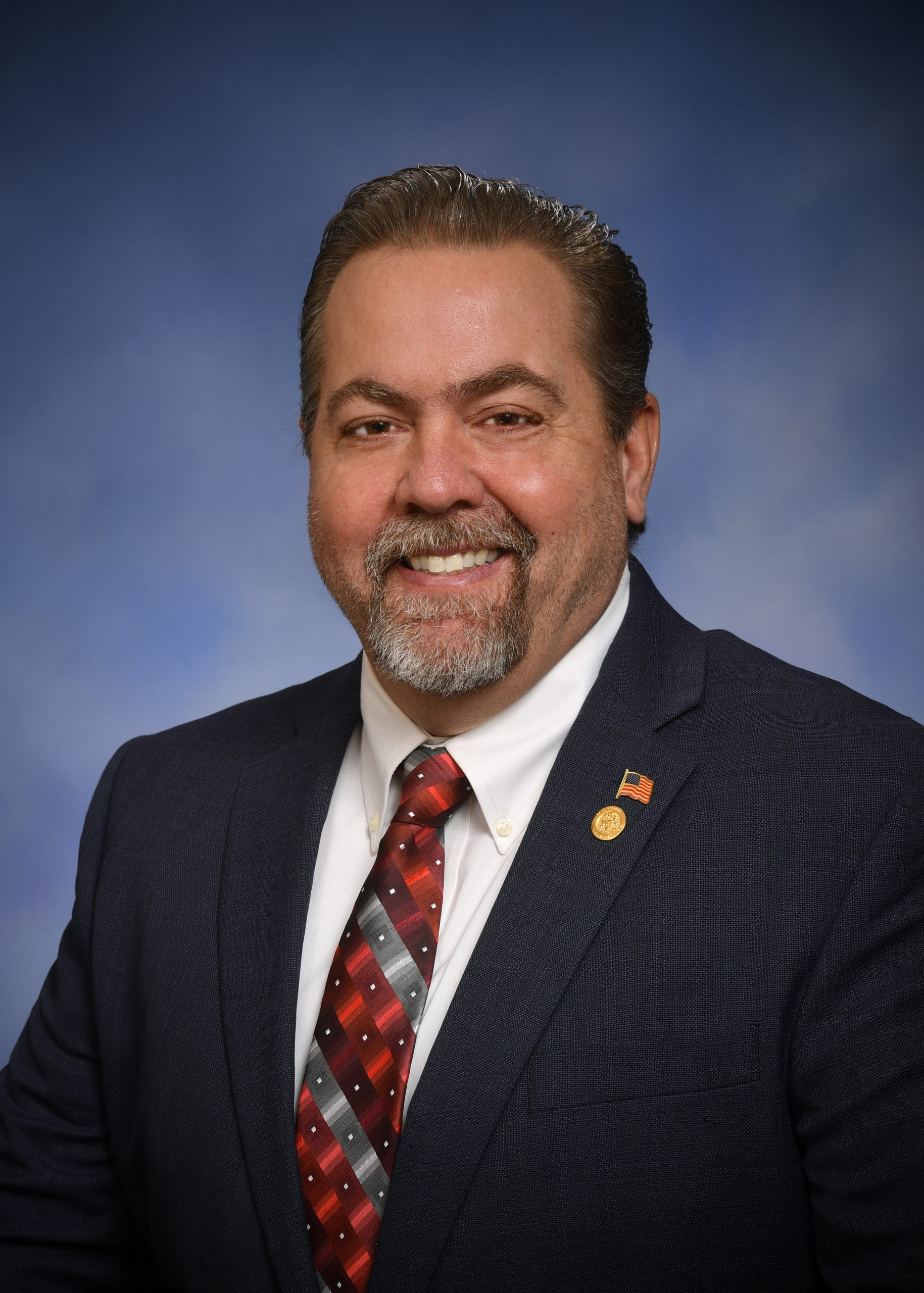
Photo of Dave Prestin
R Michigan House · District 108

Rep. Dave Prestin

Compare
Total votes
1,766
all sessions
Attendance
100%
8 missed
Higher than 83% of chamber peers
With party
94%
of cast votes
Higher than 77% of chamber peers
Bipartisan score
3%
crosses aisle rarely
Lower than 79% of chamber peers
Sponsored
426
bills & resolutions
Near the chamber average
Committees
4
assignments
426 bills and resolutions

Sponsored bills

Total
426
Primary
48
Co-sponsor
378
This page
426
matching current filters
Co-sponsor HB 5212
In committee · Michigan House · Co-sponsor
Family law: child custody; factors determining best interest of child in joint custody; include equal time with both parents as a factor. Amends secs. 6a & 7a of 1970 PA 91 (MCL 722.26a & 722.27a). TIE BAR WITH: HB 5211'25, HB 5213'25

Maddy summaryThis bill would amend Michigan's Child Custody Act to establish a presumption that equal or approximately equal parenting time with both parents is in a child's best interest. It requires courts to inform parents about joint custody options and the presumption of equal time during custody disputes, and specifies that "joint custody" means either shared decision-making for important child welfare matters or equal physical time with each parent. The bill also clarifies that joint custody does not affect child support obligations, which remain based on each parent's resources and the child's needs. This applies directly to parents involved in custody cases and judges handling such cases under Michigan law.

In committee Jun 24, 2026 1 co-sponsor
Co-sponsor HB 5211
In committee · Michigan House · Co-sponsor
Family law: child custody; factors determining best interest of child; include equal time with both parents as a factor. Amends secs. 3 & 5 of 1970 PA 91 (MCL 722.23 & 722.25). TIE BAR WITH: HB 5212'25, HB 5213'25

Maddy summaryHB 5211 would amend Michigan's Child Custody Act to create a legal presumption that equal or nearly equal parenting time between both parents is in a child's best interest for disputes between parents. This presumption would apply unless a court finds clear and convincing evidence that equal time is not appropriate. The bill does not change the existing "best interests of the child" standard (listed in Section 3), but establishes equal parenting time as the default starting point under Section 5. This applies specifically to custody disputes between parents, not involving agencies or third parties, and does not affect provisions addressing cases involving criminal sexual conduct by a parent.

In committee Jun 24, 2026 1 co-sponsor
Co-sponsor HB 5213
In committee · Michigan House · Co-sponsor
Family law: child custody; information on the presumption of equal or approximately equal parenting time; require the friend of the court to provide. Amends sec. 5 of 1982 PA 294 (MCL 552.505). TIE BAR WITH: HB 5211'25, HB 5212'25

Maddy summaryHB 5213 requires Michigan's Friend of the Court offices to provide parents with an informational pamphlet explaining the legal presumption of equal or approximately equal parenting time in child custody cases. This pamphlet must detail the presumption as outlined in Michigan's Child Custody Act (MCL 722.26a), alongside information about joint custody options. The bill amends existing law to ensure parents receive this specific information early in domestic relations proceedings. It directly affects parents involved in custody disputes who interact with the Friend of the Court system. The change focuses on informing parents of their rights, not altering custody standards.

In committee Jun 24, 2026 1 co-sponsor
Co-sponsor HB 6108
In committee · Michigan House · Co-sponsor
Education: graduation requirements; foreign language requirement; allow to be satisfied with career and technical education credits. Amends sec. 1278a of 1976 PA 451 (MCL 380.1278a).

Maddy summaryThis bill modifies Michigan's high school graduation requirements by allowing students to earn mathematics credits through career and technical education programs instead of traditional classroom courses. Specifically, it permits pupils to satisfy the algebra II requirement by completing approved CTE curricula in fields such as engineering, construction, or computer science that cover the same mathematical content. Additionally, the legislation clarifies that students can partially or fully meet the foreign language requirement by completing CTE or visual and performing arts instruction. These changes aim to provide more flexible pathways for students to graduate while maintaining specific academic standards in math and language arts.

In committee Jun 23, 2026 1 co-sponsor
Co-sponsor HB 5081
Passed · Michigan House · Co-sponsor
Education: special education; at least 1 teacher trained in Orton-Gillingham approach principles; require each school district to employ. Amends 1976 PA 451 (MCL 380.1 - 380.1852) by adding sec. 1253.

Maddy summaryHB 5081 requires Michigan school districts, intermediate districts, and public school academies to employ at least one teacher trained in the Orton-Gillingham approach by the 2026-2027 school year to support students with dyslexia. This teacher must have completed training meeting International Dyslexia Association standards, which emphasizes multisensory reading instruction through phonemic awareness, phonics, and structured skill-building. Schools must also ensure these teachers receive at least 10 hours of annual professional development focused on dyslexia support. The bill directly affects all public school entities in Michigan and aims to improve specialized reading instruction for students with dyslexia.

Passed Jun 23, 2026 1 co-sponsor
Co-sponsor HB 5307
In committee · Michigan House · Co-sponsor
Natural resources: hunting; certain penalties for failing to report a deer harvest or retain a deer harvest confirmation number; modify. Amends sec. 40118 of 1994 PA 451 (MCL 324.40118).

Maddy summaryHB 5307 amends Michigan's hunting regulations to modify penalties for failing to report a deer harvest or retain a required confirmation number. The bill targets hunters who do not comply with reporting requirements for deer, which is a specific violation under the Natural Resources and Environmental Protection Act. Key mechanisms include adding or adjusting penalties for this reporting failure, potentially affecting hunters who miss these requirements. The bill does not change penalties for other hunting violations (like taking deer without a permit), which remain detailed in the existing section. (Note: The provided bill text shows existing penalty structures but does not specify the exact amendment language for the reporting requirement change.)

In committee Jun 17, 2026 1 co-sponsor
Co-sponsor HB 5651
In committee · Michigan House · Co-sponsor
Traffic control: speed restrictions; enforcement of speed restrictions in school zones; modify. Amends sec. 627a of 1949 PA 300 (MCL 257.627a).

Maddy summaryThis bill modifies Michigan's vehicle code to update rules for speed limits and enforcement in school zones. It clarifies definitions for school zones and adjusts the timing of when lower speed limits must be enforced, expanding the window before and after school sessions to 60 minutes instead of 30. The legislation also allows school superintendents to set additional enforcement periods for times like off-campus lunch and field trips, while maintaining a minimum speed limit of 25 mph in these zones. Additionally, it permits the use of digital signs and flashing lights to display school zone speed limits and requires specific signage for year-round schools.

In committee Jun 16, 2026 1 co-sponsor
Co-sponsor HB 5214
Passed · Michigan House · Co-sponsor
Individual income tax: credit; credit for eligible family caregivers; provide for. Amends 1967 PA 281 (MCL 206.1 - 206.847) by adding sec. 277.

Maddy summaryHB 5214 creates a new tax credit for Michigan family caregivers, allowing eligible taxpayers to claim up to $2,000 (30% of qualified expenses, whichever is less) against their state income tax for care provided to qualifying family members. It directly affects Michigan residents who provide unpaid care for family members living at home (not in facilities) with specific health needs, such as inability to perform two or more daily activities or requiring supervision due to cognitive impairment. Qualified expenses include respite care, assistive devices, home modifications, and transportation, but exclude general household maintenance. To claim the credit, caregivers must document expenses, provide family member details, and meet income limits ($50,000 single / $100,000 joint). The credit applies to tax years beginning January 1, 2026.

Passed Jun 16, 2026 1 co-sponsor
Co-sponsor HB 5817
Passed · Michigan House · Co-sponsor
Administrative procedure: rules; process for promulgating rules; modify. Amends secs. 39 & 45 of 1969 PA 306 (MCL 24.239 & 24.245) & adds secs. 47a & 67c. TIE BAR WITH: HB 5818'26

Maddy summaryThis bill modifies Michigan's Administrative Procedures Act to change how state agencies create and review new rules. It requires agencies to submit detailed requests for rule-making electronically to the Office of Regulatory Reinvention, which must approve these requests before agencies can proceed. The bill also updates the process for the Legislative Service Bureau to formally certify proposed rules, including stricter timelines and requirements for correcting errors in rule formatting or impact analyses.

Passed Jun 11, 2026 1 co-sponsor
Co-sponsor HB 5815
Passed · Michigan House · Co-sponsor
Administrative procedure: judicial review; judicial review of administrative rules; modify. Amends sec. 61 of 1969 PA 306 (MCL 24.261).

Maddy summaryThis bill modifies Michigan's Administrative Procedures Act to clarify how courts should review administrative rules. It establishes that publishing a rule in the official register creates a legal presumption that the rule was properly adopted and filed, and it requires courts to take judicial notice of rules that have become effective. Additionally, the bill instructs judges to exercise independent judgment when determining if an agency acted within its legal authority, specifically prohibiting deference to an agency's interpretation of ambiguous laws. These changes directly affect state agencies that create regulations and the courts that adjudicate challenges to those regulations.

Passed Jun 11, 2026 1 co-sponsor
Showing 31 to 40 of 426 bills
Previous 1 3 4 5 43 Next