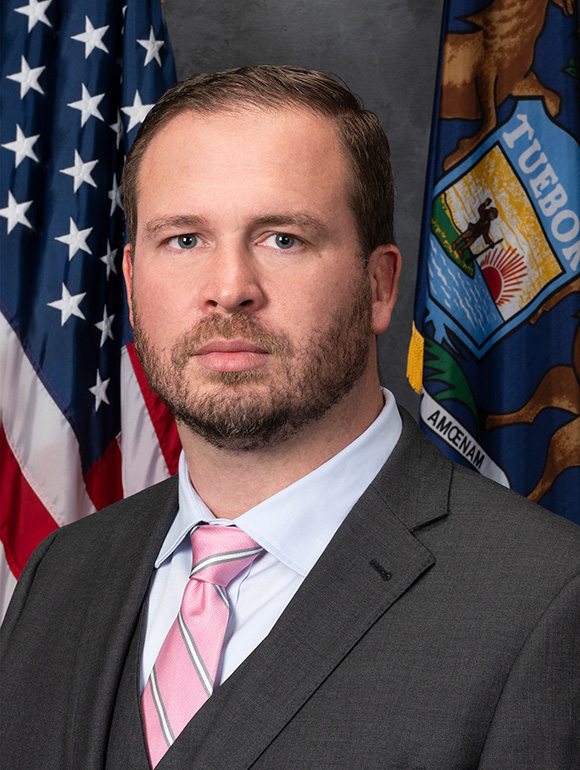
Key legislators
Who's moving technology in Michigan
Showing 11–15 of 15
bills
All technology bills
SB 363 amends Michigan's criminal liability standards in Section 9 of the Revised Statutes (MCL 8.9) to clarify when a defendant must prove a specific mental state (like intent or knowledge) for a crime. The key provision updates the statute to explicitly exclude the Identity Theft Protection Act (2004 PA 452) from these new liability rules, ensuring existing standards for identity theft cases remain unchanged. This bill affects all criminal prosecutions under Michigan law except those specifically covered by the Identity Theft Protection Act. The change is procedural, updating statutory references without altering penalties or creating new requirements for identity theft offenses.
Senate Bill 360 amends Michigan's existing Identity Theft Protection Act. The bill revises and expands several key definitions, including what constitutes a "breach of the security of a database" and various types of "personal information" and "personal identifying information." These updates clarify the scope of protected data and the circumstances under which a security breach occurs, directly affecting Michigan residents and entities that handle their personal information. Additionally, the bill introduces new sections and repeals others, indicating a comprehensive update to the act's provisions.
SB 165 is a funding bill that allocates $166.4 million in state general funds for Michigan's Department of Education during the 2025-2026 fiscal year. It provides specific appropriations for key programs including special education services ($9.8 million), Michigan Schools for the Deaf and Blind ($19.4 million), and departmental operations like information technology ($4.9 million). The bill directs state funds to cover salaries, program operations, and essential services across education departments, with additional support from federal and private revenue sources. It directly affects state education programs and administrative functions, ensuring funding continuity for existing services without creating new policies.
SB 234 requires Michigan public school districts and public school academies to create and implement policies limiting student cell phone use during school hours starting in the 2025-2026 school year. The policy must restrict phones during instructional time, breaks, lunch, and recess, while requiring exceptions for emergencies, medical devices, and students with disabilities (as required by law). Schools must detail enforcement methods and post the policy on their websites. This directly affects all Michigan K-12 public schools and their governing boards. The bill does not ban phones outright but mandates structured policies to reduce classroom distractions.
SB 24 amends Michigan's Juvenile Diversion Act to allow researchers to access certain juvenile justice records for research purposes, while strictly protecting minors' privacy. It requires researchers to obtain a data use agreement with the state court administrative office, which must include safeguards against public disclosure of personally identifiable information like names, addresses, and Social Security numbers. The bill prohibits using these records for any purpose other than research, with violations punishable by fines or up to 180 days in jail. This directly affects researchers, courts, and the state court administrative office, ensuring research access does not compromise minor confidentiality or interfere with diversion decisions.