Issue · Healthcare

Healthcare

Every healthcare bill, vote, and legislator stance in Michigan, automatically classified by Maddy, our AI policy reader.

Total bills
493
2025-2026 Regular Session
Top supporter
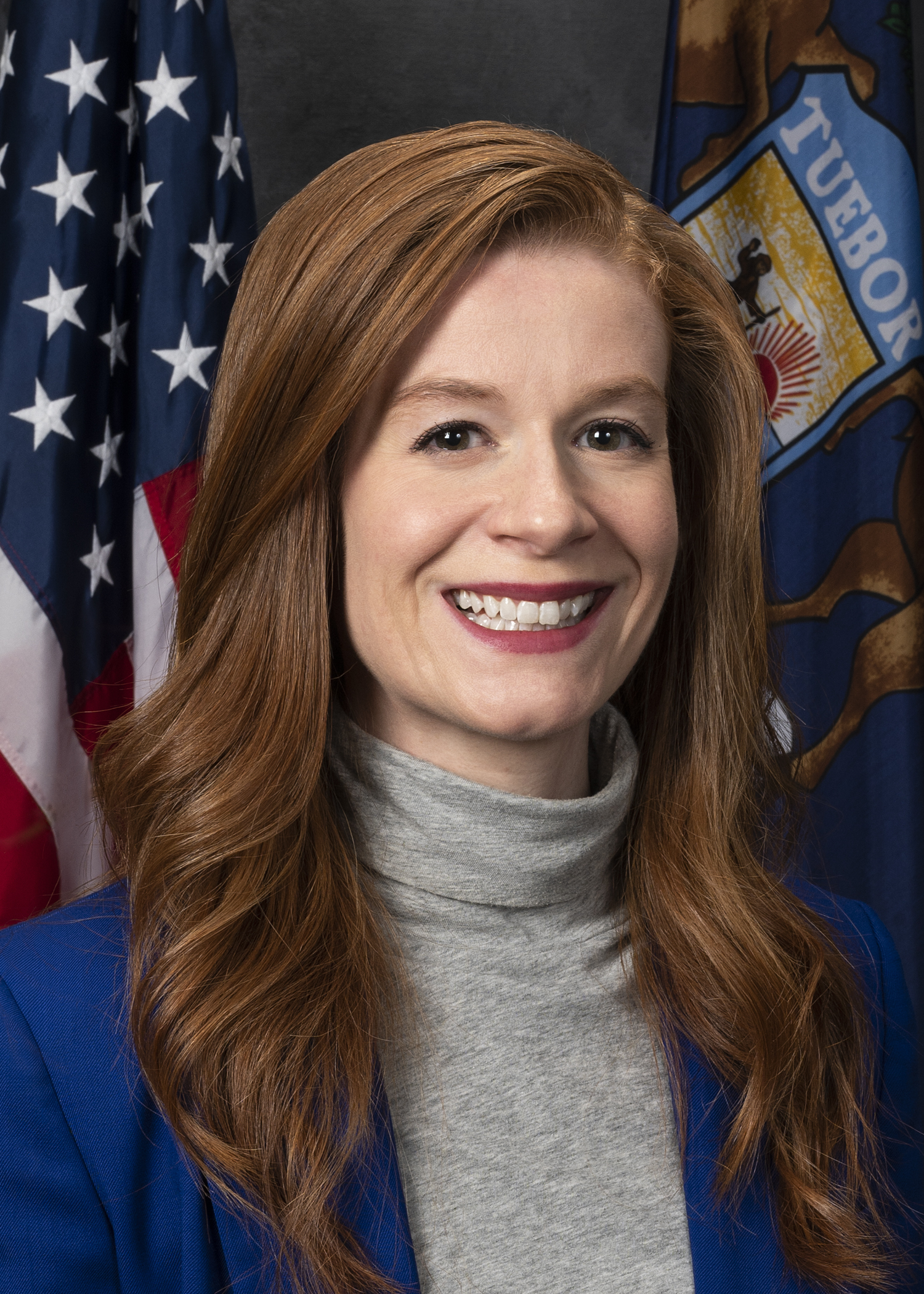
Veronica Klinefelt
96% support rate
Top opponent
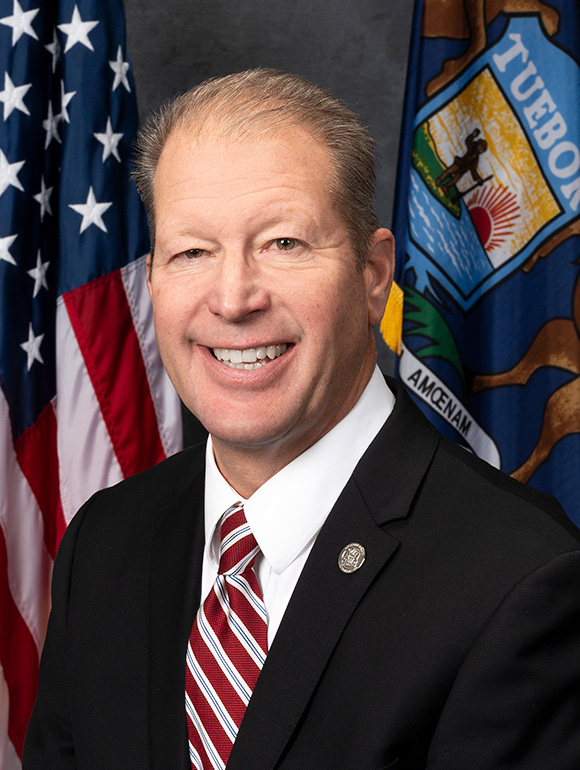
Jim Runestad
8% support rate
Ranked legislators
10
5 support · 5 oppose
Key legislators

Who's moving healthcare in Michigan

Legislators moving healthcare in Michigan
Legislator Party Stance Support rate Decisive votes
Veronica Klinefelt
Veronica Klinefelt Senate · District 11
D
Strong +
96% 27
Darrin Camilleri
Darrin Camilleri Senate · District 4
D
Strong +
93% 30
Jeremy Moss
Jeremy Moss Senate · District 7
D
Strong +
93% 30
Kevin Hertel
Kevin Hertel Senate · District 12
D
Strong +
93% 30
Mallory McMorrow
Mallory McMorrow Senate · District 8
D
Strong +
93% 30
Jim Runestad
Jim Runestad Senate · District 23
R
Strong −
8% 24
Michele Hoitenga
Michele Hoitenga Senate · District 36
R
Strong −
17% 30
Dan Lauwers
Dan Lauwers Senate · District 25
R
Strong −
17% 29
Thomas Albert
Thomas Albert Senate · District 18
R
Strong −
17% 29
Lana Theis
Lana Theis Senate · District 22
R
Strong −
19% 27
Showing 261–270 of 493 bills

All healthcare bills

signed · Michigan · House Jul 29, 2026

HB 4750: Children: foster care; conditions on the use of certain benefits for a child in foster care; provide. Amends 1994 PA 203 (MCL 722.951 - 722.960) by adding sec. 8f.

HB 4750 requires Michigan's foster care department to use or save existing benefits (such as Medicaid or education funds) for children in foster care when it serves their best interests, directly affecting all children in the state's foster care system. The bill amends Michigan's foster care law to mandate this approach, ensuring benefits are prioritized for the child's well-being rather than other uses. Key provisions include adding a new section (8f) to the existing law, directing the department to make decisions based on each child's specific needs. This policy change clarifies how resources must be managed without specifying new funding or programs.
Sub-Topics Medicaid
signed · Michigan · Senate Jul 29, 2026

SB 501: Health occupations: physical therapists; licensing process; modify to incorporate physical therapy licensing compact. Amends secs. 16335, 17801 & 17821 of 1978 PA 368 (MCL 333.16335 et seq.) & adds secs. 17820a & 17820b. TIE BAR WITH: HB 4101'25

SB 501 updates Michigan's licensing rules for physical therapists to join the Physical Therapy Licensure Compact. This allows physical therapists licensed in Michigan to practice in other participating states without needing separate licenses, directly affecting licensed physical therapists seeking multi-state practice. The bill amends specific sections of Michigan's health code and adds new provisions to implement the compact agreement. It does not change patient care standards or create new fees, focusing solely on streamlining licensing across state lines. The compact is a voluntary agreement among states to recognize each other's licenses, reducing administrative barriers for therapists.
Sub-Topics Medical Licensing
signed · Michigan · House Jul 29, 2026

HB 4101: Health occupations: physical therapists; physical therapy licensure compact; enact. Amends 1978 PA 368 (MCL 333.1101 - 333.25211) by adding sec. 16187a. TIE BAR WITH: HB 4102'25

HB 4101 establishes Michigan's participation in the Physical Therapy Licensure Compact, enabling physical therapists licensed in Michigan to practice in other participating states without obtaining separate licenses. This directly affects physical therapists seeking to work across state lines, particularly those in states already part of the compact. The key mechanism is adopting a standardized licensing framework that allows reciprocal practice privileges among participating states. The bill amends Michigan's public health code to align with the compact's requirements, creating a streamlined process for interstate practice. It does not change existing licensure standards within Michigan but facilitates mobility for licensed physical therapists.
in committee · Michigan · House Sep 29, 2025

HB 5071: Appropriations: supplemental; funding for the violence against women grant; provide for. Creates appropriation act.

HB 5071 provides supplemental state funding for programs addressing violence against women, specifically allocating money to support existing grant programs under Michigan's Violence Against Women Act (VAWA) initiatives. This bill directly affects state agencies and local organizations administering these grants, such as domestic violence shelters and legal aid services. The key mechanism is creating a new appropriation within the state budget for fiscal year 2026 to cover costs not previously funded. It does not change eligibility or program rules but ensures continued funding for these services through a dedicated budget line. The bill is currently under review by the Appropriations Committee after its introduction on September 26, 2025.
in committee · Michigan · House Sep 29, 2025

HB 5087: State finance: bonds; revenue derived from tobacco taxes; modify disbursement of. Amends sec. 12 of 1993 PA 327 (MCL 205.432).

HB 5087 amends Michigan's tobacco tax revenue distribution, changing how funds from cigarette and other tobacco product taxes are allocated. The key change adds an annual inflation adjustment (based on the Consumer Price Index) to the $3 million allocated yearly to the Michigan State Capitol Historic Site Fund for maintenance and preservation projects. The bill maintains existing allocations, directing 41.62% to the state school aid fund, 31.875% to the Medicaid trust fund, 2.4375% to health and safety programs, and 0.555% to county indigent health care. These changes directly affect public schools, Medicaid services, state health programs, and Capitol building maintenance.
Sub-Topics Revenue State Budget
in committee · Michigan · House Sep 16, 2025

HB 4884: Occupations: hearing aid; references to hearing aid dealers in general sales tax act; revise. Amends sec. 1a of 1933 PA 167 (MCL 205.51a). TIE BAR WITH: HB 4883'25

HB 4884 amends Michigan's General Sales Tax Act (MCL 205.51a) to update the definition of "prescription" for hearing aids. The bill explicitly states that a prescription for hearing aids includes orders from licensed hearing aid dealers (under MCL 339.1301-339.1309), not just physicians. This change directly affects licensed hearing aid dealers by allowing them to provide hearing aids based on their own professional instructions, streamlining the sales process under tax law. The amendment clarifies existing tax code language without altering tax rates or creating new requirements.
passed both · Michigan · House Feb 24, 2026

HB 4402: Health: diseases; dissemination of information about cytomegalovirus (CMV) to certain individuals and in certain situations; provide for. Amends secs. 5431 & 5432 of 1978 PA 368 (MCL 333.5431 & 333.5432) & adds sec. 5143.

HB 4402 requires Michigan's health department to create and distribute educational materials about cytomegalovirus (CMV), a common virus that can cause birth defects. The materials must cover CMV transmission, associated birth defects, diagnosis, prevention, and resources for parents of affected infants, and will target women who may become pregnant, expectant parents, parents of newborns, and healthcare providers. The bill also amends existing newborn screening laws to include CMV testing as part of routine infant screening, with results reported to parents and the health department. These changes aim to improve awareness and early detection of CMV infections during pregnancy and infancy.
passed both · Michigan · House Oct 30, 2025

HB 4591: Health occupations: counselors; professional counselors licensure compact; provide for. Amends sec. 18101 of 1978 PA 368 (MCL 333.18101) & adds secs. 16190a & 18105a.

HB 4591 allows Michigan to join a multi-state agreement (the "counseling compact") for licensed professional counselors. This compact enables Michigan-licensed counselors to practice in other participating states without obtaining separate licenses, while other states recognize Michigan licenses under uniform requirements. The agreement requires participating states to share disciplinary and licensure information to protect public safety, supports military spouses relocating with active duty service members, and facilitates telehealth services to improve access to counseling. It directly affects licensed professional counselors seeking to practice across state lines and expands access for residents in participating states.
in committee · Michigan · House Nov 4, 2025

HB 5182: Worker's compensation: benefits; time period an injured worker may seek treatment from the injured worker's own physician or provider; modify, and provide additional requirements for the payment of medical benefits. Amends sec. 315 of 1969 PA 317 (MCL 418.315).

HB 5182 amends Michigan's worker compensation law to clarify injured workers' access to medical care. It requires employers to provide payment for treatment from a worker's chosen doctor within 10 days of notice, or face a $100 daily penalty (capped at $25,000). The bill also establishes a preauthorization process for medical treatments, requiring employers to respond to requests within 10 business days or risk delays in care. These changes directly affect injured workers seeking medical treatment and employers/carriers responsible for covering costs under the law.
passed both · Michigan · House Jun 25, 2026

HB 4727: Probate: guardians and conservators; licensure of professional guardians and conservators; provide for. Amends secs. 5106, 5313 & 5409 of 1998 PA 386 (MCL 700.5106 et seq.). TIE BAR WITH: HB 4728'25

HB 4727 requires courts in Michigan to appoint only licensed professional guardians or conservators for individuals under legal protection (wards, developmentally disabled, or incapacitated persons). It mandates that these professionals must hold a license under Michigan's occupational code, and prohibits unlicensed employees from making medical, financial, or housing decisions for the individuals they serve. The bill also requires transparency by requiring professionals to disclose outside compensation from sources other than the ward's estate and to maintain visitation schedules for wards. These changes take effect two years after the bill's passage.
Sub-Topics Medical Licensing
Showing 261 to 270 of 493 bills
Previous 1 … 26 27 28 … 50 Next