Issue · Healthcare

Healthcare

Every healthcare bill, vote, and legislator stance in Michigan, automatically classified by Maddy, our AI policy reader.

Total bills
530
2025-2026 Regular Session
Top supporter
Veronica Klinefelt
96% support rate
Top opponent
Jim Runestad
8% support rate
Ranked legislators
10
5 support · 5 oppose
Key legislators

Who's moving healthcare in Michigan

Legislators moving healthcare in Michigan
Legislator Party Stance Support rate Votes
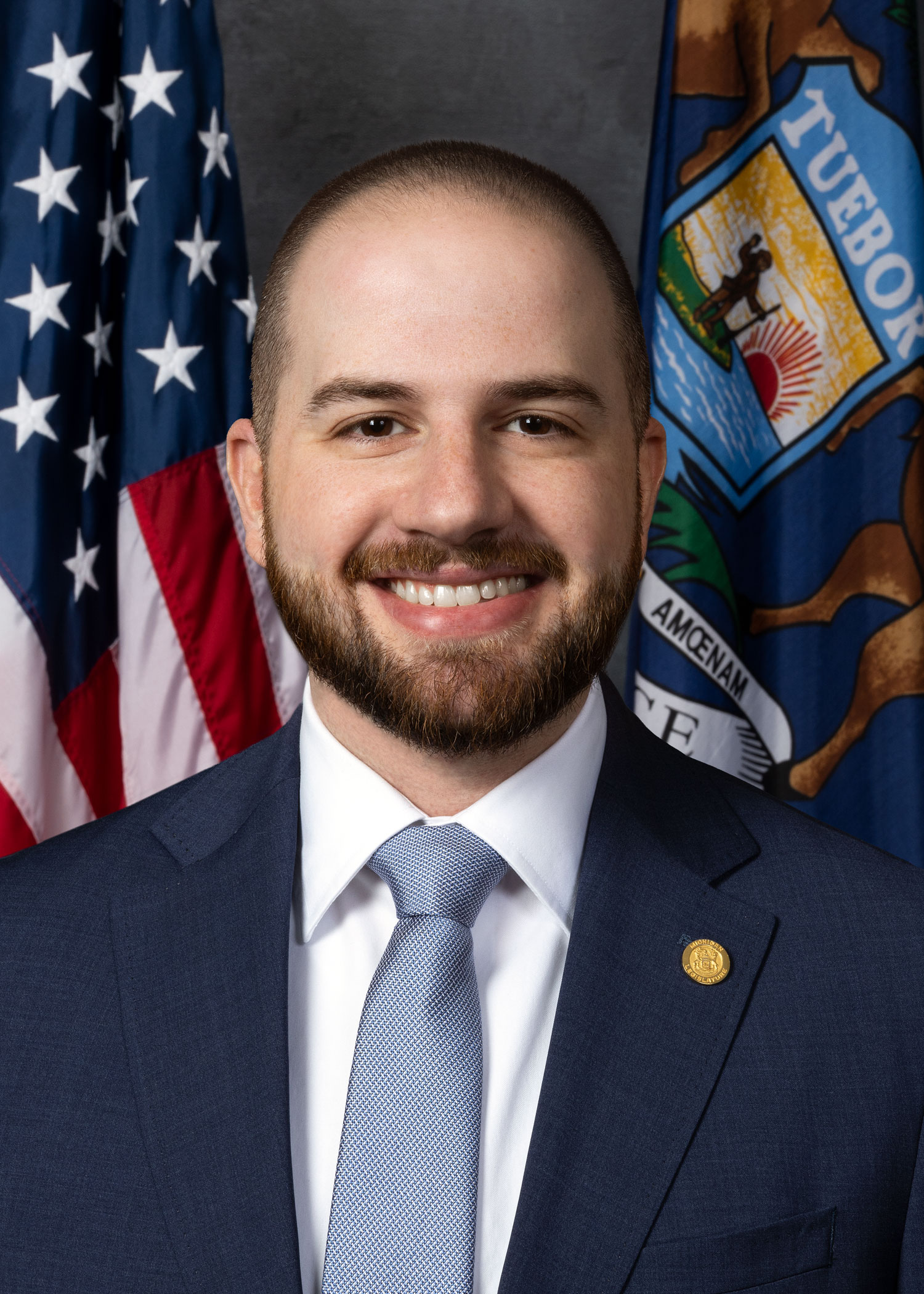
Veronica Klinefelt
Veronica Klinefelt Senate · District 11
D
Strong +
96% 60
Winnie Brinks
Winnie Brinks Senate · District 29
D
Strong +
93% 64
Mallory McMorrow
Mallory McMorrow Senate · District 8
D
Strong +
93% 60
Kevin Hertel
Kevin Hertel Senate · District 12
D
Strong +
93% 63
Jeremy Moss
Jeremy Moss Senate · District 7
D
Strong +
93% 62
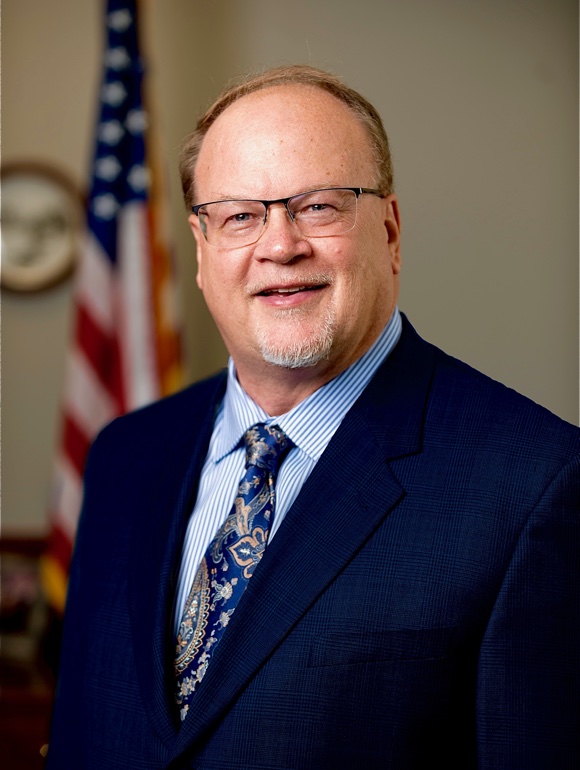
Jim Runestad
Jim Runestad Senate · District 23
R
Strong −
8% 49
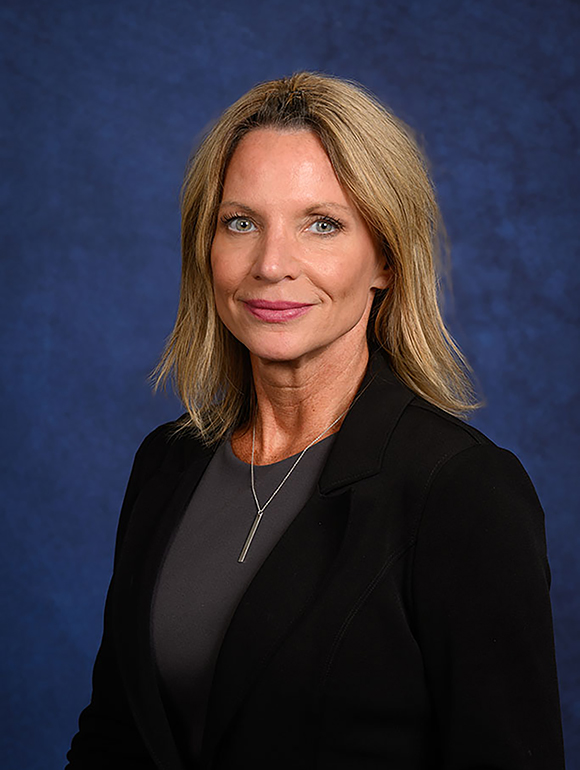
Michele Hoitenga
Michele Hoitenga Senate · District 36
R
Strong −
17% 62
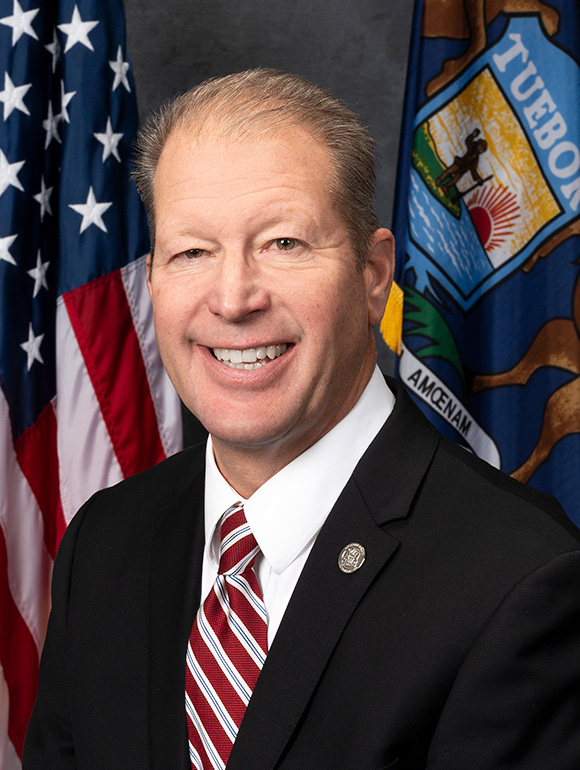
Dan Lauwers
Dan Lauwers Senate · District 25
R
Strong −
17% 63
Thomas Albert
Thomas Albert Senate · District 18
R
Strong −
17% 61
Lana Theis
Lana Theis Senate · District 22
R
Strong −
19% 59
Showing 161–170 of 530 bills

All healthcare bills

in committee · Michigan · House Apr 14, 2026

HB 5772: Children: protection; fetal alcohol spectrum disorders task force; create. Creates new act.

This Michigan bill establishes a new Fetal Alcohol Spectrum Disorders Task Force within the state legislative council to address prevention, identification, treatment, and support for individuals affected by prenatal alcohol exposure. The task force will be composed of voting members including parents of affected children, medical and mental health professionals, educators, and legislators, along with ex officio members from state agencies. Its primary duties include developing a statewide strategic plan to reduce prenatal alcohol exposure, reviewing and recommending improvements to existing programs, creating educational resources for schools, and submitting annual reports to the governor and legislature on needs assessments and funding recommendations.
Sub-Topics Mental Health
passed both · Michigan · House Jun 25, 2026

HB 5644: Traffic control: parking; determination of disability for purpose of obtaining a disability placard by nurse practitioners; allow. Amends secs. 19a, 675, 803d & 803h of 1949 PA 300 (MCL 257.19a et seq.).

This bill allows nurse practitioners to determine disability status for individuals applying for Michigan disability parking placards, expanding the list of qualified medical professionals beyond physicians and physician assistants. The legislation amends existing vehicle code sections to include nurse practitioners alongside doctors, physician assistants, physical therapists, occupational therapists, and optometrists who can certify a person's disability. The bill does not change the specific medical criteria for qualifying disabilities or the process for obtaining parking placards, but it broadens who can officially verify that a person meets those criteria. This change affects disabled individuals seeking parking privileges and the healthcare providers who evaluate their eligibility.
passed · Michigan · House Jun 24, 2026

HB 5731: Health facilities: licensing; exemptions from the substance use disorder license requirement; include crisis stabilization units. Amends secs. 100a & 260 of 1974 PA 258 (MCL 330.1100a & 330.1260) & repeals sec. 973 of 1974 PA 258 (MCL 330.1973). TIE BAR WITH: HB 5729'26

This bill modifies Michigan's Mental Health Code to update definitions and clarify requirements for health facilities, particularly regarding substance use disorder licensing and crisis stabilization units. It amends existing sections to include crisis stabilization units within the scope of facilities that may be exempt from certain substance use disorder license requirements, while also repealing an outdated section. The legislation primarily affects community mental health services programs, licensed hospitals, and adult foster care facilities by refining how they must be classified and regulated under state law. These changes aim to align the code with current service delivery models without altering the core licensing framework for mental health providers.
passed · Michigan · House Jun 24, 2026

HB 5737: Health: licensing; references to licenses for certain substance use disorder services programs in the social welfare act; modify to include those exempt from licensure. Amends sec. 109 of 1939 PA 280 (MCL 400.109). TIE BAR WITH: HB 5729'26

This bill modifies Michigan's Social Welfare Act to clarify that certain substance use disorder programs exempt from licensure are eligible to provide medically necessary acute detoxification and inpatient care for opioid use disorder. The change updates section 109 of the Social Welfare Act to explicitly include these exempt programs alongside licensed facilities in the list of approved providers for substance use disorder treatment services. The amendment does not alter existing requirements for licensed facilities but ensures that unlicensed programs meeting specific criteria can access Medicaid funding for these services. The bill is tied with HB 5729 and was introduced in March 2026 by Representative Mike Harris.
in committee · Michigan · House Mar 3, 2026

HB 5607: Appropriations: department of health and human services; appropriations for fiscal year 2026-2027; provide for. Creates appropriation act.

HB 5607 allocates specific funding to Michigan's Department of Health and Human Services (MDHHS) for the 2026-2027 fiscal year. It directly affects the MDHHS by providing the budget authority needed to operate its existing programs and services during that period. The bill creates the formal appropriation act for these funds, authorizing their expenditure without introducing new policies or altering current programs. This is a standard funding measure to ensure state health and human services programs remain operational.
in committee · Michigan · Senate Feb 26, 2026

SB 806: Health facilities: other; hyperbaric oxygen inspection fund; create. Amends 1978 PA 368 (MCL 333.1101 - 333.25211) by adding sec. 21224 to pt. 212. TIE BAR WITH: SB 0803'26, SB 0804'26, SB 0805'26

SB 806 creates a dedicated "hyperbaric oxygen therapy inspection fund" in the state treasury, funded by licensing fees paid by freestanding hyperbaric oxygen therapy facilities. The fund is managed by the state treasurer and administered by the state health department, with all money used solely for inspecting these facilities. This bill directly affects hyperbaric oxygen therapy providers and the state's inspection process for their facilities. The fund ensures consistent, dedicated funding for inspections, replacing general appropriations for this specific purpose.
in committee · Michigan · House Mar 3, 2026

HB 5591: Health facilities: other; licensure of freestanding hyperbaric oxygen therapy facilities; provide for. Amends 1978 PA 368 (MCL 333.1101 - 333.25211) by adding pt. 212. TIE BAR WITH: HB 5590'26, HB 5592'26, HB 5593'26

HB 5591 updates Michigan's Public Health Code to establish licensing requirements for freestanding hyperbaric oxygen therapy facilities (which treat conditions like non-healing wounds using pressurized oxygen). It directly affects these specialized facilities by requiring them to be accredited by approved organizations (like The Joint Commission), appoint a medical director licensed as a physician or nurse practitioner, and designate a safety coordinator. Key provisions include defining terms like "qualified health professional" and mandating compliance with NFPA 99 fire safety standards. The bill does not change patient access but sets new operational standards for facility operators. (Note: This bill is pending and requires companion bills HB 5590-5593 to take effect.)
in committee · Michigan · Senate Feb 26, 2026

SB 803: Health facilities: other; licensure of freestanding hyperbaric oxygen therapy facilities; provide for. Amends secs. 20104, 20106, 20155, 20161, 20162 & 20164 of 1978 PA 368 (MCL 333.20104 et seq.). TIE BAR WITH: SB 0804'26, SB 0805'26, SB 0806'26

SB 803 creates a new licensure requirement for freestanding facilities that provide hyperbaric oxygen therapy (HBOT), a medical treatment using pressurized oxygen. It directly affects businesses operating standalone HBOT centers and patients receiving this therapy by establishing specific safety and operational standards. The bill amends Michigan's Public Health Code to add licensing rules for these facilities, ensuring they meet state health and safety criteria. This change applies to facilities not located within hospitals, requiring them to obtain state licensure before operation.
Sub-Topics Hospitals Medical Licensing Public Health Tags Licensing
in committee · Michigan · House Mar 3, 2026

HB 5635: Health: immunizations; promulgation of certain rules that are more stringent than the requirements for claiming exemption from immunizations; prohibit. Amends sec. 1177 of 1976 PA 451 (MCL 380.1177). TIE BAR WITH: HB 5634'26

HB 5635 amends Michigan's School Code (MCL 380.1177) to prevent schools or health departments from requiring stricter exemption documentation than state law allows for student immunizations. It directly affects students entering school for the first time or in grade 7, and their families seeking exemptions based on religious beliefs or other objections. The bill ensures schools can only accept the three standard exemption options: a physician's statement, a parent's religious exemption, or a statement showing the child is in process of compliance. It does not change existing immunization requirements but prohibits additional barriers to claiming exemptions beyond those specified in state law.
in committee · Michigan · House Mar 3, 2026

HB 5604: Appropriations: department of health and human services; appropriations for fiscal year 2026-2027 for Medicaid and behavioral health; provide for. Creates appropriation act.

HB 5604 allocates state funding for Medicaid and behavioral health services under Michigan's Department of Health and Human Services for the 2026-2027 fiscal year (ending September 30, 2027). It provides the specific budget amounts needed to cover these programs, directly affecting Medicaid recipients and behavioral health providers across the state. The bill is procedural, establishing the legal framework for spending these funds but not changing program rules or eligibility.
Showing 161 to 170 of 530 bills
Previous 1 16 17 18 53 Next