Issue · Healthcare

Healthcare

Every healthcare bill, vote, and legislator stance in Michigan, automatically classified by Maddy, our AI policy reader.

Total bills
530
2025-2026 Regular Session
Top supporter
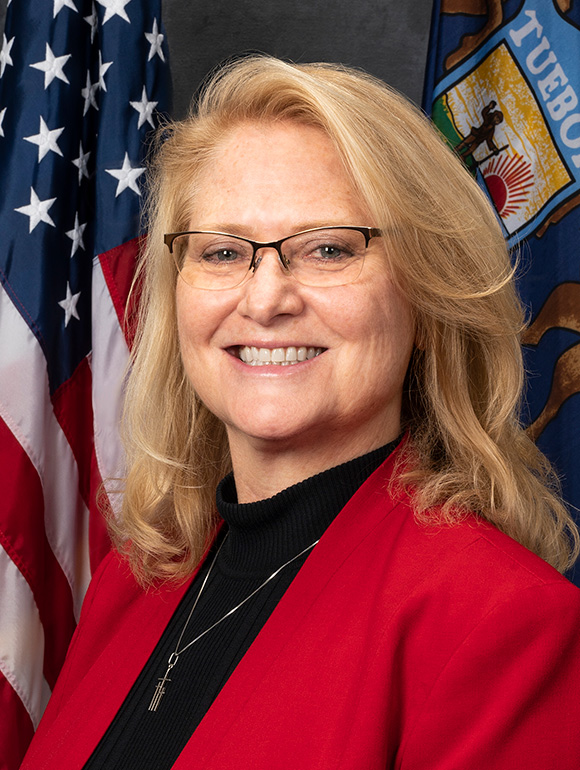
Veronica Klinefelt
96% support rate
Top opponent
Jim Runestad
8% support rate
Ranked legislators
10
5 support · 5 oppose
Key legislators

Who's moving healthcare in Michigan

Legislators moving healthcare in Michigan
Legislator Party Stance Support rate Votes
Veronica Klinefelt
Veronica Klinefelt Senate · District 11
D
Strong +
96% 60
Winnie Brinks
Winnie Brinks Senate · District 29
D
Strong +
93% 64
Mallory McMorrow
Mallory McMorrow Senate · District 8
D
Strong +
93% 60
Kevin Hertel
Kevin Hertel Senate · District 12
D
Strong +
93% 63
Jeremy Moss
Jeremy Moss Senate · District 7
D
Strong +
93% 62
Jim Runestad
Jim Runestad Senate · District 23
R
Strong −
8% 49
Michele Hoitenga
Michele Hoitenga Senate · District 36
R
Strong −
17% 62
Dan Lauwers
Dan Lauwers Senate · District 25
R
Strong −
17% 63
Thomas Albert
Thomas Albert Senate · District 18
R
Strong −
17% 61
Lana Theis
Lana Theis Senate · District 22
R
Strong −
19% 59
Showing 101–110 of 530 bills

All healthcare bills

in committee · Michigan · House Apr 22, 2026

HB 5825: Health: death; death with dignity act; create. Creates new act. TIE BAR WITH: HB 5826'26, HB 5828'26

This bill, known as the Death with Dignity Act, would allow adults in Michigan with a terminal illness to request medication to end their lives in a humane and dignified manner. To qualify, a patient must be at least 18 years old, mentally capable, and diagnosed with a disease that is incurable, irreversible, and expected to cause death within six months. The process requires multiple safeguards, including two independent medical confirmations from different doctors, counseling sessions, and a written request witnessed by two individuals who are not related to the patient or involved in their care. If approved, the attending physician would prescribe the medication after ensuring the patient understands all risks and alternatives, while the law also provides immunity from legal or professional penalties for those who follow the act's procedures.
in committee · Michigan · Senate May 21, 2026

SB 1001: Human services: medical services; certified community behavioral health clinics; provide certification and funding for. Amends 1939 PA 280 (MCL 400.1 - 400.119b) by adding sec. 109v. TIE BAR WITH: SB 1000'26

This bill directs Michigan to align its policies with federal requirements for certified community behavioral health clinics, ensuring the state does not create rules that conflict with federal standards. It mandates the development of a process to determine new clinic locations in specific regions to prevent overlapping service areas. Additionally, the bill requires continued cooperation with the federal government on these clinics, allowing the legislature to vote on opting out, which would give state officials 12 months to stop operations if chosen. The legislation will not take effect unless it is tied to the passage of a companion bill, SB 1000.
in committee · Michigan · Senate Apr 23, 2026

SB 922: Insurance: health insurers; coverage for the treatment of infertility; require. Amends 1956 PA 218 (MCL 500.100 - 500.8302) by adding sec. 3406cc.

This bill requires health insurers in Michigan to cover infertility treatments starting in 2027, affecting all individuals with health insurance policies issued or renewed in the state. The legislation mandates comprehensive coverage for diagnostic care, fertility treatments, and preservation services, including at least four complete egg retrievals with unlimited embryo transfers and costs associated with transferring embryos to a third party. Insurers must provide these benefits without discrimination based on various personal characteristics and cannot impose higher deductibles, waiting periods, or preexisting condition exclusions specifically for infertility services. The law defines infertility broadly to include conditions impacting pregnancy ability and situations where individuals lack the necessary gametes, while also clarifying that coverage applies regardless of whether donor gametes are used or if a surrogate is involved.
Sub-Topics Insurance
in committee · Michigan · Senate Apr 22, 2026

SB 917: Mental health: other; 988 crisis lifeline system fund and telecommunications fee; provide for. Amends 1974 PA 258 (MCL 330.1001 - 330.2106) by adding secs. 165a & 165b.

This bill creates a dedicated state fund to support Michigan's 988 crisis lifeline system, which provides suicide prevention and mental health crisis services. It establishes a new telecommunications fee of 25 cents per month on landline and mobile phone lines, as well as a 6% fee on prepaid phone purchases, to generate revenue for this fund. The collected fees must be used to improve the crisis hotline infrastructure, expand crisis services, and fund stabilization programs, while ensuring these funds supplement rather than replace existing state or federal grants. Additionally, the bill requires the state treasurer to adjust the monthly fee annually based on inflation and mandates regular audits to ensure phone companies collect and remit the fees correctly.
Sub-Topics Mental Health
passed · Michigan · Senate Apr 22, 2026

SR 112: A resolution to designate April 19-26, 2026, as Infertility Awareness Week.

Senate Resolution 112 officially designates April 19-26, 2026, as Infertility Awareness Week to raise public understanding of infertility as a disease that affects people of all backgrounds. The resolution encourages state legislators and the community to participate in awareness efforts alongside the National Infertility Association. This measure does not change laws or funding but serves as a symbolic gesture to highlight the challenges faced by individuals and couples struggling with family building.
in committee · Michigan · Senate Apr 23, 2026

SB 928: Health: licensing; behavioral health transportation licensing requirements; provide for. Amends 1974 PA 258 (MCL 330.1001 - 330.2106) by adding ch. 9B. TIE BAR WITH: SB 0927'26

This bill establishes a new licensing framework for agencies that provide specialized transportation services for individuals experiencing mental health crises in Michigan. It defines specific criteria for who qualifies for these services, such as being medically stable and physically able to enter a vehicle, while mandating that those requiring medical intervention or restraints be transported by ambulance instead. The legislation requires licensed agencies to operate under medical direction, maintain detailed logs of each trip, and adhere to strict safety and hygiene protocols for their vehicles. Additionally, the bill mandates that agencies submit annual reports to the legislature detailing the number of transports, police interventions, and any investigations into staff misconduct.
Sub-Topics Mental Health
passed · Michigan · House Jun 10, 2026

HB 6022: Mental health: other; authority for prescreening individuals for mental health services; modify. Amends (See bill).

HB 6022 amends Michigan's Mental Health Code to update and clarify the definitions of key terms used throughout the state's mental health system. The bill directly affects community mental health services programs, licensed hospitals, and individuals seeking mental health care by refining how concepts like "assisted outpatient treatment," "abuse," and "adaptive skills" are understood legally. Key provisions include expanding the definition of assisted outpatient treatment to explicitly cover various support services such as vocational training and supervision of living arrangements, while also standardizing definitions for roles like child and adolescent psychiatrists. By revising multiple sections of the existing law, the legislation aims to ensure consistency in how mental health services are administered and described across different facilities and programs.
Sub-Topics Mental Health
in committee · Michigan · House Jun 24, 2026

HB 5944: Human services: medical services; coverage for behavioral health transportation; provide for. Amends 1939 PA 280 (MCL 400.1 - 400.119b) by adding sec. 109y. TIE BAR WITH: HB 5943'26

This bill proposes to expand Michigan's medical assistance program to cover transportation services for individuals with behavioral health needs. It requires the state department to pay for these transport costs for eligible people and mandates that transport providers follow existing mental health code regulations. The legislation defines behavioral health transport as travel to and from treatment facilities and specifies that only approved agencies can provide this service. Importantly, the bill will not become law unless it is passed together with a companion bill, HB 5943.
Sub-Topics Mental Health
in committee · Michigan · House May 20, 2026

HB 5988: Insurance: health insurers; coverage for step therapy; modify. Amends sec. 3406t of 1956 PA 218 (MCL 500.3406t).

This bill requires Michigan health insurers and health maintenance organizations to offer a program that synchronizes multiple maintenance prescription drugs for patients with chronic long-term conditions, provided the patient, physician, and pharmacist agree it is in the patient's best interest. The law mandates that if a step therapy protocol is used to restrict drug coverage, the criteria for these protocols must be based on high-quality clinical practice guidelines developed by an unbiased, multidisciplinary panel that includes public review opportunities. Additionally, the bill establishes specific conditions under which a step therapy exception must be granted quickly, such as when a drug is contraindicated, ineffective, or causes harm, and it ensures that all relevant clinical review criteria are transparently available to patients and healthcare providers.
Sub-Topics Prescription Drugs
passed both · Michigan · House Jun 23, 2026

HB 5814: Human services: medical services; retroactive coverage for medical assistance under the medical assistance program; modify. Amends 1939 PA 280 (MCL 400.1 - 400.119b) by adding sec. 106c.

This bill proposes to allow Michigan residents to receive medical assistance coverage retroactively for up to one month before they apply, with an extension to two months for those eligible under the non-expansion Medicaid population. The changes would take effect on January 1, 2027, and apply to individuals who meet specific citizenship and eligibility requirements defined in the state's social welfare act. By modifying the Social Welfare Act, the legislation aims to provide a grace period for applicants to access healthcare services while their applications are being processed.
Sub-Topics Medicaid
Showing 101 to 110 of 530 bills
Previous 1 10 11 12 53 Next