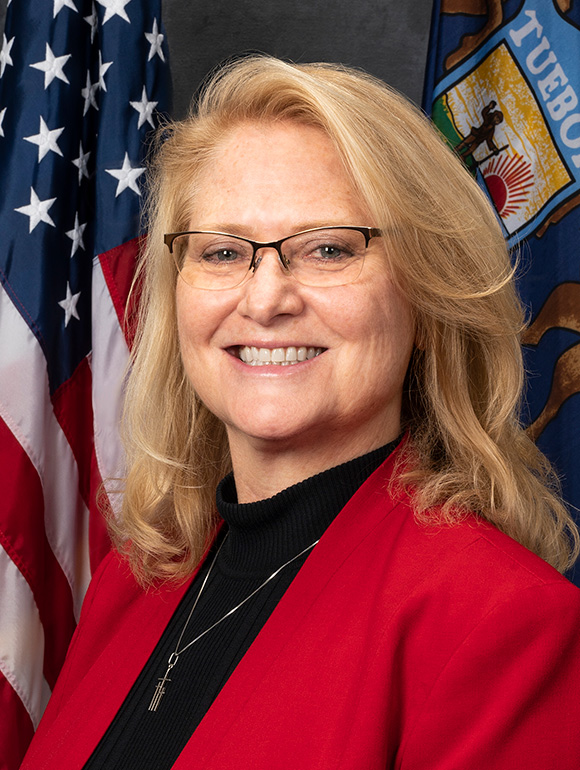
SB 370 creates Michigan's "Tricare premium reimbursement program" to help National Guard members cover health insurance costs. It directly affects Michigan National Guard members eligible for Tricare Reserve Select or Tricare Dental programs who aren't covered by employer plans or other insurance. The program reimburses members for premiums they pay for these specific Tricare plans, using funds from the existing Michigan National Guard Member Benefit Fund. To qualify, members must apply through a department-form on the website, and reimbursements are made only if sufficient funds are available.
SB 443 requires Michigan health facilities performing specific surgical procedures to implement policies mandating the use of surgical smoke plume evacuation systems. It directly affects hospitals and clinics conducting procedures involving heat-producing equipment (like electrosurgery, lasers, or other heated instruments), which generate harmful smoke containing vapor, gas, or particles. The bill mandates that facilities develop and enforce policies ensuring evacuation systems capture and neutralize the smoke at the surgical site before it can contact staff or patients' eyes or airways. This creates a concrete safety requirement to protect healthcare workers and patients from exposure to potentially hazardous surgical smoke.
This bill requires Michigan health insurers to cover group prenatal care services for all policyholders. It defines these services as evidence-based, group-based prenatal visits in a family-centered setting that include health assessments, social support, education, and peer interaction. The law applies to all health insurance policies issued in Michigan, directly affecting pregnant individuals and their insurers by mandating coverage for this specific care model.
SB 399 amends Michigan's definition of "drug paraphernalia" in the Public Health Code to explicitly exclude certain testing products, like fentanyl test strips, from being classified as paraphernalia. The bill states that tools used to detect harmful chemicals in controlled substances - such as strips for testing fentanyl - do not count as drug paraphernalia under state law. This change directly affects individuals using these testing products for safety, including people who use or distribute them to prevent overdoses. The amendment aims to remove legal barriers for harm-reduction tools without altering other provisions about paraphernalia.
SB 397 removes the prior authorization requirement for specific prescription drugs under Michigan's medical assistance program (Medicaid). This directly affects Medicaid beneficiaries and healthcare providers by allowing immediate coverage for designated drugs without waiting for insurer approval. The bill amends state law to automatically cover these medications, eliminating a step that previously delayed access. It applies only to drugs explicitly named in the legislation, streamlining treatment for covered conditions.
SB 400 prohibits Michigan health insurers from requiring prior authorization for medications treating opioid use disorder or alcohol use disorder. This directly affects health insurance companies and patients seeking these specific treatments, removing a common administrative barrier. The bill amends Michigan’s Insurance Code to explicitly ban prior authorization requirements for these medications, using the existing definition of "prior authorization" from Section 2212e. The law ensures faster access to evidence-based treatment without insurer delays.
SB 402 requires health insurance plans to cover street medicine services, which provide medical care directly to homeless individuals in non-clinical settings like streets or shelters. The bill amends state law (MCL 400.109) to mandate this coverage, directly affecting homeless residents and healthcare providers offering street-based care. This policy change ensures that street medicine services can be billed through insurance, improving access to healthcare for vulnerable populations who might otherwise avoid traditional clinics. The requirement applies to all health insurers covered under the amended statute.
SB 401 requires doctors to co-prescribe naloxone - a medication that reverses opioid overdoses - whenever they prescribe opioid painkillers. This directly affects healthcare providers who prescribe opioids and their patients, mandating that naloxone be provided at the same time as the opioid prescription. The bill amends existing law to make this co-prescribing a standard requirement, not an option. It aims to reduce opioid overdose deaths by ensuring patients have immediate access to naloxone when prescribed opioids. The bill passed the legislature with strong support on July 1, 2025.
SB 404 requires public schools in Michigan to ensure at least one staff member at each school is trained to administer naloxone (an opioid overdose reversal medication) if the state health department provides it at no cost. Schools must develop policies requiring staff to notify parents when naloxone is used and call 9-1-1 for suspected opioid overdoses. The bill directly affects public school districts, intermediate districts, and public school academies by mandating training and response protocols for opioid-related emergencies. It specifies naloxone must be FDA-approved and defines "opioid-related overdose" to include symptoms like respiratory depression or unconsciousness needing medical help.
SB 403 requires Michigan pharmacists to dispense certain medications used to treat addiction without unnecessary delay. This directly affects pharmacists who handle these medications and patients seeking treatment for substance use disorders. The bill amends Michigan's Pharmacy Act (MCL 333.1101 et seq.) by adding a new provision that eliminates administrative barriers causing delays in providing these critical medications. It establishes a clear requirement for prompt dispensing while maintaining pharmacists' existing professional responsibilities.