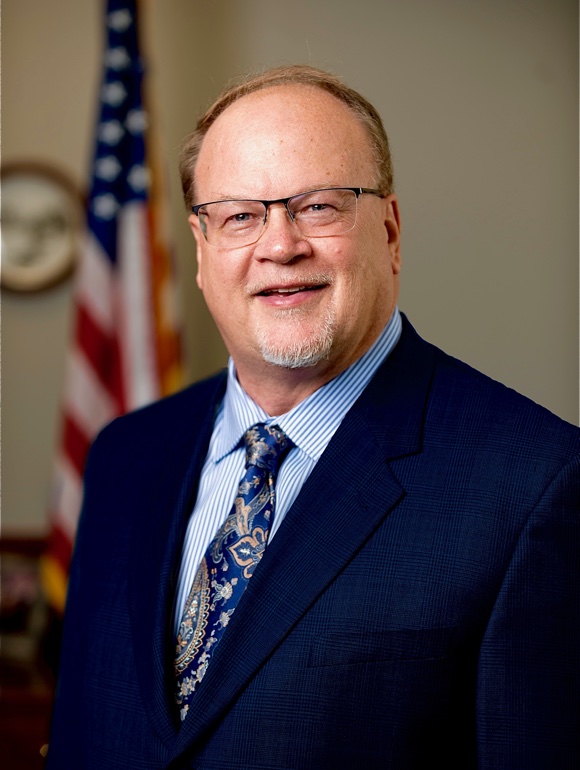
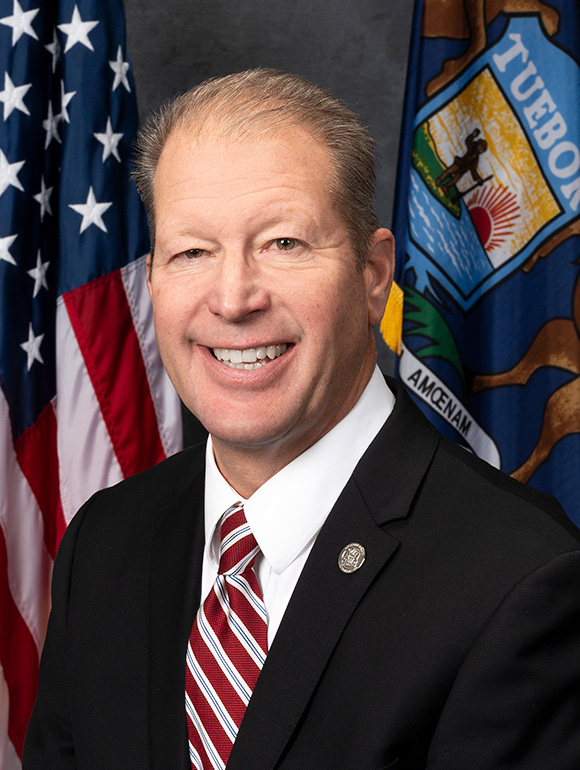
Key legislators
Who's moving healthcare in Michigan
Showing 4 of 4
bills
All healthcare bills
HB 4072 requires hospitals and freestanding surgical outpatient facilities to offer patients any unused eye drops or eye ointments after ophthalmic surgical procedures or medical care. This applies when the facility-provided medication was administered to the patient and is required for their ongoing treatment upon discharge. The bill details labeling requirements if a pharmacist dispenses the drug, and assigns the responsibility for patient counseling on its use to the prescribing doctor. This allows patients to take home remaining eye medications for continued care.
HB 4207 amends Michigan's insurance code to exclude "federal excepted benefits" from standard health insurance coverage requirements. It changes the definition of "health benefit plan" to clarify that coverage for specific federal benefits (like certain military or Indian Health Service programs) is not required under state health insurance policies. This directly affects health insurance carriers and policyholders in Michigan by narrowing what must be included in basic health coverage under state law. The bill makes this change by updating Section 3701 of the Insurance Code to exclude these federal benefits from the definition of covered services.
House Bill 4242 amends the public health code to update requirements for how medical licensees manage patient records. It mandates that healthcare providers explicitly document medical services involving vaginal or anal penetration in patient records, with certain exceptions. The bill establishes a general minimum record retention period of 7 years, which extends to 15 years for records of these specific penetration-related services, also with specified exceptions. Additionally, it outlines procedures for protecting record integrity and confidentiality, ensuring patient access, and for the proper destruction or transfer of records.
HB 4032 permanently extends Michigan's participation in the Interstate Medical Licensure Compact by removing a scheduled expiration date (sunset) from the law. This change directly affects physicians in Michigan who use the compact to practice medicine across state lines, as it eliminates the need for periodic legislative renewal. The bill's key provision amends Michigan's Public Health Code to make the compact's terms permanent, ensuring uninterrupted eligibility for physicians seeking multi-state licensure. The compact allows doctors to obtain licenses in multiple participating states more efficiently, reducing administrative barriers for cross-state medical practice.