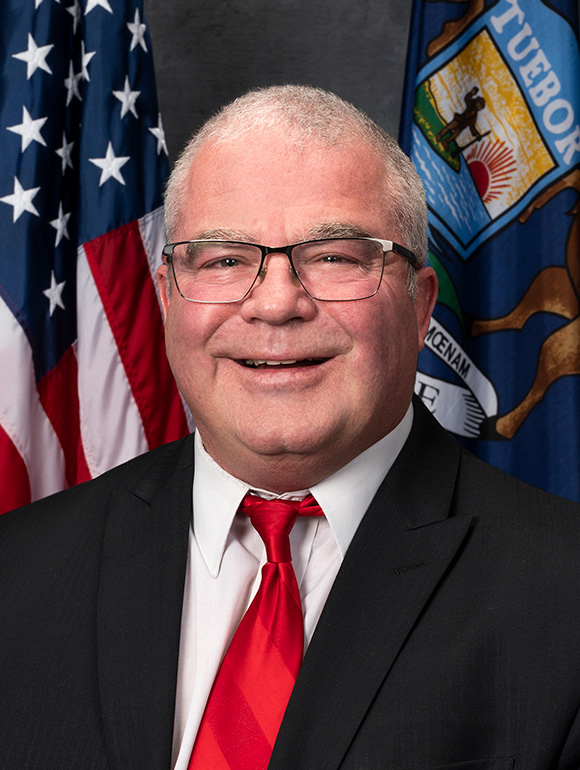
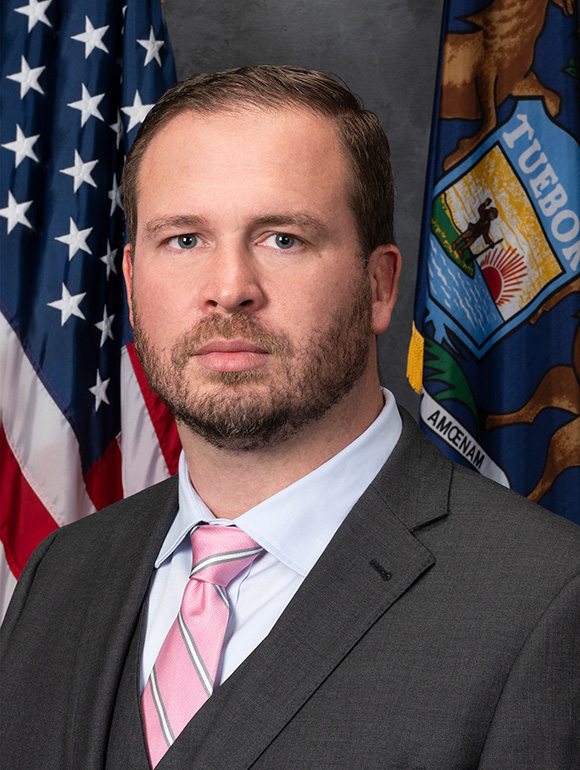
HB 5234 modifies Michigan's vehicle code to change how law enforcement agencies can use fees collected from salvage vehicle inspections. Specifically, it updates Section 217c of the Michigan Vehicle Code (MCL 257.217c) to expand allowable uses for these fee revenues. The bill directly affects local law enforcement agencies that collect these inspection fees, allowing them to allocate funds toward equipment, training, or other operational needs previously restricted. This is a procedural funding adjustment with no new tax or mandate.
HB 5126 creates new sentencing guidelines specifically for theft of cargo offenses in Michigan. It amends Michigan's Code of Criminal Procedure (MCL 777.16r) to establish distinct sentencing parameters for cases involving the theft of cargo, which currently lack specific guidelines. The bill directly affects courts, prosecutors, and defendants in cargo theft cases by providing clearer sentencing standards for these offenses. This is a procedural change to sentencing guidelines, not a new criminal charge or penalty. The bill was introduced on October 23, 2025, and referred to the Judiciary Committee.
HB 5037 extends the statute of limitations for certain criminal sexual conduct offenses involving victims under 18 years old. Specifically, it increases the time limit for filing indictments from 10 years to 15 years after the offense, or until the victim turns 28 - whichever is later. The bill also allows indefinite filing for cases where DNA evidence identifies the perpetrator, with charges needing to be filed within 15 years of identification. This change directly affects victims of these specific offenses and prosecutors seeking to pursue charges, providing more time to identify perpetrators and file cases.
This bill's title incorrectly references water supply, but the actual text amends Michigan's law restricting disclosure of law enforcement statements (2006 PA 563). It defines "involuntary statement" as information compelled by a law enforcement agency through threats of job loss or sanctions. The bill would protect such compelled statements from disclosure, applying to officers employed by state police, county agencies, cities, universities, and other specified entities. This directly affects law enforcement officers and agencies by limiting how their compelled statements can be used in legal proceedings.
HB 4714 updates Michigan's sentencing guidelines specifically for fraudulent insurance acts by amending Section 15a of the Code of Criminal Procedure (MCL 777.15a). The bill directly affects individuals convicted of insurance fraud by establishing clearer sentencing standards for these offenses. It modifies existing sentencing structures to provide more defined parameters for judges when determining penalties in fraud cases involving insurance. The changes aim to standardize penalties for this specific crime category within Michigan's criminal justice system. The bill passed the Michigan House on September 16, 2025, with strong support.
HB 4715 protects individuals and entities that report suspected or confirmed insurance fraud from civil lawsuits, provided they act without malice and do not knowingly provide false information. It extends this immunity to insurers, their employees, private citizens cooperating with fraud investigations, and authorized agencies like the National Insurance Crime Bureau. The bill ensures those filing reports, sharing information, or testifying in fraud cases cannot be sued for libel, slander, or other civil claims related to their good-faith actions. This directly affects anyone involved in reporting or investigating insurance fraud within Michigan’s legal framework.
HB 4506 would have established new sentencing guidelines to prevent life without parole sentences for individuals aged 18 to 21. The bill amended Michigan’s sentencing law (MCL 760.1-777.69) by adding a specific provision for this age group, requiring judges to consider mitigating factors like youth and development. It directly affected young adults in the criminal justice system facing potential life sentences without parole. The bill was defeated in the legislature on July 24, 2025, with 55 votes in favor and 43 against.
HB 4260 redirects $115 million annually from Michigan's 4% general sales tax revenue into the Public Safety and Violence Prevention Fund starting with the 2025-2026 fiscal year. This change affects state budget allocations, shifting funds previously going to the general fund toward public safety and violence prevention programs. The bill amends Michigan's General Sales Tax Act (MCL 205.75) to establish this specific annual transfer, with the amount adjusted based on actual tax collections. It does not create new taxes but reallocates existing revenue streams.
HB 4261 creates the Public Safety and Violence Prevention Fund within Michigan's trust fund system. It establishes the fund using money from the general sales tax (Section 25 of 1933 PA 167), donations, and investment earnings, with funds permanently staying in the account instead of lapsing to the general fund. Starting September 30, 2026, the state treasurer will distribute the fund’s revenues: 2% to health services for community violence intervention grants, 2% to crime victim funds, and the remainder based on each city/village/township’s violent crime rate (with a 5% reduction for areas not meeting crime reduction targets). This directly affects local governments receiving funds, the Department of Health and Human Services (administering grants), and crime victim programs.
HB 4018 clarifies when juveniles aged 16-17 can be transported with adults during custody. The bill specifies that juveniles may only be transported with an adult who is 25 or younger if both were taken into custody simultaneously for the same offense or occupied the same vehicle during the offense. It requires juveniles to be separated from adults "at the earliest available time" after arrival. This directly affects law enforcement and juvenile justice systems handling cases involving older juveniles (16-17) and young adults (under 25) who commit offenses together. The amendment updates Michigan's Probate Code to provide clear, specific conditions for this exception to standard juvenile detention rules.