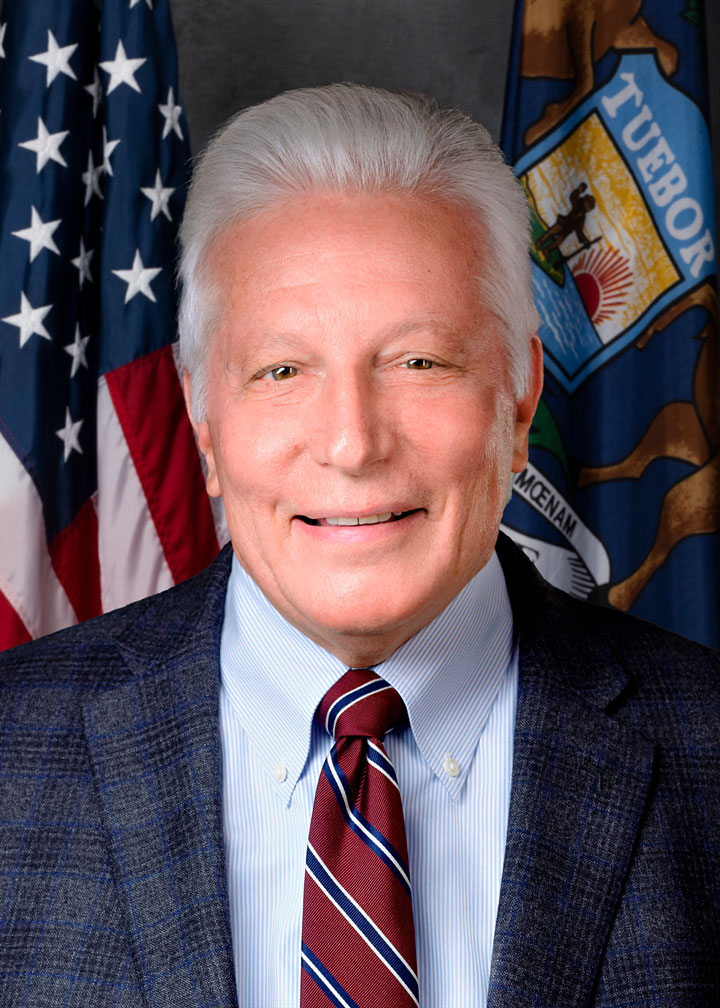
HB 5504 proposes creating a State Digital Service Office within Michigan's Department of Technology, Management, and Budget. The office would review software projects costing $1 million or more, advise state agencies on modern development practices (like user-centered design and agile methods), and require annual reports on progress and cost savings. It directly affects state departments and agencies developing digital services, mandating collaboration with the new office for projects over $500,000 and requiring transparency through public reporting on outcomes like time saved and error reduction. The bill aims to improve digital service efficiency and user experience across state government.
HB 4572 is an appropriations bill that allocates funding for Michigan's Department of Military and Veterans Affairs for the fiscal year ending September 30, 2026. It establishes the specific budget amount the department can spend on military and veterans programs during this period. The bill directly affects the department's operations and the veterans and military personnel it serves through its funded services. As a routine budget measure, it creates the legal framework for spending but does not change existing programs or policies.
HB 5308 requires Michigan watercraft owners to purchase an annual $35 "Great Lakes protection" decal. Revenue from these decals funds invasive species prevention and remediation efforts under Section 80124b. The bill mandates that the state agency discontinue sales if fewer than 2,000 decals are sold by September 2006, then fewer than 500 annually after that. It directly affects recreational boat owners in Michigan who must buy the decal to legally operate watercraft. The decal design is specified but placement rules allow flexibility for law enforcement.
This bill modifies Michigan's sales tax rules for online marketplace facilitators, requiring them to collect and remit sales tax on all taxable sales made through their platforms regardless of whether the individual sellers have a physical presence in the state. It establishes that marketplace facilitators are responsible for auditing only their own facilitated sales unless sellers fail to provide necessary information, while also protecting facilitators from liability when sellers provide incorrect data or pay the tax directly. The legislation creates a special provision for delivery network companies, allowing them to deduct or exclude from their tax liability the sales tax they paid to marketplace sellers for qualified delivery services, such as those performed by couriers using personal vehicles or walking for distances under 75 miles.
SB 581 updates definitions in Michigan's downtown development law to clarify how tax increment financing (TIF) programs operate. It specifically revises the definition of "downtown district" to allow multiple geographic areas within a business district under certain conditions (like inter-municipal agreements), defines "captured assessed value" for TIF calculations, and limits "catalyst development projects" to one per authority (requiring $300 million+ investment in cities over 600,000 population). These changes directly affect municipalities operating downtown development authorities that use TIF to fund redevelopment. The bill focuses on precise terminology to ensure consistent application of existing TIF rules, without creating new funding mechanisms.
HB 4346 redirects revenue from Michigan's lawful internet gaming programs to the Michigan Agriculture Equine Industry Development Fund and removes the existing spending limit on these funds. This bill directly affects the state's horse and agricultural industries by providing them with potentially increased funding for development initiatives. The key provision changes a 2019 law (MCL 432.315) to allow all allocated gaming revenue - previously subject to a cap - to flow into the equine fund without restriction. The bill is currently pending in the House Rules Committee after being reported with a substitute amendment.
HB 4576 is the fiscal year 2025-2026 appropriations bill for the Michigan Department of Education. It authorizes specific funding levels for the department's operations and programs during the upcoming state fiscal year. The bill passed the House on June 11, 2025, with 56 ayes, 53 noes, and 1 excused. As a procedural appropriations act, it establishes the legal funding framework but does not detail specific programs or spending items beyond the authorized amounts.
HB 4543 changes how Michigan's home heating credit is adjusted annually. It replaces the use of the national U.S. Consumer Price Index (CPI) with the Detroit Consumer Price Index to calculate annual credit adjustments. This means the credit amount for eligible households will now reflect local cost-of-living changes in Detroit instead of national averages. The bill directly affects low-to-moderate income Michigan residents who claim the home heating credit on their state tax returns.
SB 689 amends Michigan's farmland preservation law to expand when landowners can give up (relinquish) farmland from development rights agreements. It adds two new scenarios: 1) land with pre-existing structures (up to 5 acres), and 2) land for a farm operator's residence (up to 2 acres), both requiring approval from local government and the state land use agency. If relinquishment occurs, landowners must repay tax credits received under the agreement, plus interest, via a lien recorded against the property. This directly affects farmers with existing farmland preservation agreements who wish to develop or use portions of their land for specific purposes.
SB 685 amends Michigan's farmland tax credit law (MCL 324.101-324.90106) by adding Section 36109b. It expands eligibility for the farmland tax credit to properties with existing legal agreements (like easements or leases) that were in place before a specific date, even if those arrangements complicate ownership. This change directly affects farmers and landowners who hold farmland subject to multiple pre-existing agreements, allowing them to qualify for the tax credit they previously might have been excluded from. The bill passed unanimously in the Michigan Senate on December 2, 2025, after being referred to the Agriculture Committee.