Hot Rotisserie Chicken Act This bill includes hot rotisserie chicken as an eligible food to purchase with Supplemental Nutrition Assistance Program (SNAP) benefits.
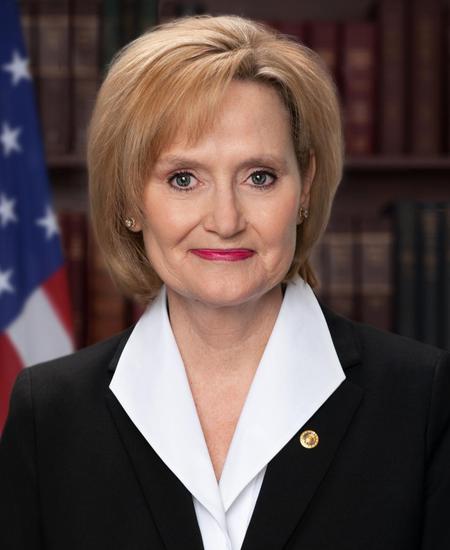
Sen. Cindy Hyde-Smith
Sponsored bills
Maddy summaryThis bill amends the Title X family planning program to prohibit the use of federal funds for entities that perform or financially support abortions. It allows exceptions for cases involving rape, incest, or life-threatening medical conditions, while also permitting hospitals to receive funding as long as they do not give those funds to non-hospital abortion providers. To enforce these rules, the bill requires the Secretary of Health and Human Services to submit annual reports detailing which organizations receive grants and the specific number of abortions performed under the medical and criminal exceptions.
Maddy summaryThe Breast Cancer Stamp Reauthorization Act extends the sale of a special postage stamp dedicated to breast cancer research until the year 2037. This change directly affects the United States Postal Service and the public by allowing the continued availability of this specific stamp for purchase. The bill achieves this by amending federal law to update the expiration date for the stamp's authorized sale period. No other policy changes or funding mechanisms are introduced by this legislation.
Maddy summaryThe Combating Illicit Xylazine Act places xylazine - a veterinary sedative increasingly found in illicit drug mixtures - into Schedule III of the Controlled Substances Act, subjecting it to federal regulation as a controlled substance. It specifically allows veterinary use without requiring registration of the ultimate user (e.g., pet owners or veterinarians) if xylazine is dispensed by a registered veterinarian or pharmacy with a vet prescription and used for animals owned by the user, under their care, or in authorized animal programs. The bill provides a one-year delay for labeling and packaging requirements and a 60-day delay for registration and recordkeeping for veterinary use to ease implementation. Additionally, it adds xylazine to the Arcos tracking system for controlled substances and mandates two congressional reports on illicit use prevalence within 18 months and 4 years of enactment.
Maddy summaryThis bill reauthorizes existing regional ocean partnerships through 2031, extending funding for coastal states and tribes managing ocean resources. It sets specific annual funding levels: $11.57 million for 2028, $11.69 million for 2029, $11.81 million for 2030, and $11.92 million for 2031. The bill makes technical updates to reporting requirements and adjusts the funding period to align with the new authorization. It directly affects current regional ocean partnership programs under the 2023 defense act, ensuring continued federal support for coastal management efforts.
Maddy summaryThis bill requires the Federal Aviation Administration (FAA) to update regulations to encourage pilots and air traffic controllers to seek and disclose mental health care without fear of losing their medical certification. It mandates an annual review of the "special issuance" process (for medical certification) to consider new treatments, improve examiner training, and reduce backlogs, while allocating $15 million annually (2026-2029) to recruit more medical examiners and provide mental health training. Additionally, it funds a $1.5 million annual public campaign to destigmatize mental health care in aviation, improve trust with workers, and make resources easily accessible at aviation medical offices and training facilities. The FAA must consult with industry stakeholders and report progress to Congress on implementation.
Maddy summaryThe SAFEGUARDS Act of 2025 ensures that revenue from the 9/11 Security Fee (paid by airline passengers) is used exclusively for aviation security, ending its diversion to other government purposes by 2027. It creates two dedicated funds: the Aviation Security Capital Fund (receiving $250 million annually through 2025, then $500 million annually starting in 2026) for general security improvements, and the Aviation Security Checkpoint Technology Fund (receiving $250 million annually starting in 2026) specifically for security screening technology like baggage scanners and exit lanes. The bill requires the Transportation Security Administration (TSA) to collect sufficient fees to fund these amounts and allows retroactive grants for security technology projects implemented since 2023. This directly affects TSA operations, airports, and passenger fees, with no new taxes or fees imposed.
Maddy summaryThis resolution designates April 2026 as National Native Plant Month to raise awareness about the importance of indigenous plant species in the United States. The bill directly affects environmental advocates, land managers, and the general public by encouraging recognition of native plants' ecological benefits, such as supporting wildlife habitats and improving soil and water quality. It formally acknowledges that native plants are better adapted to local conditions and play a critical role in ecosystem resilience compared to non-native species. The resolution does not create new laws or funding but serves as a symbolic gesture to highlight the value of preserving native plant diversity.
Maddy summaryThe Ensuring Better Interest Treatment and Deductibility Act modifies how businesses calculate interest expense limits for tax purposes. It removes a specific exception related to adjusted taxable income calculations that was added in previous legislation. This change applies to tax years starting after December 31, 2025, affecting businesses that deduct interest expenses on their federal income tax returns. The bill aims to alter the rules governing Section 163(j) of the Internal Revenue Code without changing the overall cap on deductible interest.

Maddy summaryThis bill, known as the Save Struggling Hospitals Act, modifies Medicare reimbursement rules to provide additional financial support to hospitals in low-wage areas. It directly affects hospitals whose geographic area wage index falls below the 25th percentile, increasing their reimbursement rates by half the difference between their current index and the 25th percentile threshold. The adjustment applies to discharges occurring on or after October 1, 2019, and is designed to be budget neutral, meaning the total amount paid out remains unchanged while redistributing funds from higher-wage to lower-wage areas. The law also includes safeguards to prevent hospitals in the 75th percentile or higher from losing funding and ensures no hospital's reimbursement drops below 95 percent of the previous year's rate.