

Maddy summaryHRES 1127 is a symbolic House resolution commemorating the 45th anniversary of the Taiwan Relations Act (TRA) and reaffirming U.S. policy toward Taiwan. It does not create new law but formally reiterates the U.S. commitment to Taiwan under the TRA framework, including regular defense transfers to support Taiwan's self-defense and advocacy for Taiwan's meaningful participation in international organizations. The resolution highlights longstanding U.S.-Taiwan cooperation on trade, security, education, and global challenges like public health and cybersecurity. It specifically calls on the Secretary of State to advance Taiwan's international engagement and supports existing programs like the Taiwan Fellowship Program and the American Institute in Taiwan. As a procedural resolution, it expresses congressional support for current policy without altering legal obligations.
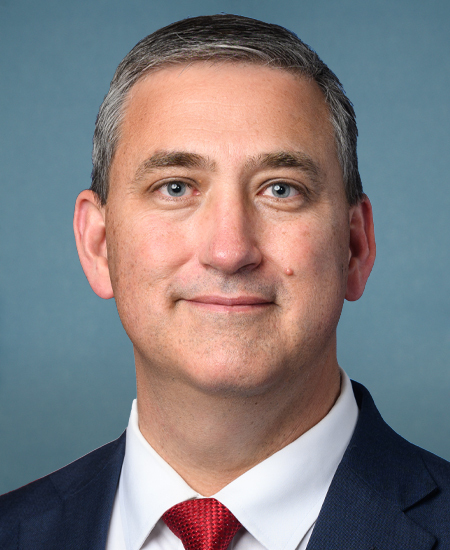
Rep. Nathaniel Moran
Sponsored bills
Maddy summary# Summary of Proposed WIOA Amendment This document proposes significant amendments to the Workforce Innovation and Opportunity Act (WIOA), with key changes including: 1. **YouthBuild Program Enhancement**: - Increased annual funding authorization to $108,150,000 - New performance reporting requirements - Added focus on opioid-related training and services 2. **New Reentry Employment Opportunities Program** (Section 172): - Creates a competitive grant program for justice-involved individuals - Requires evidence-based practices and performance metrics - Includes specific requirements for recidivism reduction - Defines "eligible adult" (age 25+) and "eligible youth" (age 14-24) 3. **Strengthening Community Colleges Program** (Section 173): - Creates new grant program with $65,000,000 annual funding - Requires industry partnerships for workforce development - Mandates evidence-based program design - Focuses on recognized postsecondary credentials and career pathways 4. **Performance Accountability System**: - Enhanced data collection and reporting requirements - New requirement for making data available in "linked, open, and interoperable data formats" - More detailed performance metrics for all programs 5. **Funding Increases**: - Increased authorizations for multiple programs: - Native American programs: $61,800,000 annually - Migrant and seasonal farmworker programs: $100,317,900 annually - Technical assistance: $5,000,000 annually - Evaluations and research: $12,720,000 annually 6. **Administrative Changes**: - New consultation requirement with labor organizations for on-the-job training - Revised definitions (e.g., "English language learners" changed to "English learners") - New requirements for public reporting of matching funds 7. **Data Infrastructure**: - New "Workforce Data Infrastructure" provisions (Section 174) - Requirements for interoperable data systems - Focus on credential registries and data sharing The proposed amendment emphasizes data-driven decision making, industry-aligned training, performance accountability, and expanded opportunities for underserved populations including justice-involved individuals, opioid treatment participants, and individuals with barriers to employment.
Maddy summaryH.J.Res. 116 seeks to block a Department of Labor rule finalized on January 10, 2024, which aimed to clarify how businesses classify workers as employees or independent contractors under the Fair Labor Standards Act (FLSA). If passed, this resolution would prevent the rule from taking effect, directly affecting businesses that use independent contractors and their workers, who rely on FLSA protections for minimum wage and overtime pay. The bill uses a specific congressional process (under Chapter 8 of Title 5, U.S. Code) to disapprove the rule, rather than creating new policy. This action would maintain the existing classification standards until a new rule is established.
Maddy summaryThis bill establishes new eligibility rules for women's and girls' amateur sports by defining "female" and "male" based on biological sex at birth. It prohibits individuals designated as male under these definitions from participating in athletic competitions designated for females, women, or girls. The law amends existing U.S. Code provisions to add this requirement, directly affecting athletes and organizations managing female-designated teams. The key change is a clear ban on male-identified participants in female sports, replacing previous eligibility standards with biological sex criteria.
Maddy summaryHR 7736, the CONSENT Act, creates a civil remedy for individuals 18+ who receive unsolicited sexually explicit images or videos without their consent. It allows victims to sue senders in federal court for statutory damages up to $500 or compensation for emotional distress, plus attorney fees and injunctions to stop further transmissions. The bill explicitly excludes third-party platforms (like social media), medical/educational uses, and 18+ websites from liability. It defines "machine-manipulated media" (including AI-generated content) as covered under "visual depictions" and includes special protections for minors, allowing them to use initials in court filings. The law does not affect existing criminal penalties for non-consensual sharing.
Maddy summaryHR 7747, the Federal Judiciary Stabilization Act of 2024, reclassifies existing federal district court judgeships in specific jurisdictions under a new section of law (28 U.S.C. § 133). It directly affects the courts in Hawaii, Kansas, Missouri, Alabama, Arizona, California, Florida, New Mexico, North Carolina, and Texas by updating their authorized judge counts, such as adding 4 judgeships for Hawaii and increasing California's Central District to 28. The bill modifies the official table in federal law to reflect these new numbers without creating new permanent positions. It authorizes necessary funding to implement these changes. This is a procedural adjustment to judgeship authorizations, not a policy change affecting the public.
Maddy summaryHR 6591, the Encouraging Success Act, requires the Small Business Administration (SBA) to regularly update the asset and net worth limits for individuals qualifying as "economically disadvantaged" under the SBA's 8(a) business development program. This affects small business owners seeking eligibility for the 8(a) program, which provides federal contracting opportunities. The bill mandates the SBA reassess these thresholds annually after enactment and every four years thereafter, adjusting for inflation and economic changes through a standard rulemaking process with public comment. The SBA must use existing funding to implement these updates without requiring new appropriations.
Maddy summaryThis bill directs the Secretary of State to actively use U.S. diplomatic resources, including the voice and influence of U.S. diplomats and officials at the International Boundary and Water Commission, to advance efforts ensuring Mexico complies with the 1944 water treaty. It requires U.S. officials to work toward establishing reliable water delivery agreements under the treaty for the Colorado, Tijuana, and Rio Grande rivers. The key mechanism is mandating diplomatic engagement to address Mexico's compliance with treaty obligations, aiming to secure predictable water flows for U.S. users. The bill affects U.S. diplomatic operations and water management coordination with Mexico, focusing on treaty implementation rather than new water infrastructure.
Maddy summaryHR 4039 prohibits U.S. State Department and USAID funds from supporting programs involving goods made in Xinjiang, China - whether wholly or partially produced there. It blocks funding for contracts, policies, or activities using such goods unless the Secretary of State specifically authorizes it after proving no forced labor was used (with clear evidence) and providing 15 days' notice to congressional leaders. The law directly affects U.S. foreign assistance programs that might source materials from Xinjiang. It aligns with existing U.S. trade law definitions of forced labor and creates strict barriers to using Xinjiang-sourced goods in U.S. international programs.
This joint resolution nullifies the final rule issued by the Animal and Plant Health Inspection Service (APHIS) titled Importation of Fresh Beef From Paraguay and published on November 14, 2023. The final rule allows for the importation of fresh (chilled or frozen) beef from Paraguay into the United States under certain conditions. The United States prohibits or restricts the importation of certain animals and animal products to prevent the introduction of various animal diseases, including foot-and-mouth disease (FMD). In response to a request from Paraguay to allow the importation of fresh beef from Paraguay into the United States, APHIS conducted a risk analysis. APHIS concluded that fresh beef could be safely imported from Paraguay, provided that certain conditions are met. These conditions include that (1) FMD has not been diagnosed in the exporting region within the previous 12 months; (2) the meat originated from premises where FMD has not been present during the lifetime of any bovines slaughtered for U.S. meat export; and (3) APHIS may periodically conduct on-site evaluations and subsequent inspections of the slaughter facilities, records, and operations.