

Expanding Home Loans for Guard and Reservists Act This bill revises a provision that makes full-time National Guard members who serve for a specified period eligible for home loans from the Department of Veterans Affairs to instead make any individual who performed active service for the specified period eligible for the loans.
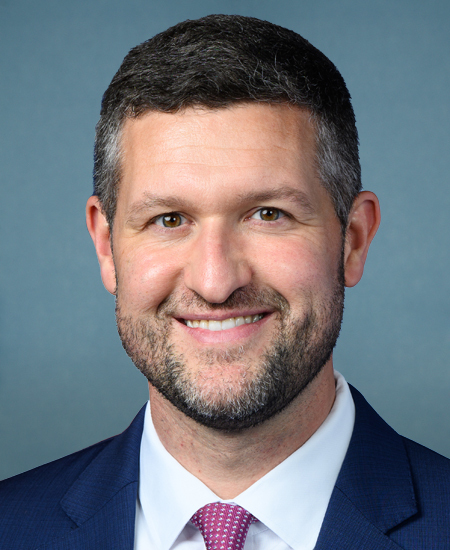
Rep. Patrick Ryan
Sponsored bills
Protecting Reproductive Freedom Act This bill prohibits states from restricting mifepristone or misoprostol that is approved for medical abortion from being sent across state lines or from being prescribed by telehealth. States are also prohibited from establishing in-person dispensing requirements.
Social Security Fairness Act of 2021 This bill repeals provisions that reduce Social Security benefits for individuals who receive other benefits, such as a pension from a state or local government. The bill eliminates the government pension offset , which in various instances reduces Social Security benefits for spouses, widows, and widowers who also receive government pensions of their own. The bill also eliminates the windfall elimination provision , which in some instances reduces Social Security benefits for individuals who also receive a pension or disability benefit from an employer that did not withhold Social Security taxes. These changes are effective for benefits payable after December 2021.
Supporting Medicare Providers Act of 2022 This bill extends a payment increase under Medicare's physician fee schedule through the end of 2023 (currently set to expire at the end of 2022).
Capital Lending and Investment for Marijuana Businesses Act or the CLIMB Act This bill allows national stock exchanges to list state-licensed cannabis-related businesses on their exchanges. It also prohibits a federal agency from bringing certain civil, criminal, regulatory, or administrative actions against a business or person because they provide assistance or services to a state-licensed cannabis-related business.
Save America’s Forgotten Equines Act of 2021 or the SAFE Act of 2021 This bill prohibits the transporting, receiving, possessing, purchasing, selling, or donation by a person of an equine (e.g., horse) that the person has reason to believe will be slaughtered for human consumption.
Alzheimer's Accountability and Investment Act This bill requires the National Institutes of Health to annually submit, beginning in FY2024, an estimate of its budget and personnel needs for carrying out initiatives pursuant to the National Alzheimer's Project. This project supports coordination of federal planning, research, and other efforts to address Alzheimer's disease and related dementias.
NAPA Reauthorization Act This bill extends through 2035 and makes other changes to the National Alzheimer's Project. This project supports coordination of federal planning, programs, and other efforts to address Alzheimer's disease and related dementias. In particular, the bill incorporates a focus on promoting healthy aging and reducing risk factors associated with cognitive decline. The bill also expands the membership of the Advisory Council on Alzheimer's Research, Care, and Services to include (1) a researcher with experience recruiting and retaining diverse clinical trial participants, (2) an individual diagnosed with Alzheimer's disease, and (3) representatives from additional federal agencies (e.g., the Department of Justice and the Office of Management and Budget).
Supply Chain Disruptions Relief Act This bill modifies the treatment of liquidations of new motor vehicle inventory as qualified LIFO (last in first out accounting method) inventory. It allows new motor vehicle dealers to elect to wait until the end of 2025 to replace their inventory for purposes of determining income attributable to the sale of such inventory during 2020 and 2021.
Integrating New Technologies to Empower Law Enforcement at Our Borders Act This bill requires the Department of Homeland Security to report to Congress a plan to identify and deploy emerging and advanced technologies (e.g., artificial intelligence, automation, and optical radar) to achieve greater situational awareness along the northern and southern U.S. borders between ports of entry. The report shall contain information including assessments of (1) how Customs and Border Protection is currently using such technologies, (2) how such technologies can address border security capability gaps, and (3) the cost of acquiring such technologies.