

Maddy summaryThis bill amends the tax code to allow charitable organizations (501(c)(3) nonprofits) to provide grants for college student housing without losing their tax-exempt status. It specifically permits grants to improve or maintain "collegiate housing property" (where most residents are full-time students at a nearby college) but excludes grants for fitness facilities. The change affects charities seeking to fund student housing infrastructure, clarifying that such grants qualify as charitable under existing tax rules. The policy change applies to grants made after the bill's enactment date.
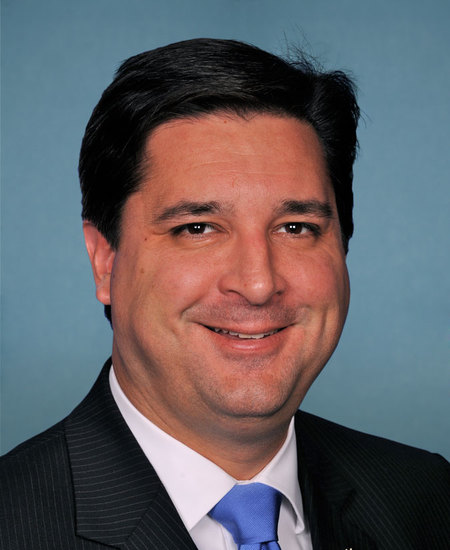
Rep. David Rouzer
Sponsored bills
Maddy summaryHR 2382, the First Responders Retirement Parity Act, clarifies that government retirement plans may include firefighters, emergency medical technicians (EMTs), and paramedics without losing their "governmental plan" status under federal tax and retirement laws. The bill amends the Internal Revenue Code and the Employee Retirement Income Security Act to specifically allow public safety agencies (contracted with local governments) to cover these workers - whose primary duties involve firefighting or out-of-hospital emergency medical services - as part of their retirement plans. This change directly affects first responders employed by local public safety agencies, ensuring their retirement benefits remain eligible for the same tax advantages as other government employees. The key mechanism updates legal definitions to prevent plans covering these roles from being disqualified under current rules.
Maddy summaryThis bill, HR 2364 (Helene Small Business Recovery Act), allows the President to waive federal rules blocking duplicate disaster aid for small businesses affected by Hurricane Helene (a 2023 major disaster). It enables businesses to receive additional assistance without being denied due to prior aid, provided the President approves a waiver within 45 days of a state governor's request. The waiver process requires consideration of cost-effectiveness, equity, and prevents income limits or labeling loans as "duplicate" if funds cover disaster-related losses. It directly helps small businesses and entities suffering losses from the 2023-2024 disasters.
Maddy summaryThis bill allows the President to waive the general prohibition against duplicate disaster assistance for individuals, businesses, and states affected by major disasters or emergencies. It requires the President to consider FEMA recommendations, cost-effectiveness, equity, and public policy when deciding on waivers, and mandates a decision within 45 days. The waiver process explicitly prohibits applying income limits to eligibility and prevents treating loans as duplications if used for disaster-related losses. It also requires FEMA to submit reports to Congress on improving disaster assistance coordination and communication within one year of enactment. The bill applies to disasters declared on or after January 1, 2016.
Maddy summaryThis bill adds Medicare coverage for home-based treatment of Alpha-1 Antitrypsin Deficiency Disorder (a rare genetic condition causing lung and liver damage). It specifically covers "augmentation therapy" (replacement protein therapy) delivered at home by qualified suppliers to Medicare Part A and B enrollees with this diagnosis who aren't in Medicare Advantage plans. The bill establishes payment for intravenous kits and up to 2 hours of nursing services per session, set at 80% of the lesser of actual cost or a defined rate. It amends Medicare rules to include this treatment under coverage, effective January 2027.
Maddy summaryThis bill allows states and tribal governments to request a lump-sum payment of 80% of estimated disaster costs (instead of standard federal aid) for "covered small disasters" defined as incidents with damages under 125% of a state's per capita indicator. States must choose this option annually, agree on the payment amount within 90 days, and cannot later seek additional funds through the standard Public Assistance Program. Funds must address recovery needs while complying with environmental, historic preservation, and civil rights laws. This directly affects state and tribal governments managing smaller-scale disasters, streamlining their access to upfront recovery resources.
This bill establishes eligibility for certain disability compensation and benefits for individuals who served at the Nevada Test and Training Range (NTTR). The bill establishes that onsite participation on or after January 1, 1972, and before January 1, 2005, at certain NTTR locations where there was a potential of toxic exposure is a radiation-risk activity, therefore providing a presumption of service-connection for specified conditions. The bill specifies the covered NTTR locations include a location at Indian Springs Auxiliary Airfield but do not include a location at Nellis Air Force Base or Creech Air Force Base. The bill also establishes a presumption of toxic exposure for veterans who performed active service at such NTTR locations, including airspace above such locations. Additionally, lipomas and tumor related conditions must be considered as service-connected conditions for veterans who served at the NTTR locations.
Maddy summaryThis bill modifies SNAP (food stamp) program rules to prevent potential misuse. It requires states to suspend SNAP benefits for households making all card transactions out-of-state for over 60 days, unless they prove continued residency in their state through evidence or an investigation. It also prohibits households where members own retail or wholesale food stores from using SNAP benefits at those businesses, with exceptions for publicly owned or government-run stores. These changes directly affect SNAP recipients who move without updating their address or own participating food businesses, aiming to ensure benefits are used by eligible residents. The rules take effect one year after enactment.
Maddy summaryHR 1376, the Healthy Poultry Assistance and Indemnification Act of 2025, provides compensation to poultry growers and layer facility owners whose operations were prohibited within USDA-designated "control areas" due to animal health restrictions. It directly affects poultry farmers raising birds bred for meat or eggs (like chickens, turkeys, or ducks), excluding doves and pigeons. The bill requires the Secretary to pay compensation equal to the average income from the farm's five most recent flocks multiplied by the number of prohibited flocks, minus any prior state compensation received, with payments due within 60 days of a claim. This mechanism ensures financial support for farmers impacted by USDA-mandated restrictions without requiring judicial review of payment amounts.
Maddy summaryHRES 227 is a non-binding resolution expressing the House of Representatives' support for designating March 18, 2025, as "National Agriculture Day" to honor agriculture's role as a vital U.S. industry. It does not create new laws, allocate funds, or impose requirements on any group. The resolution serves as a symbolic gesture to highlight agriculture's economic impact and contributions to the nation. As a procedural resolution, it has no direct policy effect beyond raising awareness.