

Maddy summaryThe Maritime Supply Chain Security Act (HR 2390) amends federal port infrastructure funding rules to allow the use of existing funds for replacing port crane hardware or software linked to the Chinese government. It specifically targets equipment installed, provided, or maintained by China's government entities or its agencies. This change directly affects U.S. ports that currently use such Chinese-sourced crane systems, enabling them to upgrade or replace these components using federal port development funds. The bill modifies existing law to explicitly include crane replacement projects under eligible port resilience initiatives.
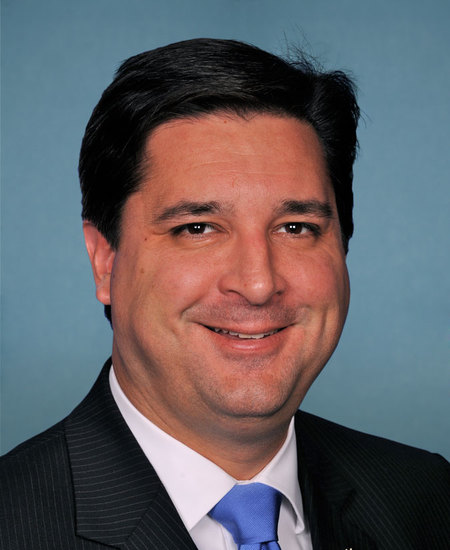
Rep. David Rouzer
Sponsored bills
Maddy summaryHRES 483 is a House resolution recognizing the 250th anniversary of the U.S. Army's founding on June 14, 1775. It expresses appreciation for the Army's service over 250 years, honors soldiers' valor and core values, and calls for public observance through ceremonies and activities. The resolution has no policy impact or funding provisions - it is purely commemorative. It was introduced by 30 bipartisan House members and referred to the Armed Services Committee.
Maddy summaryHR 649, the Whole Milk for Healthy Kids Act of 2025, amends the National School Lunch Act to allow schools participating in the program to offer students both organic and non-organic whole milk, in addition to reduced-fat, low-fat, and fat-free options. Key provisions include clarifying that milk fat in whole milk should not count toward saturated fat limits for meal compliance, prohibiting schools from purchasing milk from Chinese state-owned enterprises, and ensuring schools cannot be barred from offering the full range of milk types listed. The bill directly affects public and private schools serving the National School Lunch Program by expanding their milk options for students. It focuses on concrete policy changes to dietary offerings and sourcing restrictions within the school nutrition program.
Maddy summaryHR 3688, the Protecting Children from Experimentation Act of 2025, prohibits healthcare professionals from performing or aiding gender transition procedures on minors (under age 18) when the procedure involves interstate commerce (e.g., travel, payments, or communications across state lines). The bill defines "gender transition procedures" broadly to include hormonal treatments and surgeries like puberty blockers, hormone therapy, and genital reconstruction, but excludes medically necessary care for disorders of sex development, precocious puberty, or life-threatening conditions. Healthcare providers violating this prohibition face criminal penalties of up to five years in prison or fines, while minors cannot be prosecuted for receiving such procedures. The law explicitly targets providers, not parents or minors, and includes specific medical exceptions to avoid restricting standard care for qualifying health conditions.
Maddy summaryHJRES 61 is a congressional resolution that formally disapproves an Environmental Protection Agency (EPA) rule setting new air pollution standards for rubber tire manufacturing. It directly affects tire manufacturers by blocking the EPA’s proposed rule (published November 29, 2024), which would have required them to meet specific limits on hazardous air pollutants. The resolution’s key mechanism is a formal congressional vote to nullify the rule, making it legally ineffective under Title 5, U.S. Code. This action stops the EPA rule from taking effect without creating new regulations.
Maddy summaryHRES 447 is a non-binding House resolution condemning antisemitism and honoring Yaron Lischinsky and Sarah Milgrim, two Israeli Embassy employees killed during a peace-focused panel discussion in 2023. The resolution specifically condemns all forms of antisemitism - including violence, vandalism, and online harassment - and remembers the victims, who were killed by a far-left activist affiliated with the Party for Socialism and Liberation. It calls for enforcing existing hate crime laws and protecting religious freedom, without creating new legislation. This resolution symbolically supports Jewish communities and victims of antisemitic violence but does not alter legal requirements.
Maddy summaryHRES 441 is a symbolic House resolution expressing support for designating May 2025 as "Mental Health Awareness Month." It does not create new laws, allocate funding, or change existing policies - it solely aims to raise public awareness about mental health challenges. The resolution cites statistics on rising mental health issues (including youth depression, suicide rates, and disparities in care access) to underscore the need for greater attention. It encourages the public, schools, and organizations to use the month to promote mental well-being and reduce stigma, but contains no concrete policy changes or mandates.
Maddy summaryHR 3512, the Tackling Predatory Litigation Funding Act, imposes a new annual tax on funds received by third-party investors who finance lawsuits through litigation financing agreements. It directly affects investors (including foreign entities) who provide funding to plaintiffs or law firms in exchange for a share of settlement or judgment proceeds, excluding small agreements under $10,000 or standard loans. The tax equals the top individual income tax rate plus 3.8 percentage points, with 50% withheld from settlement payments by parties involved in the lawsuit. The law also clarifies that such funds cannot offset losses and excludes certain typical legal fee reimbursements from taxation. The provisions take effect for taxable years beginning after December 31, 2025.
Maddy summaryHR 3518 would deny federal funding to graduate medical schools that require certain diversity, equity, and inclusion (DEI) policies. Specifically, schools must certify they do not compel students or staff to affirm specific beliefs about race, gender, or systemic racism; require "diversity statements" for admission or employment; establish DEI offices; or discriminate based on race in programs. This affects graduate medical schools at institutions of higher education seeking federal financial aid, including student loan programs. The bill permits schools to teach about medical conditions related to race or collect demographic data, but prohibits policies mandating DEI-related pledges or offices.
Maddy summaryThe AGRITOURISM Act (HR 3470) creates a new Office of Agritourism within the U.S. Department of Agriculture (USDA) to support farm-based tourism businesses. The Office, led by a Director appointed by the Secretary, will coordinate USDA programs and provide technical assistance to help small and family-run farms diversify income through activities like farm tours, on-farm sales, accommodations, and farm-related events. It will update USDA programs to reflect best practices, share resources with agritourism businesses, and facilitate partnerships to promote rural economic development. This bill directly affects rural agricultural businesses and the USDA’s approach to fostering sustainable tourism in rural communities.