

Maddy summaryThis bill requires Congress to approve major federal regulations before they take effect. It would mandate that agencies submit detailed reports including cost-benefit analyses, economic impact assessments, and other information to Congress before implementing significant regulations. Major rules - defined as those with at least $100 million annual economic impact or significant effects on costs, competition, or employment - would need a joint resolution of approval from Congress within 70 session days. Nonmajor rules would follow a less stringent disapproval process. The bill aims to increase legislative oversight of the regulatory process, requiring Congress to formally review and approve rules that significantly impact the economy or public regulations.
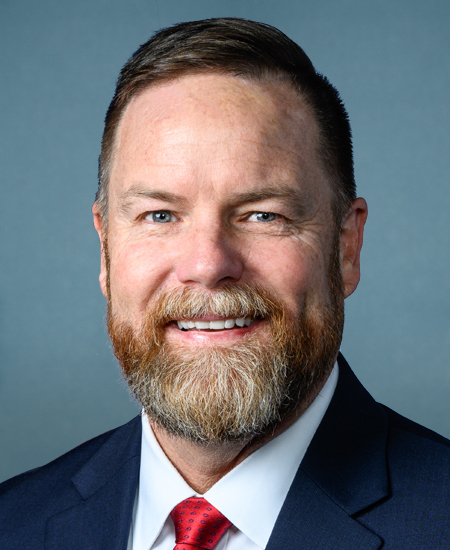
Rep. Aaron Bean
Sponsored bills
Maddy summaryThis bill renames a U.S. Postal Service facility at 518 North Ridgewood Drive in Sebring, Florida, as the "U.S. Army Air Corps Major Thomas B. McGuire Post Office Building." It updates all official federal references to this specific location to reflect the new name. The bill has no policy impact - it does not change postal services, funding, or operations, and only affects the building's official designation.
Maddy summaryThis bill (HR 6633) renames a U.S. Postal Service facility at 9355 113th Street in Seminole, Florida, as the "Army SSG Ryan Christian Knauss Memorial Post Office Building." It directly affects the postal service location and all official federal references to it. The bill requires all government documents, maps, and records to use the new name moving forward. As a commemorative resolution, it has no policy or funding impact - it solely honors Army Specialist Ryan Christian Knauss through the building name.
Maddy summaryThis bill designates the U.S. Postal Service facility at 14280 South Military Trail in Delray Beach, Florida, as the "Benjamin Berell Ferencz Post Office Building." It is a ceremonial naming resolution with no substantive policy changes or impacts on residents, services, or regulations. The bill simply updates official references (such as maps or documents) to use the new name for this specific post office location. It was enacted on January 2, 2025, following passage by both House and Senate in December 2024.
Maddy summaryThis bill designates the U.S. Postal Service facility at 109 Live Oaks Boulevard in Casselberry, Florida, as the "Colonel Joseph William Kittinger II Post Office Building." It directly affects the postal facility and all official U.S. government references to it. The key provision changes the building's official name in all federal laws, documents, maps, and records to reflect this designation. The bill does not create new policies or funding; it is purely a ceremonial naming action.
Maddy summaryThis bill (HR 1823) officially renames the U.S. Postal Service facility at 207 East Fort Dade Avenue in Brooksville, Florida, as the "Specialist Justin Dean Coleman Memorial Post Office Building." It directly affects the building's official name and all future references to it in government documents, maps, or records. The key provision is a simple name change to honor Specialist Justin Dean Coleman, a U.S. Army veteran. This is a procedural bill with no new policies or funding, solely commemorating an individual through the building's designation.
Maddy summaryThis bill, HR 1097 (Everett Alvarez, Jr. Congressional Gold Medal Act of 2023), authorizes the award of a Congressional Gold Medal to Everett Alvarez, Jr., in recognition of his service as a U.S. Navy pilot and Vietnam War prisoner of war. It directly honors Alvarez, who was the first U.S. pilot shot down in the Vietnam War, spent over 8.5 years in captivity, and later served in the Peace Corps and Veterans Administration. The bill’s key mechanism is directing the U.S. Mint to strike a gold medal bearing his name and image, with bronze duplicates available for sale to cover costs. It does not create new policies or affect any group beyond the honoree.
Maddy summaryHR 10517, the DRAIN THE SWAMP Act, requires federal agencies to relocate at least 30% of headquarters employees to offices outside the Washington, D.C., metropolitan area within one year of enactment. The law mandates that relocated employees have their pay adjusted to reflect their new location's pay locality and cannot work full-time remotely. It also directs agencies to reduce government-owned or leased headquarters office space by 30% within two years, prioritizing building sales and consolidating locations. Agencies must report details on employee locations, telework status, and implementation plans to Congress by 180 days after enactment.
Maddy summaryHR 9457, the Transparent Telehealth Bills Act of 2024, prohibits group health plans and insurance plans from charging higher payments for telehealth services when the provider is located at a facility. Specifically, it requires that payment for such services cannot exceed what would have been paid if the provider were not at a facility, eliminating facility fee markups. The bill also mandates a report by the Comptroller General within 18 months, examining telehealth usage trends, rural/urban access, facility fee application, device access, cross-state care, and reimbursement patterns. This applies to plan years beginning January 1, 2026, directly affecting how employer and private health plans reimburse telehealth services provided from facilities.
Maddy summaryHR 2948, the CARS Act, prevents states from banning specialized trucks that carry multiple cars (stinger-steered combination automobile transporters) weighing 88,000 pounds or less from operating on most interstate highways and certain federal-aid primary roads. It requires states to allow reasonable access to these trucks for loading/unloading, fueling, repairs, and rest at facilities along those routes. The bill also permits a 10% increase in axle weight limits for these vehicles. This directly affects auto transport companies and their operations across state lines.