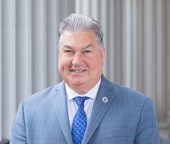
Filed by Mr. Brady -- Order relative to granting the committee on Public Service until June 30, 2024, within which time to make its final report on on current Senate document numbered 1279, relative to civil service adoption.
Sen. Mike Brady
Sponsored bills
Maddy summaryThis bill amends Massachusetts law to explicitly authorize libraries to purchase and license electronic books and digital audiobooks. It directly affects a wide range of library types, including public, school, academic, and tribal libraries, by legally defining these digital formats and the companies that provide them. The legislation clarifies that "publishers" include both traditional book sellers and digital aggregators who license collections to libraries. By updating Chapter 78 of the General Laws, the bill removes potential legal barriers that might have prevented libraries from acquiring modern digital reading materials.
Maddy summaryThis bill requires state and municipal agencies to specify that iron, steel, and manufactured goods used in public construction projects must be made in the United States. While the law generally mandates domestic materials, it allows agencies to request waivers if using American products would harm the public interest, result in insufficient supply or quality, or increase project costs by more than 25 percent. Agencies must provide public notice and justification for any such waivers, and the law imposes penalties, including contract ineligibility, on individuals who falsely label non-domestic goods as American. Additionally, the bill sets a $500,000 threshold for contracts requiring this domestic preference and ensures the rules remain valid even if specific parts are later found unconstitutional.

By Representative Garlick of Needham, a petition (accompanied by bill, House, No. 3040) of Denise C. Garlick and others relative to providing for hybrid access to public meetings. State Administration and Regulatory Oversight.
By Representative Garballey of Arlington, a petition (accompanied by bill, House, No. 2802) of Sean Garballey and others relative to rental housing deleading income tax credit. Revenue.
By Representatives Decker of Cambridge and Vargas of Haverhill, a petition (accompanied by bill, House, No. 2761) of Marjorie C. Decker, Andres X. Vargas and others relative to establishing a child and family tax credit. Revenue.
By Representative Rogers of Cambridge, a petition (accompanied by bill, House, No. 2932) of David M. Rogers and others for legislation to establish a family caregiving tax credit. Revenue.
Maddy summaryThis bill updates Massachusetts laws to allow public bodies and town meetings to be held remotely or in hybrid formats while ensuring all participants can hear one another clearly. It mandates that these meetings remain open to the public and provides for remote voting by members, preventing them from being counted as absent. To maintain transparency, the legislation requires that the public have access to deliberations through live streaming or, if live access is not possible due to financial constraints, by posting a full transcript or recording on the organization's website. The bill also clarifies that remote participation must be offered without any fees or charges to the public.
Maddy summaryThis bill increases the funding available for Massachusetts' housing development incentive program, which provides tax credits to developers building affordable housing. It raises the annual credit limit from $10 million to $57 million for fiscal year 2024 and sets a new annual cap of $30 million for subsequent years. Additionally, the legislation adjusts specific project thresholds, raising the maximum credit amount for certain developments from $2 million to $5 million. These changes directly affect housing developers and the Department of Housing and Community Development by allowing for a larger pool of financial incentives to be distributed.
Maddy summaryThis bill aims to reduce poverty in Massachusetts by expanding the state Earned Income Tax Credit and the Child and Family Tax Credit. It increases the percentage of the federal credit that residents can claim and raises the base credit amount to $600 for eligible households, including those with disabled members or multiple children. The legislation also requires the state to provide multilingual information and posters to help low-income families and employers understand these new tax benefits.