

In committee Feb 20, 2024
1 co-sponsor
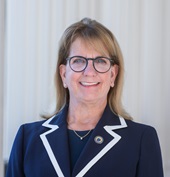
Sen. Joan Lovely
Total votes
1,652
all sessions
Attendance
100%
3 missed
Near the chamber average
With party
98%
of cast votes
Near the chamber average
Bipartisan score
1%
crosses aisle rarely
Near the chamber average
Sponsored
1,753
bills & resolutions
Near the chamber average
Committees
7
assignments
1,753 bills and resolutions
Sponsored bills
Total
1,753
Primary
336
Co-sponsor
1,417
This page
1,753
matching current filters
An Act relative to universal school meals
Maddy summaryThis bill proposes establishing a universal school meal program in Massachusetts to provide free breakfast and lunch to all public school students. It would require the state to allocate funding for these meals and mandate that every school district participate in the program. The legislation aims to ensure that every child attending a public school in the Commonwealth receives nutritious food at no cost to their families.
Passed Feb 20, 2024
1 co-sponsor
An Act to lift kids out of deep poverty
Maddy summaryThis bill is a petition to establish a new committee or task force focused on lifting children out of deep poverty in Massachusetts. It does not contain specific policy provisions, funding allocations, or operational mechanisms, as it serves only as a formal request to the legislature to consider the issue. The document lists numerous legislators who have signed the petition but does not outline any concrete legislative changes. Consequently, the bill functions as a procedural item to raise awareness rather than a standalone law.
Passed Feb 15, 2024
1 co-sponsor
An Act establishing a diaper benefits pilot program
Maddy summaryThis bill creates a pilot program to help low-income families in Massachusetts afford diapers for infants and young children. It establishes a new trust fund managed by the Department of Public Health, which will be financed through state appropriations, interest, and unrestricted private donations. The Department of Public Health will select up to 12 organizations across the state to receive funding for purchasing, storing, and distributing diapers, with limits on how many grants are awarded to specific geographic regions. The program is designed to run for a set period, after which the department must submit a report to the legislature detailing the results.
Passed Feb 15, 2024
1 co-sponsor
An Act relative to newborn screenings for congenital cytomegalovirus
By Representative Khan of Newton, a petition (accompanied by bill, House, No. 2218) of Kay Khan and others relative to newborn screenings for congenital cytomegalovirus. Public Health.
Passed Feb 15, 2024
1 co-sponsor
An Act relative to cueing and supervision in the PCA program
Maddy summaryThis bill amends Massachusetts law to allow individuals who need supervision and cueing to perform daily living tasks to qualify for the Personal Care Attendant program. Specifically, it directs the Division of Medical Assistance to update its regulations so that people requiring assistance with two or more activities of daily living are considered eligible for PCA services. The change ensures that those who need guidance or oversight while completing routine tasks can receive support through the state's existing personal care system.
Passed Feb 15, 2024
1 co-sponsor
An Act relative to individuals with intellectual or developmental disabilities
Maddy summaryThis bill amends Massachusetts state laws to update terminology regarding individuals with intellectual or developmental disabilities. Its primary function is to replace outdated terms like "handicapped persons" and "autistic" with modern, person-first language such as "persons with disabilities" and "individuals with disabilities." These changes affect various sections of Chapter 6 of the General Laws, which cover topics including employment weeks and general definitions used across state regulations. By standardizing this language, the legislation ensures that official documents and statutes reflect current respectful terminology without altering the substantive rights or programs available to these individuals.
Passed Feb 15, 2024
1 co-sponsor
An Act improving pediatric cancer research
By Representative Giannino of Revere, a petition (subject to Joint Rule 12) of Jessica Ann Giannino and others relative to pediatric cancer research. Public Health.
Passed Feb 15, 2024
1 co-sponsor
An Act relative to individuals with intellectual or developmental disabilities
Maddy summaryThis bill updates the language used in Massachusetts state law to refer to people with intellectual or developmental disabilities. It replaces older terms like "handicapped" and "autistic" with more modern and respectful phrasing such as "persons with disabilities" and "individuals with disabilities." The changes apply to various sections of the General Laws that govern employment, services, and support for people with disabilities. By updating these specific legal definitions, the bill ensures that official state documents use current terminology when discussing this population.
Passed Feb 15, 2024
1 co-sponsor
An Act governing the operation of ambulance services by not-for-profit hospital systems or services
Maddy summaryThis bill requires not-for-profit hospital systems in Massachusetts that operate ambulance services to follow specific state regulations for administering medical transport. If such a hospital wins a 911 contract from a municipality, it must contribute at least 33% of its gross ambulance revenue to support the local fire-based emergency service. Additionally, the hospital must pay no less than 50% of the cost to operate the municipality's Public Safety Answering Point, which handles 911 dispatch calls. The Department of Public Health is tasked with creating rules to enforce these requirements within 30 days of the law's enactment.
Passed Feb 15, 2024
0 co-sponsors
Ask Maddy
·
AI policy assistant
Ask Maddy about Joan Lovely
Scope: MA
Hi! I can help you understand Joan Lovely's legislative record. What would you like to know?
Try one of these
i
Maddy answers using official bill text and legislative records. Always verify before sharing.
Sources cited inline