

Senate, June 29, 2023 -- The committee on Consumer Protection and Professional Licensure, to whom was referred the petitions (accompanied by bill, Senate, No. 185) of Joan B. Lovely for legislation relative to advancing the profession of interior design; and (accompanied by bill, House, No. 315) of Patricia A. Haddad and others relative to registered interior designers, reports the accompanying bill (Senate, No. 2408).
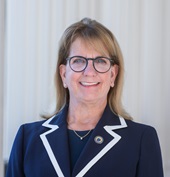
Sen. Joan Lovely
Sponsored bills
Maddy summaryThis bill creates a new licensing system for commercial interior designers in Massachusetts by establishing a state board to oversee registration and a selection board to review government design projects. The legislation defines the specific scope of work that interior designers can perform independently, such as designing interior spaces without altering core structural elements or major safety systems. It sets out requirements for board membership, including experience levels and appointment terms, while also outlining the qualifications needed for individuals to obtain a two-year registration license.
Senate, June 6,2024 -- The committee on Children, Families and Persons with Disabilities, to whom was referred the petitions (accompanied by bill, Senate, No. 68) of Joanne M. Comerford, Sean Garballey and Vanna Howard for legislation to establish a bill of rights for children in foster care; and (accompanied by bill, House, No. 164) of Michael J. Finn and others relative to establishing a bill of rights for children in foster care, report the accompanying bill (Senate, No. 2803).
Maddy summaryThis bill establishes a new Office of the Tenant Advocate within the Massachusetts Attorney General's office to support tenants in public and subsidized housing. The legislation defines specific forms of misconduct, such as bullying, mobbing, and hostile environment harassment, and clarifies that these actions do not require physical harm to be considered violations. Under this act, the Attorney General would have the authority to intervene in legal or administrative cases on behalf of affected tenants and hold landlords accountable for interfering with a resident's right to peacefully enjoy their home.
Maddy summaryThis bill modifies Massachusetts law to establish a standard fee for towns hosting marijuana businesses or medical treatment centers. If a community cannot precisely calculate the specific costs imposed by these facilities, the law requires them to charge a flat fee equal to one percent of the business's gross sales. This fee is intended to last for a maximum of eight years and applies to both recreational and medical marijuana operations. The change simplifies the financial process for municipalities by providing a clear calculation method when exact cost documentation is unavailable.
Maddy summaryThis bill protects Host Community Agreements signed before August 11, 2022, from being challenged or reviewed. It specifically applies to cannabis businesses operating in Massachusetts that have already entered into these deals with local communities. The law ensures that agreements where the host impact fees are 3% or less of gross sales for the first five years remain valid and cannot be overturned. This provision aims to provide stability for existing partnerships between cannabis companies and the towns where they operate.
Maddy summaryThis bill establishes a special commission to study how Massachusetts can better support adults over 21 with developmental disabilities, particularly those whose conditions are not currently covered by the state's definition. The commission will consist of government officials and community representatives, including individuals with lived experience, to examine current service gaps and compare state definitions with federal standards. Its main task is to gather input from families and providers, identify unmet needs for specific diagnoses like cerebral palsy or fetal alcohol spectrum disorder, and propose recommendations to improve service availability and inter-agency collaboration. The group must submit a final report with findings, budget estimates, and potential new laws within one year of the bill taking effect.
Maddy summaryThis bill creates a new Board of Hoisting Machinery Regulations within the Massachusetts Department of Public Safety to oversee the safety and licensing of equipment used for lifting and moving heavy loads. The six-member board will be appointed by the governor and includes representatives from public utilities, construction contractors, safety trainers, federal safety experts, and operating engineers to ensure diverse perspectives. The board will develop rules for classifying machinery and set specific criteria for issuing, renewing, or revoking licenses for apprentice operators, requiring them to work under the supervision of a fully licensed professional. Additionally, the legislation establishes that violations of federal or state safety regulations can lead to the denial or suspension of these licenses.
Maddy summaryThis bill establishes a new section in Massachusetts law to support deaf, deafblind, and hard-of-hearing children from birth to age six by creating a standardized framework for assessing their language development. It requires the state commission for the deaf and hard of hearing, in collaboration with public health and education departments, to select language milestones and develop a user-friendly resource for parents to track their children's progress in American Sign Language, English, or both. The legislation also mandates that these tools be aligned with existing state standards and that the departments publish annual reports on the data collected to identify and address systemic gaps in services.
Maddy summaryThis bill amends Massachusetts law to require health insurers to pay ambulance service providers directly for emergency services rendered to insured individuals, even when the provider is not part of the insurer's existing network. The legislation mandates that insurers make these payments promptly once an insured person signs an assignment of benefits or is unable to do so due to their condition. By establishing a direct payment pathway, the bill aims to ensure that emergency medical transport providers receive compensation without relying on the insured to pay out-of-pocket first. This change applies to all types of insurance policies covering transportation services within the state, including those held by individuals and organizations.