

Maddy summaryThis bill establishes new payment standards for behavioral health clinics in Massachusetts to ensure they receive fair compensation for mental health and substance use services. It requires the state health division to increase minimum payment rates by 5% effective January 1, 2023, and mandates that bundled rates for clinic services be at least 20% higher than those paid to independent practitioners. Additionally, the law directs the division to review these rates every two years, adjusting them based on inflation, staff wage data, and the costs of new government mandates. These changes directly affect clinics licensed by the Department of Public Health and the managed care entities that pay for their services.
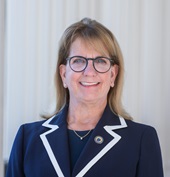
Sen. Joan Lovely
Sponsored bills
Maddy summaryThis bill allows married couples to work as paid caregivers for one another under the MassHealth program in Massachusetts. It amends state law to authorize spouses to provide specific home-based care services, provided these arrangements comply with federal regulations. To make this possible, the state's health and human services department must submit a plan or waiver application to the federal government within six months of the law taking effect.
Maddy summaryThis bill would legalize the possession, use, and sharing of specific plant medicines, including psilocybin, psilocyn, dimethyltryptamine, ibogaine, and mescaline, for adults aged 18 and older in Massachusetts. It allows individuals to grow, ingest, or transport up to two grams of these substances, provided the exchange is free of financial gain and excludes the weight of the plant material itself. By amending state law, the measure removes criminal penalties for these activities while maintaining restrictions on commercial sales and use by minors.
By Representative Capano of Lynn, a petition (accompanied by bill, House, No. 2143) of Peter Capano and others that the Department of Public Health create a process for state receivership for certain hospitals or free-standing clinics that provides essential health services. Public Health.
Maddy summaryThis bill removes the time limit for filing civil lawsuits related to sexual abuse of minors, allowing victims to seek legal action regardless of how much time has passed since the incident. It also extends this rule to cases involving negligence by individuals who supervised the abuser or whose actions contributed to the abuse. The legislation applies to all such claims, even those that would have expired under previous laws, but limits liability for employers or supervisors to situations where they are found directly responsible for the abuse.
Maddy summaryThis bill establishes a primary seat belt law in Massachusetts, making it a traffic violation to operate a vehicle or ride as a passenger without wearing a safety belt. Drivers face a $50 fine for not wearing a belt themselves, while those with passengers aged 12 to under 16 must also pay an additional $50 for each unbelted child. The law explicitly prohibits insurance surcharges for these violations and forbids police from searching a vehicle solely based on a seat belt infraction. Revenue generated from these tickets will be directed to a trust fund for head injury treatment services, and the law will become effective 180 days after enactment.
By Representative Philips of Sharon, a petition (accompanied by bill, House, No. 2386) of Edward R. Philips and Vanna Howard relative to fire protection systems for buildings and structures. Public Safety and Homeland Security.
Senate, July 29, 2024 -- The committee on Senate Ways and Means, to whom was referred the Senate Bill relative to the reduction of certain toxic chemicals in firefighter personal protective equipment (Senate, No. 1502),- reports, recommending that the same ought to pass with an amendment substituting a new draft with the same title (Senate, No. 2902).
Maddy summaryThis bill expands domestic violence protections in Massachusetts to include contract workers employed by staffing agencies and other third-party labor providers. It achieves this by legally defining these workers and their employers, ensuring they have the same right as traditional employees to take time off for safety reasons related to domestic violence. The change removes the previous restriction that limited these protections only to direct employees, thereby covering a broader range of workers in the Commonwealth.
Maddy summaryThis bill establishes a formal legal framework for supported decision-making, allowing adults to voluntarily enter into written agreements with trusted supporters to help them make life decisions without losing their legal autonomy. It mandates that the state create a training program for supporters and decision-makers covering their rights, obligations, and dispute resolution processes. Additionally, the bill requires schools to inform students with disabilities and their families about this option as an alternative to guardianship when the students turn sixteen. By adding supported decision-making agreements to existing guardianship laws, the legislation aims to provide a flexible, self-determined way for adults to receive assistance while retaining control over their own lives.