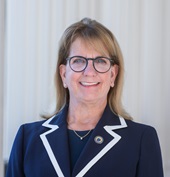
By Representative Cahill of Lynn and Senator Lovely, a joint petition (subject to Joint Rule 12) of Daniel Cahill and Joan B. Lovely for legislation to further regulate insurance claims. Financial Services.
Sen. Joan Lovely
Sponsored bills
Maddy summaryThis bill temporarily suspends an existing rule to allow the Senate to meet for formal business. The change specifically permits the chamber to convene in order to consider reports from conference committees or those received from the House. By overriding the standard restrictions, the legislation enables the Senate to handle these specific legislative tasks without adhering to the usual procedural limitations.
By Ms. Lovely, a petition (accompanied by bill) (subject to Joint Rule 12) of Joan B. Lovely for legislation relative to the partition of nominee trusts. The Judiciary.
By Representative Garlick of Needham, a petition (accompanied by bill, House, No. 2330) of Denise C. Garlick and others relative to providing protections for health care employees who are victims of violence or assault and battery. Public Safety and Homeland Security.
Maddy summaryThis bill requires health care employers in Massachusetts to create and enforce programs aimed at preventing workplace violence. To achieve this, facilities must conduct annual risk assessments in cooperation with employees and labor unions to identify specific dangers, such as working in public areas or guarding property. The legislation defines workplace violence to include unpermitted touching, attempts to use physical force, or threatening behavior that causes fear of future harm. These measures apply to a wide range of settings, including hospitals and state correctional facilities, while explicitly excluding certain outpatient services like clinics and dialysis centers.
By Representative Cruz of Salem and Senator Lovely, a joint petition (subject to Joint Rule 12) of Manny Cruz and Joan B. Lovely (with the approval of the mayor and city council) that the city of Salem be authorized to employ automated enforcement of speed limit violations in designated school zones within said city. Transportation. [Local Approval Received.]
Maddy summaryThis bill establishes collective bargaining rights for drivers working in Massachusetts' transportation network industry, such as rideshare and ride-hailing services. It allows these drivers to form organizations and negotiate industry-wide recommendations with companies regarding work standards, pay, and benefits. The legislation creates a new chapter in state law that exempts these negotiations from federal and state antitrust laws and sets up a process where the Secretary of Labor reviews and can make these negotiated terms binding. Additionally, the bill permits rideshare companies to form multi-company associations to represent them during these negotiations.
By Representative Donahue of Worcester, a petition (accompanied by bill, House, No. 2505) of Daniel M. Donahue and others relative to public employee retiree benefits. Public Service.
Maddy summaryThis bill amends Massachusetts tax laws to set specific spending limits for community investment tax credits. It caps the total value of these credits at $12 million for the years 2023 and 2024, and increases the cap to $15 million starting in 2025. The changes apply to two separate tax credit programs, ensuring that the combined amount of credits issued does not exceed these annual thresholds. Directly affecting businesses and investors eligible for these credits, the legislation provides a clear financial ceiling for state support over the next several years.
Maddy summaryThis bill establishes a network of peer-run respite centers across Massachusetts to provide short-term, safe housing and support for adults experiencing emotional or mental distress. The Department of Mental Health is tasked with creating at least 14 of these centers, ensuring that every county has at least one location, with two specifically designated for LGBTQIA+ individuals in Hampden and Suffolk counties. These facilities must be operated by non-profit organizations led by people with lived experience of mental health challenges, who will also serve as trained peer supporters. The centers offer a homelike environment focused on recovery and wellness rather than clinical treatment, aiming to reduce social isolation and provide immediate relief during crises.