Maddy summaryThis bill establishes specific deadlines for Massachusetts to transition its public school bus and fleet vehicles to electric power. It requires that 50% of public fleets be electric by 2025, 75% by 2030, and 100% by 2035, while prioritizing vehicles serving environmental justice communities. The legislation also creates programs to encourage private fleet owners to adopt electric vehicles through goals and incentives set by state agencies. Emergency vehicles are explicitly excluded from these electrification requirements.
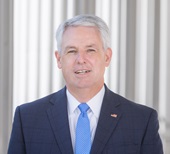
Sen. John Keenan
Sponsored bills
Maddy summaryThis bill establishes a legal framework for the MBTA to fully electrify its commuter rail system by December 31, 2035. It mandates that lines serving environmental justice communities be prioritized for early conversion, with specific interim deadlines set for the Fairmount, Newburyport/Rockport, Framingham/Worcester, and Middleborough/Lakeville lines. The legislation also requires the MBTA to maintain service frequency standards and outlines a phased approach for expanding electric operations to all remaining routes by the final deadline.
Maddy summaryThis bill creates the Massachusetts Hunger-Free Campus Initiative, a grant program designed to help public colleges and universities address student food insecurity. Managed by the state department of higher education, the program will provide funding to eligible institutions, including municipal colleges and minority-serving schools, to support students in completing their post-secondary education. The department will hire a director to set guidelines for the grants, which may require schools to have specific staff, awareness programs, and meal options that accept federal nutrition benefits. Additionally, the bill mandates that the department provide technical assistance to schools and submit an annual report to state officials on the program's progress.
Senate, February 29, 2024 -- Text of the Senate Bill relative to healthy youth (Senate, No. 2692) (being the text of Senate, No. 2686, printed as amended)
Maddy summaryThis bill expands Massachusetts prevailing wage laws to include offsite fabrication work for public projects, ensuring that workers building components like pipes, wiring, and modular units at factories receive the same wage protections as those working on construction sites. It defines offsite fabrication as non-standard items produced specifically for a project and mandates that contractors submit weekly certified payroll records detailing employee wages, hours, and the specific location where the work was performed. By applying existing penalties and reporting requirements to these offsite activities, the legislation aims to standardize labor standards across both on-site construction and off-site manufacturing processes for qualified public works.
Maddy summaryThis bill aims to improve Massachusetts' paid family and medical leave program by updating how employers handle leave requests and enhancing data tracking. It requires employers to inform employees of their eligibility for paid leave within five business days and to provide necessary forms in the employee's primary language. The legislation also expands the types of employer policies that count toward meeting leave requirements and mandates more detailed reporting on claim demographics and processing times.
Filed by Mr. Keenan -- Order relative to granting the committee on Election Laws until May 28, 2024 within which time to make its final report on current Senate documents relative to election laws matters.
Senate, March 4, 2024 --The committee on Labor and Workforce Development, to whom was referred the petitions (accompanied by bill, Senate, No. 1197) of Jason M. Lewis, Rebecca L. Rausch, Jack Patrick Lewis, Michael D. Brady and other members of the General Court for legislation to improve the Massachusetts paid family medical leave law; (accompanied by bill, Senate, No. 1198) of Jason M. Lewis, Lydia Edwards, James B. Eldridge and Paul R. Feeney for legislation to amend the Massachusetts Paid Family Medical Leave law definitions of a covered business entity and a covered contract worker; (accompanied by bill, House, No. 1858) of Josh S. Cutler and others relative to the publication of hearing decisions by the Department of Family and Medical Leave; (accompanied by bill, House, No. 1859) of Josh S. Cutler and others relative to data reporting by the Department of Family and Medical Leave; (accompanied by bill, House, No. 1860) of Josh S. Cutler and others for legislation to include bone marrow and organ donation in the paid family and medical leave program; (accompanied by bill, House, No. 1888) of Kenneth I. Gordon and others relative to the Massachusetts Paid Family Medical Leave Law; (accompanied by bill, House, No. 1889) of Kenneth I. Gordon and others relative to the definitions of covered business entity and covered contract worker under the Massachusetts Paid Family Medical Leave Law; and (accompanied by bill, House, No. 1942) of Jeffrey N. Roy relative to unemployment benefits for replacement workers, report the accompanying bill (Senate, No. 2605).

Senate, March 4, 2024 -- The committee on Labor and Workforce Development, to whom was referred the petitions (accompanied by bill, Senate, No. 1171) of Paul R. Feeney, Marc R. Pacheco, Jacob R. Oliveira, Sal N. DiDomenico and other members of the General Court for legislation to include offsite fabrication work for qualified projects under the prevailing wage laws of the Commonwealth; and (accompanied by bill, House, No. 1943) of Jeffrey N. Roy and others relative to compliance with prevailing wage laws for offsite fabrication, report the accompanying bill (Senate, No. 2603).
Maddy summaryThis Massachusetts bill establishes a 10-year pilot program to create overdose prevention centers that allow trained staff to monitor individuals using pre-obtained drugs. These facilities aim to reduce the risk of disease transmission and prevent fatal overdoses by providing a safe environment for consumption. Eligible operators include private organizations and municipal departments, but they must first receive approval from their local board of health before applying for a license. The Department of Public Health is tasked with creating specific rules for these centers and must review applications and notify applicants of their decision within 45 days.