

Maddy summaryThis bill establishes an advisory council of wildlife experts and tribal representatives to guide offshore wind development in Massachusetts, focusing on protecting species like North Atlantic right whales and coastal habitats. It creates new support programs for communities hosting offshore wind projects, giving them priority access to state funding for infrastructure, housing, and economic development. The bill also mandates a special commission to study the offshore wind supply chain, workforce needs, and economic opportunities, requiring recommendations on equity and environmental justice. Additionally, it amends existing laws to strengthen wildlife monitoring requirements and expand incentives for communities hosting clean energy facilities.
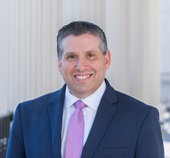
Sen. Sal DiDomenico
Sponsored bills
Maddy summaryHD 3080 creates a task force to study whether basic hygiene products like diapers, feminine products, and soap should be covered under the WIC program. The task force, including government officials and community representatives, will analyze hygiene insecurity in Massachusetts and evaluate existing programs. It must submit a report by January 2027 with recommendations on including these products in WIC, including public input. This bill does not change current policy but sets up a formal study to inform future decisions. The direct effect is on the study process, not immediate access to products.
Maddy summaryThis bill (SD 2305) requires Massachusetts gas distribution and transmission companies to develop and submit detailed "just transition" plans to the Department of Public Utilities. These plans must ensure workforce retention, training, and safety during the shift to clean energy, including maintaining staffing levels as of January 1, 2025 (except through negotiated early retirement), and outlining how companies will train workers for renewable energy roles. Companies must report on workforce development, cross-training, pension solvency, and measures to prevent job displacement through 2050 or until gas pipeline retirement. The bill directly affects all gas companies operating in Massachusetts and mandates compliance with new service quality standards for safety, reliability, and workforce transition.
By Mr. DiDomenico, a petition (accompanied by resolve, Senate, No. 346) of Sal N. DiDomenico that provisions be made for an investigation and study by a special commission (including members of the General Court) to study the funding of high-quality early education. Education.
By Mr. DiDomenico, a petition (accompanied by bill, Senate, No. 343) of Sal N. DiDomenico for legislation to fulfill the promise of education reform. Education.
By Ms. Creem, a petition (accompanied by bill, Senate, No. 1651) of Cynthia Stone Creem and Sal N. DiDomenico for legislation relative to rehabilitation, re-entry, and human rights for incarcerated persons. Public Safety and Homeland Security.
By Ms. Creem, a petition (accompanied by bill, Senate, No. 1653) of Cynthia Stone Creem, Jason M. Lewis, David Paul Linsky, Christopher Richard Flanagan and other members of the General Court for legislation relative to firearm industry accountability and gun violence victims’ access to justice. Public Safety and Homeland Security.
By Mr. Gomez, a petition (accompanied by bill, Senate, No. 370) of Adam Gomez, Vanna Howard, Michael D. Brady, James K. Hawkins and others for legislation to require that all public school educators are paid not less than a living wage as defined by the Massachusetts Institute of Technology Living Wage Calculator. Education.
Maddy summarySD 2058 creates a framework for cities and towns to establish Municipal Creative Space Preservation Trust Funds. The bill defines "creative space" as areas used for creating, practicing, or exhibiting art by artists, creative workers, or artisans, and "presentation space" for showcasing such work. These trust funds can accept donations, buy property, and enforce legal restrictions to preserve affordable spaces for artists, preventing conversion to non-creative uses. The law specifically aims to maintain affordability for low- or moderate-income artists through property use restrictions. Cities adopting this can use zoning fees and private contributions to fund these preservation efforts.
Maddy summaryThis bill establishes the PLACE (Program for Local Art and Community Engagement) program to fund public art in Massachusetts state buildings and infrastructure. It creates a commission (with appointed members from arts, community, and state agencies) to manage a dedicated fund receiving 0.5% of public construction funds (capped at $300,000 per project, adjusted for inflation). The fund supports public art projects - including design, installation, and maintenance - in state-owned buildings, requiring projects to be owned by the Commonwealth, prioritize Massachusetts artists, and distribute projects across geographic regions. The commission must report annually on fund usage to state legislative committees.