

Senate, December 29, 2025 -- The committee on Education to whom was referred the petition (accompanied by bill, Senate, No. 314) of Joanne M. Comerford, Vanna Howard, Michael D. Brady, Jacob R. Oliveira and other members of the General Court for legislation to provide a sustainable future for rural schools, report the accompanying bill (Senate, No. 2870).
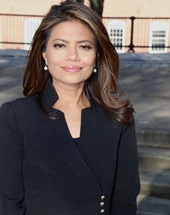
Sen. Vanna Howard
Sponsored bills
Maddy summaryThis bill requires all newly constructed, reconstructed, or remodeled Massachusetts state-owned public buildings (like libraries, community centers, or government offices) to install at least one universal changing station in public restrooms by January 1, 2028. The stations must support 350 pounds, measure at least 70 inches long by 30 inches wide, and be positioned 20-25 inches off the floor, with clear signage and ADA-compliant safety features like rails and privacy. It directly affects parents, caregivers, and individuals with disabilities who need assistance with diapering or changing in public spaces. Limited exemptions apply for historic properties, non-public buildings, or projects under $10,000 in cost.
By Ms. Comerford, a petition (accompanied by bill, Senate, No. 314) of Joanne M. Comerford, Vanna Howard, Michael D. Brady, Jacob R. Oliveira and other members of the General Court for legislation to provide a sustainable future for rural schools. Education.
Maddy summaryThis bill establishes a state fund to provide matching grants for cities and towns to build or renovate municipal parking facilities with electric vehicle (EV) charging stations. It directly affects Massachusetts municipalities by requiring projects to meet specific equity and urban design standards, such as reducing surface parking, providing affordable EV access in dense neighborhoods, supporting housing growth, and promoting walkable streets. The fund reimburses cities/towns based on their median income (30%-80%) for eligible projects, administered by the Massachusetts Department of Transportation. Projects must include a local financing plan and be certified by the state before reimbursement. The law aims to advance EV infrastructure while aligning parking development with community-focused urban planning goals.
Maddy summaryHD 982 requires all Massachusetts state-owned public buildings (like government offices or libraries) that are newly built, reconstructed, or remodeled after January 1, 2025, to install at least one universal changing station in public restrooms. These stations must support up to 350 pounds, measure at least 70 inches long by 30 inches wide, have adjustable height (17-38 inches), include safety rails, and be located in private or enclosed areas. The bill mandates clear signage for location and operation, and compliance with accessibility standards, while allowing exemptions for historic properties or if installation costs exceed $10,000. It directly affects state building owners and contractors planning new construction or renovations after 2025.
By Representatives Livingstone of Boston and Finn of West Springfield, a petition (accompanied by bill, House, No. 261) of Jay D. Livingstone, Michael J. Finn and others relative to supported decision-making agreements for certain adults with disabilities. Children, Families and Persons with Disabilities.
Senate, November 26, 2025 -- The committee on Higher Education, to whom was referred the petitions (accompanied by bill, Senate, No. 951) of Rebecca L. Rausch for legislation to support college students in recovery; and (accompanied by bill, Senate, No. 954) of John C. Velis for legislation relative to opioid overdose prevention in college housing, report the accompanying bill (Senate, No. 2756).
The committee on Higher Education, to whom was referred the petitions (accompanied by bill, Senate, No. 930) of James B. Eldridge for legislation to establish compensation and employment standards for contingent faculty in public higher education; (accompanied by bill, Senate, No. 934) of Patricia D. Jehlen for legislation to establish the public higher education faculty advancement pilot program; (accompanied by bill, Senate, No. 937) of Edward J. Kennedy for legislation to invest in public higher education; and (accompanied by bill, Senate, No. 940) of Paul W. Mark, Vanna Howard, Michael D. Brady, Jacob R. Oliveira and other members of the General Court for legislation to improve the working conditions and benefits of part-time and adjunct faculty at public institutions of higher education Commonwealth., report the accompanying bill (Senate, No. 2880).
Senate, November 26, 2025 -- The committee on Higher Education to whom was referred the petition (accompanied by bill, Senate, No. 929) of James B. Eldridge, Vanna Howard, Jacob R. Oliveira, Mike Connolly and other members of the General Court for legislation to guarantee debt-free public higher education, report the accompanying bill (Senate, No. 2755).
Maddy summarySD 300 guarantees free public higher education as a right for eligible Massachusetts residents. It creates a state grant program covering tuition, mandatory fees, and additional costs (like room, board, and books) for students who graduated from a Massachusetts high school or earned a GED in MA, or currently qualify for in-state tuition. The grant supplements existing aid (such as Pell Grants, state grants, or institutional aid) and does not replace it. Eligibility is determined by the Board of Higher Education, which must notify students and maintain a database of eligible applicants. This bill directly affects Massachusetts residents attending public colleges, universities, or vocational programs.