

Maddy summaryThis bill requires state agencies responsible for managing public lands to conduct a formal review of their sustainable forestry practices every five years. It establishes a new Public Land Management Advisory Council to oversee these reviews and ensure transparency, public participation, and accountability in how forests are managed. The legislation sets a specific goal for these agencies to designate at least 30% of their watershed lands and wildlife management areas as forest reserves by December 31, 2030. Additionally, the bill mandates that the review process assess opportunities to use forests for renewable energy and carbon sequestration to help meet the state's emissions reduction targets.
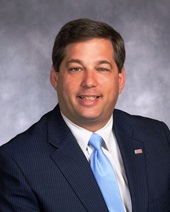
Sen. Bruce Tarr
Sponsored bills
By Representatives Fiola of Fall River and Kane of Shrewsbury, a petition (accompanied by bill, House, No. 3498) of Carole A. Fiola, Hannah Kane and others for legislation relative to recognition of the "Honor and Remember" flag in the Commonwealth. Veterans and Federal Affairs.
April 22, 2024 -- The committee on Public Health, to whom was referred the petitions (accompanied by bill, Senate, No. 1379) of Adam Gomez, Jason M. Lewis, Sal N. DiDomenico and James B. Eldridge for legislation to improve oral health for all Massachusetts residents; and (accompanied by bill, House, No. 2253) of Smitty Pignatelli and others for legislation to expand patient access to oral health care, report the accompanying bill (Senate, No. 2740).
Maddy summaryThis bill creates a new state fund called the PFAS Research and Development Public Safety Fund to address health risks associated with PFAS chemicals, which are found in firefighting gear. The fund will be managed by the Secretary of Public Safety and Security and will be financed through state appropriations, grants, and investment earnings. Its primary purpose is to support the development, testing, and purchase of new firefighter turnout gear that eliminates PFAS materials while maintaining safety standards and improving protection against fire byproducts. Additionally, the fund can be used to research other new materials and designs that reduce dangers for firefighters, such as better resistance to contamination and easier cleaning processes.
Maddy summaryThis bill requires drivers to turn on their car's interior lights when stopped by a police officer to improve officer safety. The law applies to all motor vehicle operators in Massachusetts and mandates that they activate cabin lighting immediately if the lights are present and working. If a driver fails to comply, the officer can order them to do so, and refusing this order would be treated as a traffic violation under existing statutes. The measure aims to increase visibility inside the vehicle during traffic stops without changing other aspects of traffic law.
Maddy summaryThis bill directs the Massachusetts Secretary of Public Safety to create a statewide standard and accreditation program for police officers who wish to become drug recognition experts. The primary goal is to ensure these officers can provide reliable testimony in court proceedings regarding drug impairment. The legislation requires the secretary to complete the development of this certification system and submit recommendations to the legislature by December 31, 2024. It applies specifically to both municipal and state police officers within the Commonwealth.
Maddy summaryThis bill directs the Massachusetts Department of Transportation to form a nine-member Commission to study the state's municipal Chapter 90 funding program, which provides financial assistance to towns for road and pedestrian infrastructure projects. The Commission will include representatives from various community organizations, planning agencies, and the highway association, alongside three members appointed by the Governor and a chair from the Department of Transportation. Over the course of one year, the group will analyze whether the current funding formula is fair and effective, taking into account differences in geography, population density, and local financial resources. The Commission is required to submit a final report with specific recommendations on how to adjust the reimbursement system to better maintain local infrastructure.
Maddy summaryThis bill aims to grant public safety telecommunicators, such as 911 dispatchers, the same internal benefits as first responders like firefighters and police officers. It establishes that these dispatchers, who handle emergency calls and coordinate responses, will receive equivalent benefits without altering their current pay or pension plans. The legislation defines telecommunicators to include those who promote from dispatch roles and supervise others in the field. By aligning the benefits of dispatchers with those of on-scene responders, the bill seeks to recognize the critical nature of their work in public safety.
Maddy summaryThis bill amends Massachusetts law to allow students to be excused from school for mental health symptoms in the same way they are for physical illnesses. It requires that documentation for mental health absences be treated identically to that for physical health, accepting notes from licensed mental health professionals. Additionally, the law mandates that students returning from such absences be offered a meeting with a school counselor, though attending this meeting remains optional. These changes directly affect school districts, educators, and families by formalizing support for mental health needs within the existing framework for health-related absences.
Maddy summaryThis bill requires Massachusetts law enforcement and correctional officers to complete new training on interacting with individuals on the autism spectrum and those with intellectual and developmental disabilities. The training, which must be established by municipal police training committees by January 1, 2024, focuses on de-escalating situations and providing positive responses without adding to existing mandatory training hours. It also mandates the creation of specific guidelines for how officers should handle interactions with these individuals who are victims, witnesses, or suspects in criminal matters. The legislation applies to a wide range of agencies, including city and town police, state police, university police, and correctional facility officers.