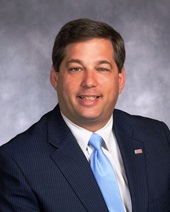
By Mr. Tarr, a petition (accompanied by bill, Senate, No. 71) of Bruce E. Tarr for legislation relative to the use of food security infrastructure grants. Agriculture.
Sen. Bruce Tarr
Sponsored bills
By Mr. Tarr, a petition (accompanied by bill, Senate, No. 73) of Bruce E. Tarr and Michael O. Moore for legislation to expand programs under the Department of Fish and Game. Agriculture.
By Mr. Mark, a petition (accompanied by bill, Senate, No. 65) of Paul W. Mark for legislation to establish regulations defining post-construction healthy soil standards. Agriculture.
Maddy summarySD 217 creates a dedicated Motorcycle Safety Fund using $2 from every motorcycle registration fee (previously sent to the General Fund). The fund finances motorcycle safety programs, including rebates of at least $150 for riders under 21 who complete approved basic rider courses (capped at 20% of fund revenues), rider education courses, instructor training, and public awareness campaigns. All money deposited into the fund must stay there and cannot be transferred to other funds, with annual reports detailing income and expenditures required for specific state officials. This directly affects motorcycle owners (via registration fees) and young riders (via rebate eligibility), focusing on improving safety through education and awareness.
Maddy summaryThis bill (SD 371) increases penalties for drivers transporting unsecured children under 16 in vehicles. It raises the fine for each child not wearing a safety belt from $25 to $100 per child (Section 2), while exempting taxi drivers without child restraint devices from the $100 fine (Section 1). The bill also requires driver education materials about child safety risks to be added to the state driver's manual (Section 3). It directly affects all vehicle operators transporting children under 16, with specific exemptions for certain taxi operators.
Maddy summaryThis bill creates a voluntary "yellow dot" program for drivers aged 62+ or with chronic health conditions. Participants receive a yellow window decal and a folder for their glove compartment containing their health information, including medications, allergies, emergency contacts, and medical conditions. Emergency responders are alerted to check the folder during accidents or medical emergencies to quickly access critical health details. The program includes a fee to cover costs, requires state agency design standards based on other states' models, and protects responders from liability for good-faith actions using the provided information.
Maddy summaryThis bill requires all newly constructed, reconstructed, or remodeled Massachusetts state-owned public buildings (like libraries, community centers, or government offices) to install at least one universal changing station in public restrooms by January 1, 2028. The stations must support 350 pounds, measure at least 70 inches long by 30 inches wide, and be positioned 20-25 inches off the floor, with clear signage and ADA-compliant safety features like rails and privacy. It directly affects parents, caregivers, and individuals with disabilities who need assistance with diapering or changing in public spaces. Limited exemptions apply for historic properties, non-public buildings, or projects under $10,000 in cost.

Maddy summaryHD 982 requires all Massachusetts state-owned public buildings (like government offices or libraries) that are newly built, reconstructed, or remodeled after January 1, 2025, to install at least one universal changing station in public restrooms. These stations must support up to 350 pounds, measure at least 70 inches long by 30 inches wide, have adjustable height (17-38 inches), include safety rails, and be located in private or enclosed areas. The bill mandates clear signage for location and operation, and compliance with accessibility standards, while allowing exemptions for historic properties or if installation costs exceed $10,000. It directly affects state building owners and contractors planning new construction or renovations after 2025.
Maddy summaryThis bill (SD 441) creates a special firefighter motorcycle license plate for active and retired municipal firefighters in Massachusetts. It requires firefighters to get certification from their fire department head to qualify, and the plate can only be used on their personal motorcycles. An additional $10 fee is charged for the plate, collected by the state and paid to the Massachusetts Firefighters Academy Trust Fund. The bill directly affects firefighters who own motorcycles and provides a dedicated funding stream for firefighter training.
By Representatives Livingstone of Boston and Finn of West Springfield, a petition (accompanied by bill, House, No. 261) of Jay D. Livingstone, Michael J. Finn and others relative to supported decision-making agreements for certain adults with disabilities. Children, Families and Persons with Disabilities.